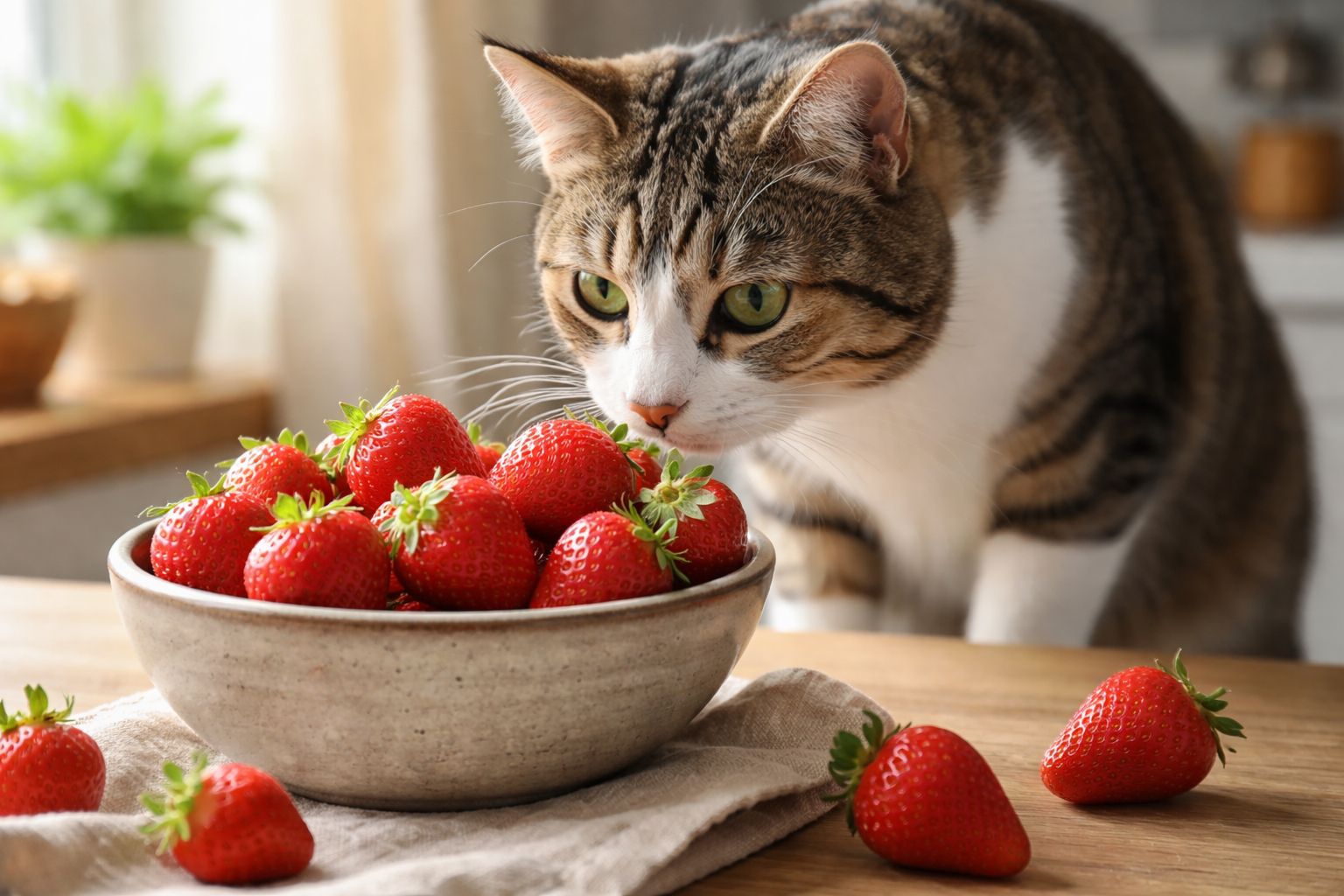
If you’ve ever been snacking on strawberries and noticed your cat watching you with that intense, unblinking stare, you’re probably wondering whether it’s okay to share a piece. The short answer is yes. Strawberries are not toxic to cats, and a small bite here and there is generally safe. But there’s a bit more to the story, especially if you want to keep your cat comfortable and healthy.
Let’s walk through what you actually need to know before letting your cat take a nibble.
Are Strawberries Safe for Cats?
Yes, strawberries are considered non-toxic to cats by the ASPCA. That said, “non-toxic” doesn’t mean “go ahead and serve them a bowl.” Cats are obligate carnivores, which means their bodies are built to run on protein from meat, not fruit. Their digestive systems aren’t designed to process large amounts of sugar, even natural sugar from fruit.
A small, clean piece of strawberry occasionally is fine for most healthy adult cats. The concern comes when fruit becomes a regular snack, or when the strawberry isn’t prepared properly. Always wash the fruit thoroughly to remove pesticide residue, and remove the leaves and stem before offering any to your cat. The leaves can cause mild stomach upset, and that’s an easy thing to avoid.
Do Cats Even Want to Eat Strawberries?
Probably not for the reason you’d expect. Cats actually lack the taste receptors that detect sweetness, so the sugary flavor that makes strawberries irresistible to you means absolutely nothing to them. If your cat shows interest, it’s more likely the smell, the texture, or simply the fact that you’re eating something and they want in on the action.
Some cats will take a small bite, decide it’s not for them, and walk away. Others will bat the strawberry off the counter and call it a day. Both reactions are completely normal. Don’t be discouraged if your cat has zero interest. That’s actually the more common response.
When to Skip the Strawberries Altogether
Even though strawberries are generally safe, there are some situations where it’s better to leave them off the menu entirely:
- If your cat has been diagnosed with diabetes, the natural sugar in fruit can be problematic.
- If your cat is overweight, extra sugar from fruit isn’t helpful.
- If your cat has a history of digestive sensitivity or has reacted badly to new foods in the past.
If your cat eats a piece of strawberry and you notice vomiting, diarrhea, or any change in behavior afterward, skip strawberries going forward and mention it at your next vet visit.
How to Offer Strawberries Safely
If you’d like to let your cat try a piece, the prep is simple. Wash the strawberry well, remove the stem and leaves, and cut a small piece, something closer to the size of a pea than a full slice. Offer it on its own, not mixed into their food, so you can see how they respond.
Think of it less as a nutritional addition to their diet and more as a small enrichment moment. Exploring a new smell and texture can be mentally stimulating for cats, even if they ultimately reject the treat entirely.
What Other Fruits Can Cats Eat?
Strawberries aren’t the only fruit that’s safe for cats in small amounts. Blueberries, cantaloupe, and small pieces of peeled apple (with seeds removed) are also generally well tolerated. Bananas are safe but higher in sugar, so offer them sparingly if at all.
Whatever fruit you offer, the same rules apply: wash it, remove any seeds or rind, cut it small, and keep portions tiny. Fruit should always be an occasional extra, never a substitute for your cat’s balanced, protein-focused diet.
So, Can Cats Eat Strawberries?
Strawberries are safe for most healthy adult cats in small, properly prepared amounts. They won’t provide meaningful nutritional benefits for your cat, but they’re not going to cause harm if offered occasionally and in moderation. If your cat wants to investigate what you’re eating, a small piece is a perfectly reasonable thing to share.
And if they sniff it, stare at you with judgment, and walk away? That’s just cats being cats, and honestly, it’s part of what makes them so entertaining to live with.

Debbie Reid is the founder and chief editor of CatPedia.net, with over 25 years of hands-on experience in feline care, rescue, and behavior research. Inspired by her rescue cats Snickers and Bigboy, she collaborates with animal welfare resources and consults veterinary literature to turn complex feline health, nutrition, and behavior topics into clear, actionable guides.