
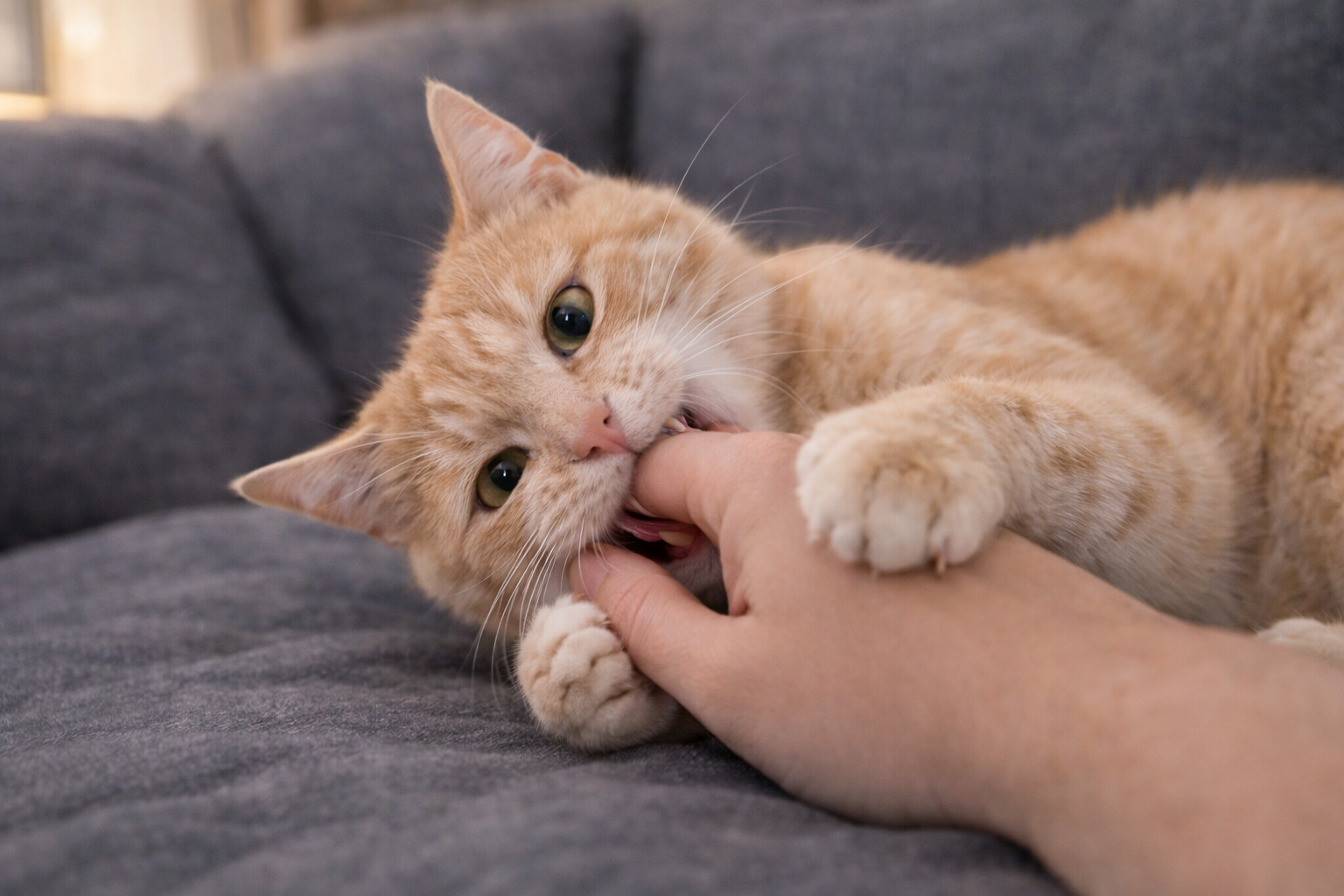
Cats communicate in many different ways, and biting is just one of them. While it may seem sudden or confusing, a bite is usually your cat reacting to something in the moment.
Most of the time, biting is not about aggression. It is more often your cat trying to say they have had enough, something feels uncomfortable, or they need a little space.
Why Do Cats Bite in the First Place?
Cats usually communicate with body language first. They use their ears, tail, eyes, and posture to show how they are feeling long before they use their teeth.
When those early signals are missed or ignored, biting becomes a stronger way to get the message across. It may happen during petting, play, or when your cat feels stressed or unsure about what is going on around them.
Common Reasons Cats Bite Their Owners
Most cat bites fall into a few main categories. The situation, your cat’s body language, and what was happening just before the bite can help point to the real cause.
Overstimulation and Petting Sensitivity
Many cats enjoy being petted, but only for short periods of time. After a while, the repeated touch can start to feel irritating instead of relaxing.
When that happens, your cat may suddenly bite even though she seemed fine just moments earlier. Touch can start to feel uncomfortable, and biting becomes a quick way to make the petting stop.
Warning signs before a bite can include tail flicking, skin twitching, ears turning sideways, freezing in place, or giving your hand a sharp look. Stopping when you see these signals can often prevent the bite.
This is also why some cats roll onto their backs and then bite when you reach for their belly. Showing the belly can be a sign of trust, not an invitation to touch. For many cats, belly rubs feel uncomfortable and trigger a fast reaction.
Play and Hunting Instincts
Cats are natural hunters, and play is how they practice those instincts. Chasing, pouncing, grabbing, and biting are all part of normal cat play, especially in kittens and young cats.
If your cat bites your hands, ankles, or feet, she may be treating you like moving prey. This often happens when cats are bored, full of energy, or do not have enough ways to burn it off. It can also explain why some cats bite when you walk by or grab your hand during playtime.
Using toys instead of hands during play helps keep those instincts pointed at the right targets and reduces painful play biting.
Attention-Seeking Behavior
Some cats learn that biting gets a fast reaction. Even if the reaction is negative, it still means they got your attention, and that can be rewarding to a cat who wants interaction.
This can show up as ankle biting, nipping while you are working, or biting in the early morning or late at night when your cat wants food or play. Over time, the cat learns that biting works as a way to get you to respond.
In these cases, the bite is not about anger. It is about communication and learned behavior.
Fear, Stress, or Redirected Aggression
Cats can bite when they feel scared, threatened, or overwhelmed. Loud noises, unfamiliar people, new pets, or changes in the home can all raise stress levels and make a cat more reactive.
Sometimes the trigger is not even you. A cat may see another animal outside the window or hear something upsetting, then bite the nearest person because they cannot reach what is actually bothering them. This is called redirected aggression.
Bites linked to fear or stress are more likely when a cat feels trapped or unable to escape the situation.
Pain or Medical Issues
If biting is new or suddenly getting worse, pain should always be considered. Cats in pain often have less tolerance for touch and may bite when something hurts.
Dental problems, arthritis, injuries, skin conditions, or internal illness can all make normal handling feel uncomfortable. If your cat used to enjoy petting and now bites when touched, that change is important to pay attention to.
In these cases, a vet visit is the safest way to rule out medical causes and make sure your cat is not dealing with untreated pain.
Are Gentle Bites or “Love Bites” Normal?
Sometimes a bite feels more like a small nibble than an attack. These gentle bites are often called love bites, and they usually happen during moments that seem calm and affectionate.
Gentle biting can be part of social bonding and grooming behavior. Cats sometimes use light nips when grooming cats they trust, and they may treat people the same way. Licking followed by a small bite can be part of that same grooming pattern.
However, gentle bites can also be an early sign that your cat is getting overstimulated. What starts as affection can turn into a stronger bite if petting continues past your cat’s comfort level.
When Biting Is a Sign You Should Call the Vet
Occasional biting tied to clear situations like play or overstimulation is usually normal. But some patterns should not be ignored.
Contact your vet if your cat starts biting suddenly, bites when touched anywhere on the body, hides more than usual, eats less, or seems stiff or uncomfortable when moving. These can all be signs that something medical may be going on.
Changes in behavior are often one of the first ways cats show that they are not feeling well.
How to Stop Your Cat From Biting You
Stopping biting starts with learning your cat’s warning signs and respecting their limits. When you notice tail flicking, ear changes, or restlessness, it is best to stop petting or step away before a bite happens.
During play, always use toys instead of hands or feet. Wand toys, balls, and interactive games give your cat a safe way to burn off energy and practice hunting without hurting you.
If your cat starts to get mouthy or tries to grab your hand, gently move away and offer a toy instead. This teaches your cat what is okay to bite and what is not.
Regular play sessions can also help reduce biting. Cats that get daily chances to chase and pounce are less likely to use people as their outlet for energy.
It is also important not to punish biting. Yelling or hitting can increase fear and stress, which often makes biting worse, not better.
What to Do If a Cat Bite Breaks the Skin
If your cat bites you hard enough to break the skin, it is important to clean the area right away. Gently wash the bite with soap and warm water to help remove bacteria.
Keep an eye on the area over the next day or two. Signs of infection can include redness, swelling, warmth, pain, or drainage. If you notice any of these, or if the bite was deep, it is best to contact a doctor.
Cat bites can become infected more easily than scratches, so it is always better to be cautious, especially if the bite is on the hand, finger, or near a joint.
Final Thoughts: What Your Cat Is Really Trying to Say
A bite does not mean your cat is being mean or trying to hurt you. Most of the time, it is just their way of saying something feels off or they have had enough.
Learning your cat’s signals takes a little time, but it pays off. When you can spot the signs early and respond before things escalate, you build more trust and fewer painful surprises.
Frequently Asked Questions About Cat Biting
Why does my cat bite me out of nowhere?
It often feels random, but there is usually something behind it. Your cat may be overstimulated, startled, or reacting to something you did not notice, like a noise or movement. Watching what was happening right before the bite can help reveal the trigger.
Why does my cat bite me while purring?
Purring does not always mean your cat is completely relaxed. Some cats purr when they are content but still become overstimulated by touch. In these cases, the bite may be your cat’s way of saying they enjoy being near you but need the petting to stop.
Why does my cat bite me when I sleep?
Nighttime biting is often linked to boredom or wanting attention. Cats are most active at dawn and dusk, so if your cat wakes you by biting, they may be looking for food, play, or interaction. Adding playtime before bed can sometimes help reduce this behavior.