Abyssinian cats are one of those breeds that make you tired just watching them. They’re quick, curious, and constantly in motion, but in a way that’s genuinely fun to be around rather than exhausting. If you want a cat that actually engages with you and your home rather than just occupying a corner of it, the Abyssinian is worth a serious look.
They’re not the easiest breed for every household though. Abyssinians need stimulation, company, and space to move. Get that right and they’re wonderful. Get it wrong and you’ll have a bored, restless cat on your hands.
Here’s what it’s actually like to live with an Abyssinian cat, from personality and energy levels to grooming, health, and whether they’re the right fit for your home.
Quick Breed Facts
- Origin: Thought to be Egypt or Ethiopia, developed in the U.K.
- Breed registries: CFA, TICA, FIFe, GCCF, ACFA
- Weight range: 6–10 lbs
- Lifespan: 12–15+ years
- Coat: Short, fine, ticked
- Colors and patterns: Ruddy, red (sorrel), blue, fawn
- Eye color: Gold or green
- Grooming: Low
- Activity level: High
- Affection level: Moderate to high
- Vocality: Quiet but expressive
- Good with children: Yes
- Good with other pets: Yes, especially active pets
History & Origin of the Abyssinian Cat
The Abyssinian cat’s exact origins are still debated, but the most widely accepted theory is that the breed traces back to cats from Ethiopia, formerly known as Abyssinia, or possibly ancient Egypt. The resemblance to cats depicted in Egyptian art is striking, with their tall ears, slender build, and alert expression. Whatever the true starting point, the breed was developed and refined in England, where it was first exhibited at a cat show in the 1870s.
Over the following century the Abyssinian gained a devoted following for its unique ticked coat and lively personality. It’s now recognized by all major cat registries and remains one of the more popular shorthaired breeds worldwide, particularly among owners who want an active, engaged companion rather than a laid-back lap cat.
Abyssinian Cat Personality & Temperament
The Abyssinian is one of the most active and curious cat breeds you’ll find. They’re not content to sit on the sidelines while life happens around them. They want to be involved, whether that means following you from room to room, investigating every bag you bring in, or finding a way to the highest point in whatever space they’re in. They’re not vocal in the way a Siamese is, but they communicate clearly through body language and the occasional chirp.
They form genuine bonds with their people but aren’t typically lap cats. They’re more likely to sit next to you than on you, keeping an eye on things while staying close. What they do need is interaction and mental engagement. An Abyssinian left alone for long hours with nothing to do is an Abyssinian looking for trouble.
Abyssinian Cat Appearance & Physical Traits
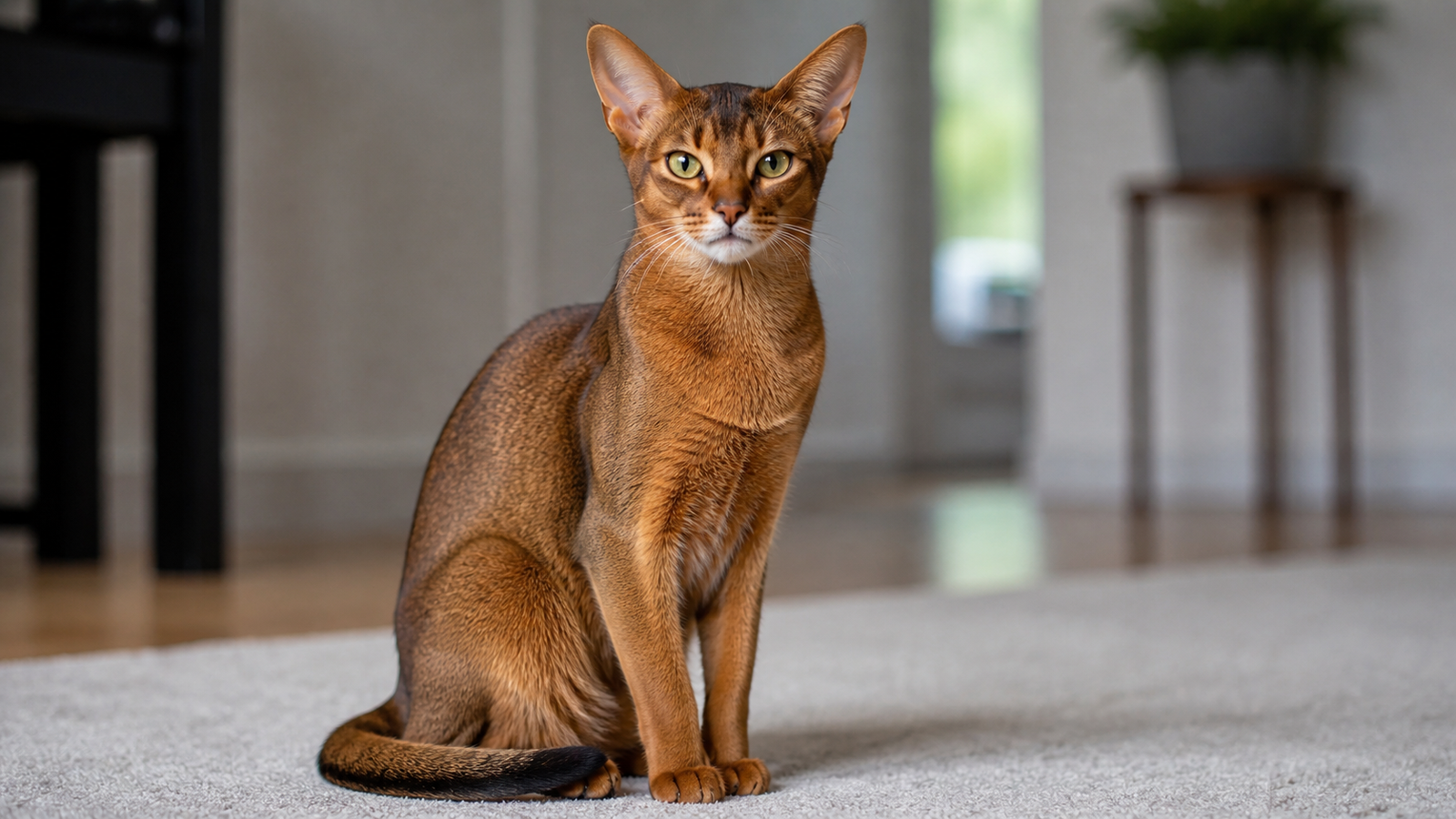
The Abyssinian has a lean, athletic build that matches its personality perfectly. They’re medium-sized with long legs, a wedge-shaped head, large almond-shaped eyes, and prominent ears that give them a permanently alert, interested expression. Their overall look is often described as wild or exotic, closer to a small jungle cat than your average domestic breed.
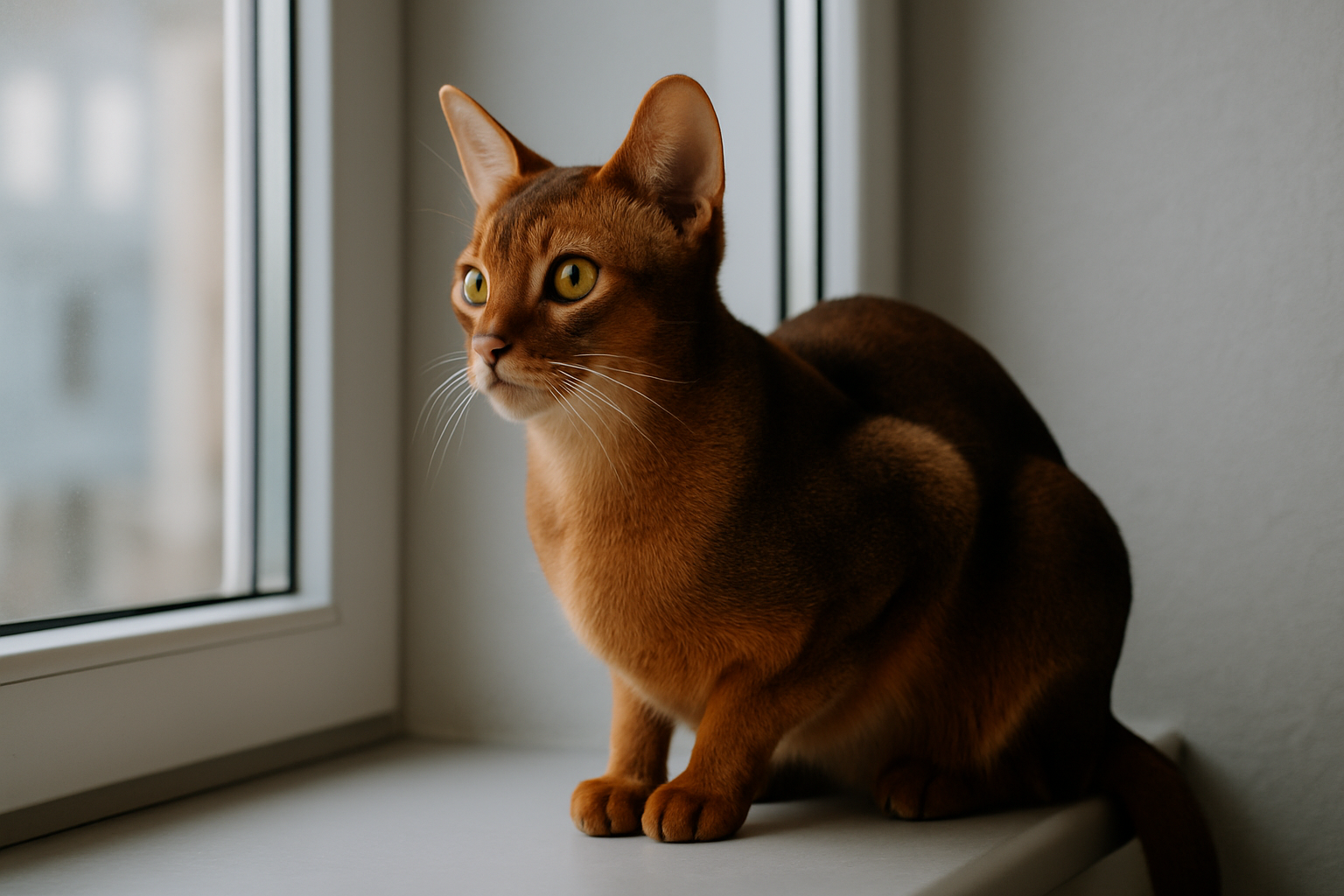
The coat is one of the breed’s most distinctive features. Each individual hair has multiple bands of color in a pattern called ticking, which gives the coat a warm, glowing, almost iridescent look. Common colors include ruddy, red (also called sorrel), blue, and fawn. Despite looking exotic, the coat is short and requires very little maintenance.
Abyssinian Cat Grooming & Shedding
The Abyssinian is one of the easier breeds to keep groomed. Their short, fine coat sheds lightly and rarely mats, and a quick brush once a week is usually all it takes to keep things tidy and remove loose hair. They’re not a breed that requires frequent bathing or professional grooming.
Beyond coat care, keep up with the basics: nail trims every couple of weeks, regular ear checks, and dental care. Abyssinians are notably prone to periodontal disease, so dental hygiene is worth taking seriously with this breed. Regular tooth brushing or dental treats from an early age makes a real difference long term.
Activity & Play
Abyssinians are one of the most active domestic cat breeds. They climb, jump, chase, and explore constantly, and they stay that way well into adulthood. A tall cat tree is practically a necessity, not a luxury, because they need somewhere to go with that energy. Window perches, puzzle feeders, and interactive wand toys all help, but the most important thing is daily engagement with their people.
They’re also smart enough to get bored with the same toys quickly. Rotating what you offer and introducing new challenges keeps them mentally engaged and out of mischief. If you work from home or have an active household, an Abyssinian will thrive. If you’re away most of the day, a second cat for company is worth considering.

Abyssinian Cat Diet & Nutrition
Abyssinian cats do well on a high-protein, meat-based diet. Because they’re so active, they tend to burn calories efficiently, but that doesn’t mean portion control isn’t important. Look for cat food with animal protein listed as the first ingredient and avoid fillers like corn or soy. A mix of wet and dry food works well for most Abyssinians: wet food helps with hydration, while dry food can offer a bit of dental benefit.
Fresh water should always be available. Given their energy levels and lean build, maintaining a healthy weight is usually straightforward with this breed as long as they’re getting enough exercise and not being overfed.
Abyssinian Cat Health & Lifespan
Abyssinian cats typically live 12 to 15 years or more with good care. They’re generally a healthy breed, but there are a few hereditary conditions worth being aware of. Progressive retinal atrophy (PRA) is a genetic eye condition that can lead to vision loss, and responsible breeders screen for it. Renal amyloidosis, a kidney condition, also appears in the breed and is worth asking about when choosing a breeder.
Periodontal disease is probably the most common day-to-day health concern with Abyssinians, so dental care should be part of their routine from the start. Regular vet checkups, a quality diet, and keeping them at a healthy weight are the best things you can do to support a long, healthy life.
Family Compatibility
Abyssinians do well in active households where there’s plenty going on. They’re patient with children who like to play and interact, and they adapt well to homes with other cats or cat-friendly dogs, especially if the other animals share their energy level. They’re not the type to hide from a busy household — they’ll be right in the middle of it.
That said, they’re not ideal for very quiet homes or owners who are away for long stretches. They need engagement and company to stay happy. If your lifestyle involves long work days and quiet evenings, a more laid-back breed might be a better fit. But if you want a cat that’s genuinely part of daily life, the Abyssinian delivers.
Recommended Supplies for an Abyssinian Cat
Abyssinians need an environment that matches their energy. Focus on vertical space, mental stimulation, and variety. The basics matter, but enrichment is what keeps this breed genuinely content.
- Tall, sturdy cat tree with multiple platforms
- Window perches for watching and climbing
- Interactive puzzle toys and feather wands
- Wide, shallow food and water bowls to avoid whisker fatigue
- Scratching posts at different heights

Abyssinian Cat Price and Cost
From a reputable breeder, Abyssinian kittens typically cost between $800 and $1,500. Show-quality cats or rare color lines can run higher. Prices vary by region and breeder, so it’s worth researching breeders carefully and asking about health screening for PRA and kidney conditions before committing.
Adoption is less common with this breed but not impossible. Breed-specific rescues occasionally have Abyssinians available, and adoption fees are significantly lower than breeder prices. If you’re open to an adult cat, it’s worth checking before going the breeder route.
Abyssinian Cat FAQs
Are Abyssinian cats good with kids?
Yes, especially with older children who enjoy interactive play. Abyssinians are energetic and social, which makes them a good match for kids who want an engaged, playful companion rather than a lap cat.
Do Abyssinian cats shed a lot?
No. Their short, fine coat sheds lightly and is easy to maintain with a quick weekly brush. They’re one of the lower-shedding shorthaired breeds.
How much do Abyssinian cats cost?
Pet-quality Abyssinian kittens from a reputable breeder typically cost between $800 and $1,500. Show-quality or rare color lines can cost more. Adoption through a rescue is a more affordable option if you’re open to an adult cat.
Are Abyssinian cats hypoallergenic?
No, Abyssinian cats are not hypoallergenic. All cats produce the Fel d 1 protein that triggers allergies. Their light shedding may make them slightly easier for some allergy sufferers, but there are no guarantees.
How long do Abyssinian cats live?
Most Abyssinian cats live 12 to 15 years or more with proper care. Regular vet visits, a quality diet, and dental care all contribute to a longer, healthier life.
What do Abyssinian cats eat?
Abyssinians do best on a high-protein, meat-based diet. Look for cat food with animal protein as the first ingredient. A mix of wet and dry food works well for most cats of this breed.
Is the Abyssinian Cat Right for You?
If you want an active, curious, and genuinely engaging cat that treats your home like its personal adventure course, the Abyssinian is hard to beat. They’re best suited to households with plenty of activity, people who are home regularly, and owners who enjoy interacting with their cat rather than just coexisting with one.
The honest caveat is that they’re not a low-effort breed. They need stimulation, company, and an environment that matches their energy. Get that right and the Abyssinian will be one of the most rewarding cats you’ve ever lived with.
Debbie Reid is the founder and chief editor of CatPedia.net, with over 25 years of hands-on experience in feline care, rescue, and behavior research. Inspired by her rescue cats Snickers and Bigboy, she collaborates with animal welfare resources and consults veterinary literature to turn complex feline health, nutrition, and behavior topics into clear, actionable guides.