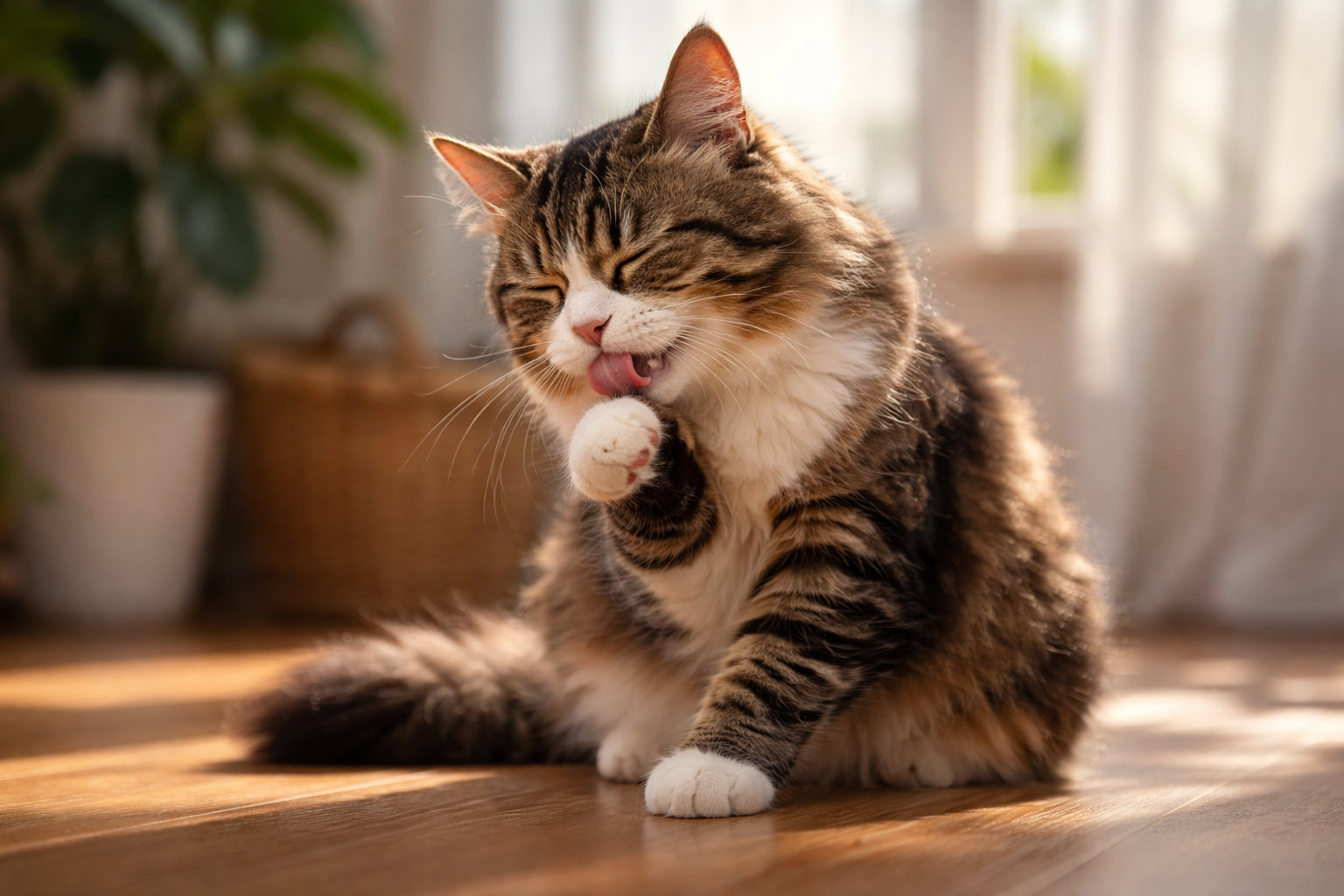
Hairballs are a normal part of life with a cat. The gagging sound, the crouched posture, and the occasional mess are things most cat owners recognize.
But what if hairballs start happening more often, or your cat struggles to bring one up?
We’ll walk through what actually helps with hairballs in cats, what tends to get overlooked, and how to tell when it’s more than just a normal hairball.
What Is the Best Hairball Treatment for Cats?
There isn’t a single solution that works for every cat. The right approach depends on how often hairballs are happening and how severe they are.
That’s because hairballs form when swallowed fur builds up faster than your cat can pass it naturally.
The goal is to keep things moving. Hairball remedies that add lubrication, support digestion, reduce shedding, and support hydration all help prevent buildup in the first place.
Most cats end up needing a combination of approaches, especially if hairballs are happening often or becoming harder to pass.
Hairball Control Gels (The Fastest Way to Get Hairballs Under Control)
Hairball gels are one of the most reliable ways to deal with cat hairballs because they work directly in your cat’s system. Most are designed to coat swallowed hair so it can move through the body instead of being coughed back up.
This makes them especially helpful for cats that gag often or seem uncomfortable trying to bring one up.
Most gels are easy to use and can be given on your finger, mixed into food, or offered as a treat. Many cats will lick it up once they get used to the taste.
With consistent use, many owners notice fewer hairballs within a few days to a week.
For cats that struggle with hairballs, this is often the quickest way to get things under control.

High-Fiber Cat Food for Hairballs (Best for Ongoing Control)
Fiber helps keep things moving in your cat’s system. When there isn’t enough of it, swallowed hair is more likely to clump together and turn into hairballs instead of passing through naturally.
Hairball control cat food is made to help with this by supporting digestion and keeping everything moving the way it should. Over time, this can reduce how often hairballs happen in the first place.
This approach works best for ongoing management, especially for cats that deal with frequent hairballs, shed heavily, or don’t do well with gels.
Brushing Your Cat: The Best Way to Prevent Hairballs
One of the simplest ways to reduce your cat’s hairballs is also one of the most overlooked: brushing your cat regularly.
Hairballs start with loose fur. The more hair your cat swallows while grooming, the more likely it is to build up in the stomach. By removing that loose fur ahead of time, you’re stopping hairballs before they even begin.
Even short-haired cats benefit from brushing, but it’s especially important for long-haired breeds. Just a few minutes a day can make a noticeable difference over time.
This works best as a prevention step, helping reduce how much hair your cat swallows in the first place.
Hydration: A Key Part of Preventing Hairballs
Hydration plays a bigger role than most people realize. When a cat is slightly dehydrated, digestion slows down, making it harder for swallowed hair to move through the body.
Over time, that slowdown makes it more likely for hair to build up and form hairballs instead of passing naturally.

Natural Hairball Remedies for Cats
If you prefer to try natural options first, they can help reduce hairballs in mild cases.
Adding a small amount of plain pumpkin to your cat’s food can increase fiber, and omega-3 supplements can support coat health and reduce shedding.
That said, natural remedies usually work best for prevention or occasional hairballs. If hairballs are happening often, they’re usually not enough on their own.
When Hairballs Are Not Normal
Occasional hairballs are normal. Frequent or difficult ones are not.
If your cat is gagging often but not producing a hairball, it may not be a hairball issue at all. Repeated coughing without a hairball can be a sign of airway irritation or another underlying condition.
Watch for these warning signs:
- Repeated gagging with nothing coming up
- Loss of appetite
- Lethargy
- Constipation or difficulty passing stool
These symptoms can point to a blockage, which is a medical emergency and requires immediate veterinary care.
FAQs About Hairball Treatment for Cats
How often should a cat have hairballs?
Most cats should only have hairballs occasionally. Frequent hairballs (more than once every couple of weeks) may signal an underlying issue.
What is the fastest way to help a cat pass a hairball?
Hairball gels are usually the fastest option because they help hair move through your cat’s system instead of being coughed back up.
Can hairballs be dangerous for cats?
Yes, in some cases cat hairballs can lead to blockages, which are serious and require immediate veterinary care.
Do all cats get hairballs?
Most cats experience hairballs at some point, but some are more prone than others, especially long-haired breeds.
The Best Way to Manage Hairballs
Most cats don’t need just one solution — they need the right combination.
If hairballs are happening often or your cat seems uncomfortable, starting with a fast-acting option like a gel can help get things under control quickly.
From there, long-term improvements like brushing, diet, and hydration can make a big difference in preventing them from coming back.
With the right approach, most cats can have far fewer hairballs — and you can avoid stepping on them in the middle of the night.
| Preview | Product | Price | |
|---|---|---|---|

|
Tomlyn Laxatone Tuna-Flavored Hairball Remedy Gel for Cats and Kittens, 4.25oz | $15.47 | View on Amazon |
Debbie Reid is the founder and chief editor of CatPedia.net, with over 25 years of hands-on experience in feline care, rescue, and behavior research. Inspired by her rescue cats Snickers and Bigboy, she collaborates with animal welfare resources and consults veterinary literature to turn complex feline health, nutrition, and behavior topics into clear, actionable guides.