
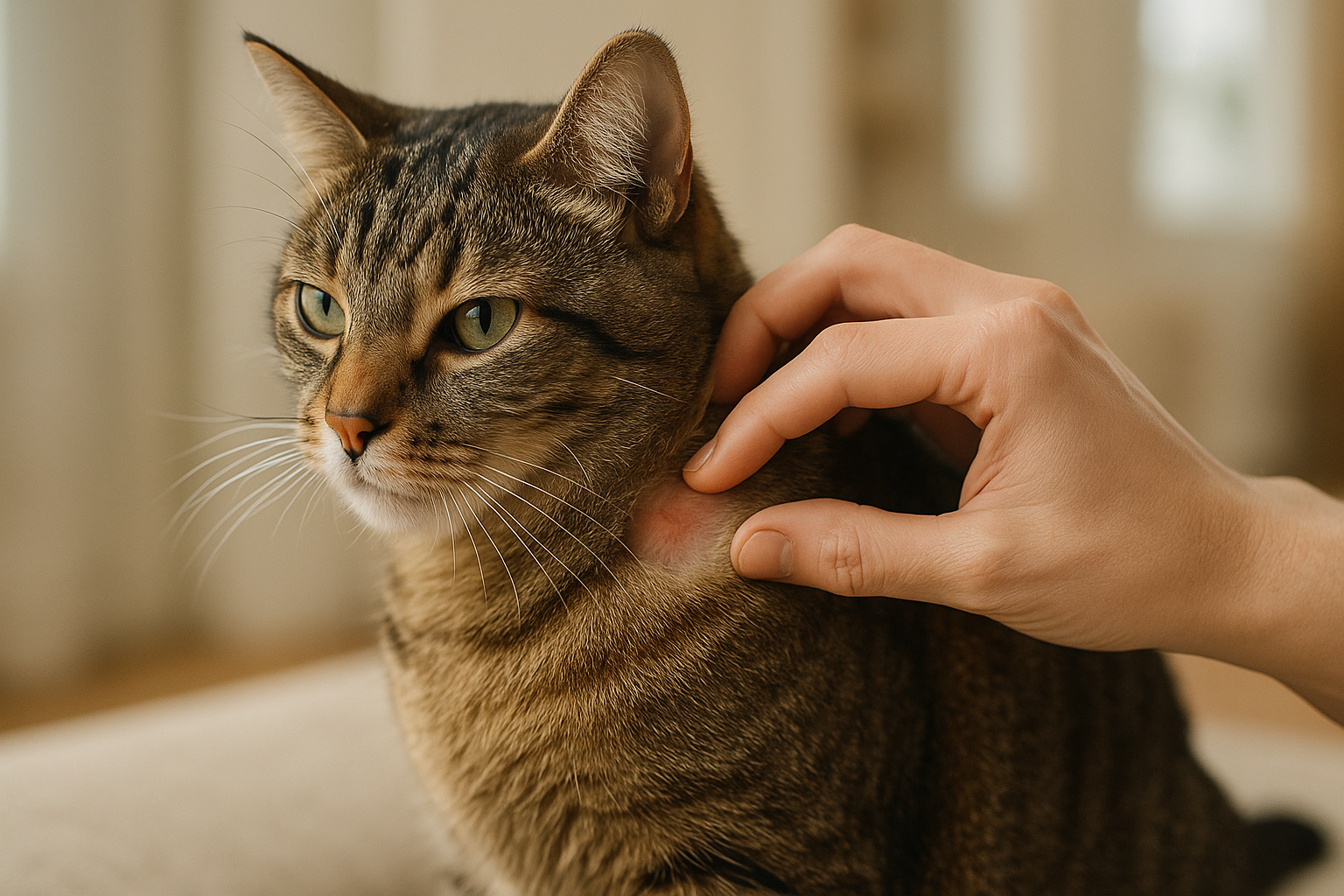
If you’ve noticed red bumps, scabs, or small patches of missing fur on your cat, it can be pretty alarming. These changes often point to folliculitis in cats, a common skin problem that happens when the hair follicles become irritated or infected. It may look dramatic — especially if your cat is scratching or licking the same spot over and over — but most cases clear up once you know what’s causing the irritation.
Folliculitis can start for several different reasons, and the symptoms usually look the same no matter what triggered it. That’s why it’s important to understand why your cat’s skin is reacting in the first place. Once you identify the cause, treatment becomes much easier and your cat can start feeling comfortable again.
What Causes Folliculitis in Cats?
The most common cause of folliculitis is a bacterial skin infection. Even a small scratch, flea bite, or irritated patch of skin can let bacteria in and cause redness around the hair follicles. Fungal infections — especially ringworm — can cause the same type of irritation and often lead to round, thinning patches of fur. Allergies are another major trigger. Cats with food allergies, flea allergies, or environmental sensitivities may have repeated skin flare-ups that eventually turn into folliculitis.
Other causes include mites like Demodex, autoimmune conditions, or reactions to grooming products. Because each cause needs a different treatment plan, a quick vet exam is usually the easiest way to find out what’s behind your cat’s skin irritation and how to treat it effectively.
Common Symptoms of Folliculitis
Folliculitis often begins with small red bumps that look a little like tiny pimples. As the skin becomes more irritated, you may notice scabs, flaky skin, or damp, irritated spots where your cat has been licking or scratching. Some cats start to lose fur in the area, and persistent grooming can make the patch appear larger over time.
These changes often appear on the chin, face, belly, legs, tail base, or along the torso, but folliculitis can show up anywhere on the body. If allergies are involved, the irritation may return in the same locations again and again, especially if the underlying trigger hasn’t been identified yet.
How Vets Diagnose Folliculitis
Your veterinarian will start by examining your cat’s skin up close and asking about any recent changes you’ve noticed at home. To rule out common causes, they may take a small skin scraping to check for mites or run a fungal test if ringworm is suspected. These quick tests help narrow down the source of the irritation.
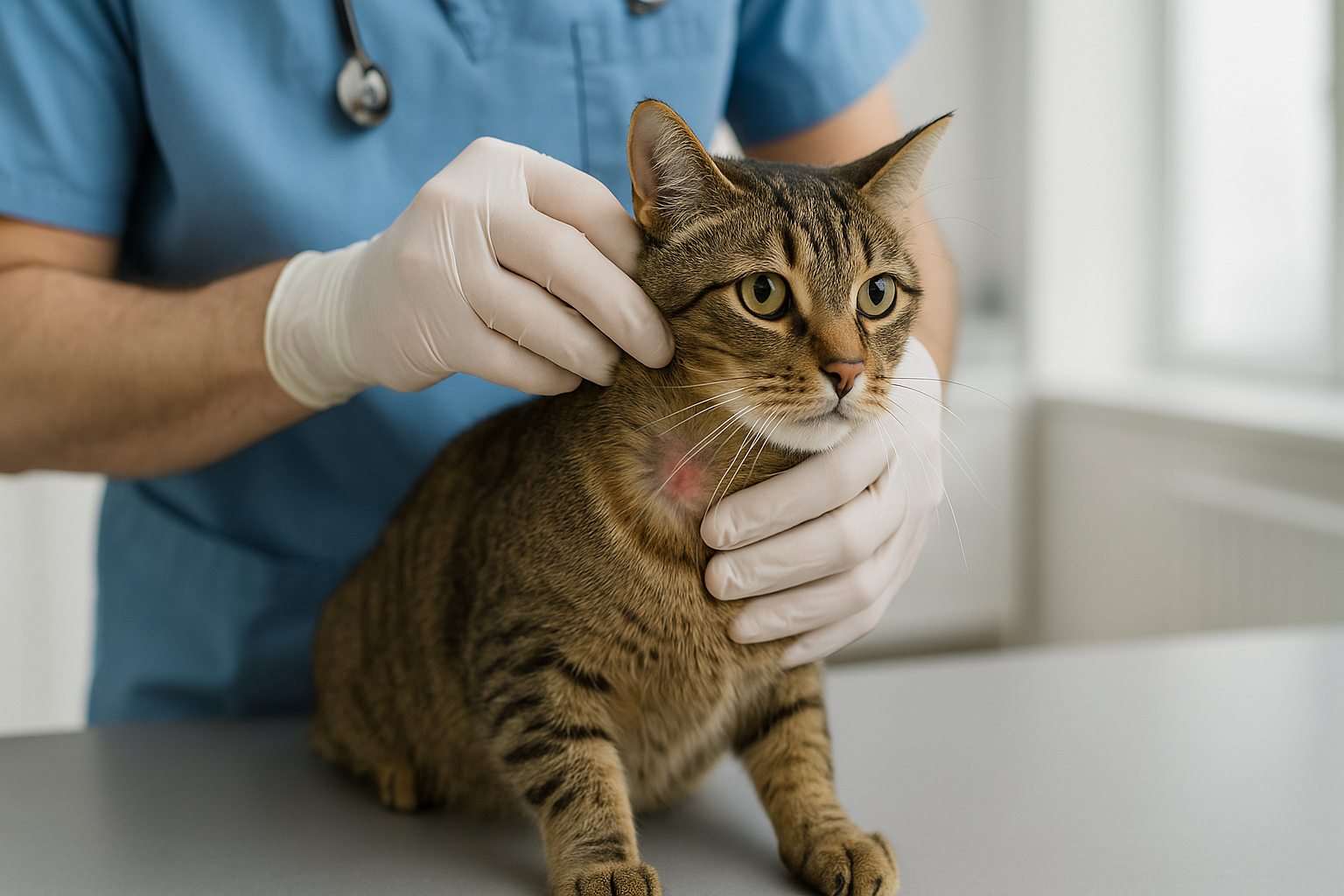
Many vets also use skin cytology, a simple test where they look for bacteria or yeast on the surface of the skin. If your cat has frequent flare-ups or long-term skin problems, your vet may recommend allergy testing to uncover hidden triggers and create a more personalized treatment plan.
Treatment Options That Actually Work
Treatment depends on what’s causing the irritation in the first place. Cats with bacterial skin infections usually improve with oral or topical antibiotics. Fungal infections need antifungal medication, and ringworm often requires several weeks of steady treatment to fully clear. Your vet may also suggest a medicated shampoo with chlorhexidine or ketoconazole to help calm irritated skin and reduce germs on the surface.
If your cat is very itchy or uncomfortable, anti-inflammatory medication can make healing much easier. When allergies are the underlying trigger, changing the diet or managing environmental irritants becomes a big part of long-term care. Most cats begin to show improvement within two to four weeks once the right treatment plan is in place.
At-Home Care to Support Healing
Once your vet starts treatment, there are several things you can do at home to help your cat heal more comfortably. Keeping the area clean and dry is a simple but important step, and some cats need a soft cone for a short time to prevent licking or over-grooming. Your vet may also suggest switching to a gentle, fragrance-free shampoo once the skin begins to settle down.
If allergies or parasites are part of the problem, staying consistent with flea control and choosing a simple, high-quality diet can make a noticeable difference. Cats with sensitive or itchy skin often improve when you keep their routine as calm and uncomplicated as possible, especially while the skin is healing.
Preventing Future Flare-Ups
Some cats deal with folliculitis only once, while others have flare-ups every few months, especially if allergies or parasites are involved. Staying consistent with monthly flea and mite control and using gentle grooming habits can help keep the skin calm and reduce irritation. Avoiding harsh cleaning products or strong fragrances around your cat can also make a noticeable difference.

Feeding a simple, high-quality diet is another way to support healthy skin, especially for cats with sensitive or itchy areas. If your cat continues to have skin problems despite these steps, your veterinarian may suggest allergy testing to uncover hidden triggers and create a more personalized prevention plan.
When to See a Vet
Any skin problem that spreads, worsens, or doesn’t improve within a week should be checked by your veterinarian. Signs such as open sores, ring-shaped patches, or sudden hair loss can point to an infection that needs medical care sooner. You should also schedule a visit if your cat seems painful, itchy all the time, or more tired than usual, since these symptoms can signal deeper skin irritation or infection.
Most cats recover quickly with the right treatment and a clear diagnosis. Keeping an eye on your cat’s skin and addressing small changes early is the best way to prevent flare-ups from turning into bigger problems. Early vet care often leads to faster healing and a much more comfortable cat.
Debbie Reid is the founder and chief editor of CatPedia.net, with over 25 years of hands-on experience in feline care, rescue, and behavior research. Inspired by her rescue cats Snickers and Bigboy, she collaborates with animal welfare resources and consults veterinary literature to turn complex feline health, nutrition, and behavior topics into clear, actionable guides.