Most cats are consistent about using the litter box, so if your cat starts pooping outside it, it usually means something is bothering them.
Health problems, litter box setup issues, or stress in the home can all lead to changes in bathroom habits. Understanding the most common causes can help you figure out why it’s happening and get your cat back to using the litter box.
Common Reasons Cats Poop Outside the Litter Box
Most litter box poop problems come down to one of three things: trouble passing stool, a litter box setup issue, or stress in the home.
Some cats try to poop in the box but stop partway through because passing stool hurts or feels uncomfortable. After a few experiences like that, they may start avoiding the box entirely and choose a new spot. Others avoid the box because they dislike the litter, location, or cleanliness. And some cats start pooping outside the box after a change in routine, a new pet, or conflict with another cat.
Because pooping outside the box can sometimes be linked to health problems, it helps to consider medical causes first before focusing on litter box setup or stress.
Medical Causes to Rule Out First
If your cat is pooping outside the litter box, a health problem can sometimes be the cause. Sudden changes, signs of discomfort, or differences in appetite, energy, or stool quality are all signals that something physical may be contributing to the behavior.
Constipation and Hard, Painful Stools
Constipation is one of the most common reasons cats poop outside the litter box. When stool is hard and dry, it can be painful to pass. Some cats strain, cry, or keep hopping in and out of the box. Some begin avoiding the litter box altogether after repeated discomfort, especially if they associate the box with pain.
Constipated cats may visit the litter box repeatedly but produce little stool. Over time, this discomfort can create a negative association with the box, leading some cats to avoid it completely.
Signs constipation may be the cause:
- Small, hard, dry stools
- Straining, crying, or spending a long time in the box
- Repeated trips to the box with little stool
- Lower appetite, low energy, or vomiting
If your cat has not pooped in 48 to 72 hours, call your veterinarian.
Megacolon or Severe Constipation
In some cases, constipation becomes severe and ongoing. Over time, the colon can stretch and stop working properly, which allows stool to build up and become very difficult to pass. This condition is known as megacolon.
Cats with chronic constipation may begin avoiding the litter box after repeated discomfort.
If your cat has repeated constipation, very large hard stools, or long gaps between bowel movements, your veterinarian should evaluate them. Severe cases may require medical treatment to prevent the problem from worsening.
Diarrhea, Urgency, or Digestive Upset
Diarrhea can create urgency that makes it difficult for a cat to reach the litter box in time. Some cats may have accidents on the way to the box, while others begin avoiding it after a stressful or messy experience.
If diarrhea is present, focus on hydration and contact your vet if it lasts more than a day, contains blood, or your cat seems weak.
Parasites
Worms and other intestinal parasites can cause diarrhea, mucus in the stool, or abdominal discomfort. Kittens and outdoor cats are at higher risk, but indoor cats can still be exposed through contaminated soil, fleas, or new animals brought into the home.
Some cats with parasites may also show weight loss, bloating, or changes in appetite. A simple stool test from your veterinarian can usually identify and treat most parasite infections quickly.
Arthritis or Pain (Especially in Senior Cats)
Some older cats still want to use the litter box but cannot climb in easily, squat comfortably, or step over a tall edge. They may poop right outside the box because that is as far as they can manage.
If your cat is older, moving stiffly, hesitant to jump, or slowing down, joint pain may be part of the problem. In these cases, switching to a larger box with a lower entry or placing a box closer to where your cat rests can make litter box use easier and more comfortable.
Litter Box Problems That Make Cats Avoid the Box
If your cat seems healthy and the stool looks normal, the next step is to look closely at the litter box setup. Cats can be surprisingly picky about their bathroom, and small changes can lead to big behavior shifts.
The Box Is Not Clean Enough
Many cats will avoid a dirty litter box. Even if it looks “fine” to you, your cat may disagree. Cats generally prefer a clean space, and a box that smells or contains old waste can quickly become unappealing.
Basic clean-up goals:
- Scoop at least once daily (twice is better for many cats)
- Wash the box regularly with mild soap and water (avoid strong scents)
- Replace litter as needed so it stays fresh
The Litter Smell or Texture Changed
Switching litter can trigger avoidance, even if the new litter seems “better.” Some cats dislike strong fragrance, larger granules, or dusty litter that feels uncomfortable on their paws. If a new litter smells too strong or feels unfamiliar, your cat may look for another place to go.
If you changed litter recently, consider going back to the previous type or transitioning more slowly by mixing the new litter with the old over several days. Many cats prefer simple, unscented litter with a familiar texture.
The Box Location Is Stressful
Cats prefer quiet, low-traffic areas with easy access. A box in a busy hallway, near a loud appliance, or in a spot where another cat can “guard” it may be avoided.
If a cat does not feel safe or relaxed while using the litter box, they may look for a calmer location. This is especially common in multi-cat homes where one cat may block access or create tension around shared spaces.
The Box Is Too Small or Hard to Enter
Many commercial litter boxes are smaller than what adult cats prefer. A good rule is that the box should be about 1.5 times your cat’s body length (not counting the tail). If your cat is large, older, or has joint pain, a bigger box with a low entry can make a big difference.
Cats need enough space to turn around, dig, and squat comfortably. If the box feels cramped or difficult to enter, some cats may start choosing easier places nearby instead.
Covered Boxes and Liners Can Backfire
Some cats love privacy. Others feel trapped in a covered box or dislike the smell that can build up inside enclosed spaces. Liners can also bother cats if they shift under their feet or catch on their claws.
If you use a covered box or liner and the problem started recently, try switching to an open box for a few weeks to see if behavior improves.
Not Enough Litter Boxes
In multi-cat homes, the classic guideline is one box per cat, plus one extra. This helps reduce crowding and lowers the chance that one cat will block access for another.
If your cat poops outside the box but still pees inside it, limited box access or social tension may be contributing factors.
Behavior and Stress Causes
Once medical issues and litter box basics are addressed, stress becomes the next major factor. Cats are routine-focused, and they can react strongly to changes that seem minor to humans.
A new pet, visitors, schedule shifts, or tension between household cats can all affect litter box habits. When a cat feels unsettled or anxious, bathroom behavior is often one of the first things to change.
New Pets, New People, or Changes at Home
Moving furniture, remodeling, new roommates, visiting pets, or even a schedule change can affect litter box habits. Some cats respond by avoiding the box or choosing a new spot that feels safer.
Cats rely heavily on routine and familiar surroundings. When their environment shifts, even temporarily, stress can show up in subtle ways, including changes in bathroom behavior.
Conflict With Another Cat
Even cats that “get along” can have tension. One cat may stalk, stare, or block the path to the box. The other cat may then choose a different spot to avoid confrontation.
If you suspect this, add a box in a separate area and observe how each cat moves around the home. Multiple box locations can reduce competition and give more timid cats a safer option.
Negative Association With the Litter Box
If your cat was constipated, had diarrhea, or felt pain while using the box, they may start avoiding it even after they feel better. This is a learned association: the box becomes linked with discomfort.
This is one reason addressing medical causes first is so important. Adjusting the litter box setup alone may not solve the problem if your cat is still associating it with pain.
Why Is My Cat Pooping Outside the Litter Box but Peeing Inside?
This pattern is common. It often suggests the cat can still access and tolerate the box for urination, but something about pooping feels different. Constipation, pain while squatting, box size, or stress related to spending longer in the box can all play a role.
Because defecation takes more time and effort than urination, any discomfort or anxiety may show up first as poop outside the box while urine habits stay normal.
If your cat is also peeing outside the box, this companion guide may help: Why Do Cats Pee Outside the Litter Box?
Why Kittens Poop Outside the Litter Box
Kittens sometimes miss the litter box for simple reasons. The box may be too tall to climb into easily, the location may be hard to reach, or they may still be learning consistent bathroom habits.
Because kittens are also more likely to have soft stool from diet changes or parasites, accidents can happen even when they are trying to get to the box. Using a low-entry box, placing boxes in more than one room during early training, and keeping the litter box very clean can help. If loose stool lasts more than a day or two, or your kitten seems tired, isn’t eating, or you see blood, call your veterinarian.
When Pooping Outside the Litter Box Is a Red Flag
Not every accident means something serious, but certain signs should always get your attention. When a cat avoids the litter box because of discomfort, the behavior is often their way of telling you something does not feel right.
Straining, crying in the box, or going more than two to three days without a bowel movement can signal constipation or pain. vomiting, low appetite, or sudden lethargy alongside litter box issues may also point to a medical cause rather than a simple behavior problem.
If you notice blood in the stool, repeated accidents over several days, or a clear change in your cat’s energy or appetite, it is safest to call your veterinarian. Catching digestive or pain-related issues early often makes them much easier to treat.
How Your Vet Figures Out the Cause
Because many different problems can lead to poop outside the litter box, your veterinarian will usually start with a full history and physical exam. They will ask about stool consistency, diet changes, stress at home, and your litter box setup to narrow down possible causes.
Depending on what they find, your vet may recommend a stool test to check for parasites, bloodwork to evaluate hydration and overall health, or X-rays if constipation or blockage is suspected. These tests help rule out medical causes first so treatment focuses on the real problem rather than just the symptom.
The goal is always to treat the underlying issue. Once pain, constipation, or digestive upset is addressed, many cats naturally return to using the litter box again.
How to Stop a Cat From Pooping Outside the Litter Box
Once urgent medical issues have been ruled out, many litter box problems can be improved with a few practical adjustments at home. Start simple and make changes gradually so your cat does not feel overwhelmed. Changing too many things at once can sometimes increase stress instead of solving the problem.
The goal is to make the litter box feel safe, comfortable, and predictable again. When the box becomes the easiest and most inviting option, many cats return to using it.
Reset the Litter Box Basics
Cleanliness, comfort, and location all play a role in whether a cat wants to use the box. Even small improvements can make a big difference. Scoop daily, keep litter fresh, and make sure the box is large enough for easy turning and digging. Many cats also prefer simple, unscented litter with a familiar texture.
If you currently use a covered box, try switching to an open one to see if your cat feels more comfortable. Placing boxes in quiet, easy-to-reach areas can also help reduce hesitation.
Add Another Litter Box
Adding a second box often helps faster than people expect. It gives your cat options and can break a negative association with one box or location. Even single-cat homes sometimes benefit from having two boxes in different areas.
In multi-cat households, aim for one box per cat plus one extra whenever possible. Extra boxes reduce competition and help more timid cats feel safe using them.
Clean Accident Areas Thoroughly
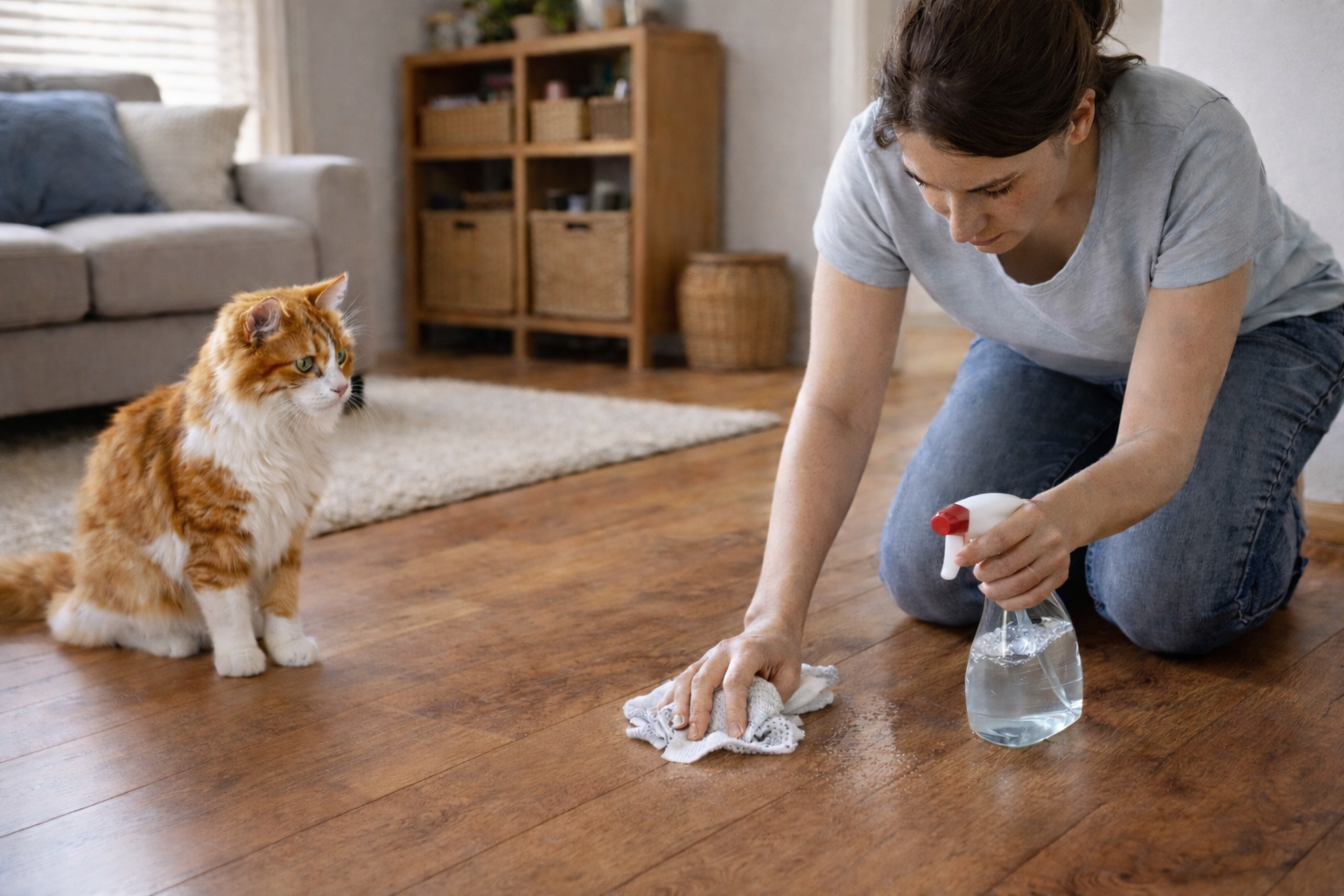
Cats often return to the same area if it still smells like waste. Using an enzymatic cleaner designed for pet messes removes odor at the source so your cat is less likely to revisit that spot. Avoid ammonia-based cleaners, since they can smell similar to urine and unintentionally attract repeat accidents.
Once the scent is fully removed, many cats lose interest in that location and return to the litter box instead.
Reduce Stress in the Home
If the timing lines up with a change at home, focus on restoring routine and predictability. Cats feel more secure when daily patterns stay consistent and their environment feels calm.
Keeping feeding times steady, providing quiet resting areas, and making sure each cat has separate food, water, and resting spaces can help lower tension. Gentle play sessions can also reduce stress and rebuild confidence, especially in multi-cat households.
Make Adjustments for Older Cats
If your cat is older or having trouble moving comfortably, comfort becomes even more important. A low-entry litter box, softer litter texture, and a location on the same floor where your cat spends most of their time can make using the box much easier.
When movement feels easier and less painful, many senior cats return to using the litter box again.
FAQs
Why is my cat suddenly pooping outside the litter box?
A sudden change usually means something has changed in your cat’s health or environment. Constipation, diarrhea, parasites, pain, or stress from household changes can all trigger accidents. If the behavior appears suddenly or your cat seems uncomfortable, it’s best to contact your veterinarian.
Is it normal for cats to poop outside the litter box sometimes?
An occasional accident can happen, especially with sudden diarrhea or a short-term stress event. But repeated pooping outside the box usually means something needs to change, either medically or in the litter box setup.
Why does my cat poop right next to the litter box?
This often suggests your cat is trying to “use the box” but something is not working. The box may be too dirty, too small, hard to enter, or the litter may feel wrong. It can also happen if your cat is constipated and leaves the box before finishing.
Should I punish my cat for pooping outside the litter box?
No. Punishment tends to increase stress and can make litter box problems worse. Focus on finding the cause, improving the setup, and working with your vet if pain or illness is possible.
Final Thoughts
When a cat starts pooping outside the litter box, it is usually a signal that something is not quite right. Sometimes the fix is simple, like cleaning the box more often or adding another one in a quieter location. Other times, issues like constipation, pain, or digestive upset need attention first.
Start by looking for medical warning signs, then take a close look at your litter box setup and any recent changes in the home. When the underlying cause is addressed and the litter box feels comfortable again, most cats return to their normal bathroom habits.
If the problem continues or your cat seems uncomfortable, your veterinarian can help rule out health issues and guide you toward the right solution.