Most cats drink small amounts of water throughout the day, so it’s not always easy to notice when something has changed. But if your cat suddenly stops visiting the water bowl, it’s normal to worry. Hydration supports everything from kidney health to digestion, and a sudden drop in water intake is often a sign that something needs attention.
Below, we break down the most common reasons cats avoid drinking, how to spot early signs of dehydration at home, and simple changes that can help your cat stay hydrated. These explanations are easy to follow, with practical steps that make a real difference for many households.
Why Your Cat Might Not Be Drinking Water
Cats come from desert ancestors, so their bodies are naturally good at saving water. They get more moisture from food than many people realize, especially if they eat mostly wet food. But even with these built-in habits, drinking too little can still lead to dehydration or make existing health issues worse.
Understanding why your cat is drinking less is the first step toward fixing the problem. Below, we explain the most common reasons and what each one might look like in a real home.
Your Cat May Already Be Hydrated
Cats who eat wet food often drink noticeably less from their bowl because wet food naturally contains about 70 percent moisture. This is actually close to what their bodies are designed to process. A cat who eats wet food twice a day may get most of their daily water needs just from their meals.
Another thing to keep in mind is that many cats drink when no one is watching. Cats are private about many behaviors, and drinking is one of them. You might not see your cat at the bowl often, but that doesn’t mean they never visit it. As long as your cat is acting normally, using the litter box, and staying active, low visible drinking does not always signal a problem.
The Water Bowl Location Might Be Stressful
Cats are sensitive to their surroundings. They may avoid a water bowl placed in an area that feels uncomfortable, too busy, or too loud. Common problem spots include:
- Next to washing machines, dryers, or dishwashers
- In a hallway with steady foot traffic
- Near the litter box, which many cats dislike
- Beside a door that opens and closes often
Location also matters socially. In a multi-pet home, some cats feel vulnerable if another animal can approach them while they drink. A more dominant pet may block access, even if you don’t witness the behavior directly. Placing water in a few quiet, separate spots can relieve this pressure and give your cat safe options.
The Water Bowl or Water Quality Isn’t Appealing
Cats are very sensitive to smell and taste. Even a small change in water quality can make them avoid the bowl. This often happens when the bowl isn’t cleaned often enough or when water sits for too long and picks up a stale taste.
Plastic bowls can absorb odors from food, detergents, or bacteria over time. Some cats won’t drink from a bowl that has even a faint smell. Switching to stainless steel or ceramic, washing the bowl daily, and refilling with cool, fresh water can drastically improve drinking habits.
Your Cat Might Be Feeling Unwell
A decline in water intake is sometimes an early sign of illness. Cats often drink less when they feel nauseous, have stomach pain, or are dealing with inflammation anywhere in the digestive system. Even mild gastrointestinal upset can make water seem unappealing.
If low drinking is paired with vomiting, diarrhea, weight loss, drooling, hiding, or changes in appetite, your cat may need medical evaluation. Cats hide symptoms well, so a subtle change in water intake can be a useful early clue that something is bothering them.
Dental Pain Can Make Drinking Harder
Many cats avoid drinking when their mouth hurts. Problems like gum disease, tooth resorption, or small mouth sores can make cold water feel sharp or uncomfortable. Some cats also struggle with deep bowls because lowering their head changes the pressure in sensitive areas of the mouth. Since cats hide pain well, this kind of discomfort often goes unnoticed until their habits start to change.
You may also see other hints of dental trouble during meals. A cat with a sore mouth might chew on only one side, drop pieces of food, or take much longer to finish a meal. Bad breath and light drooling are also common warning signs. When these changes appear along with reduced water intake, it usually means the mouth needs attention.
Because dental disease is extremely common in adult cats, a quick vet check is the safest way to rule out pain. Catching issues early can help your cat feel better and return to normal drinking habits.
Your Cat Prefers Moving Water
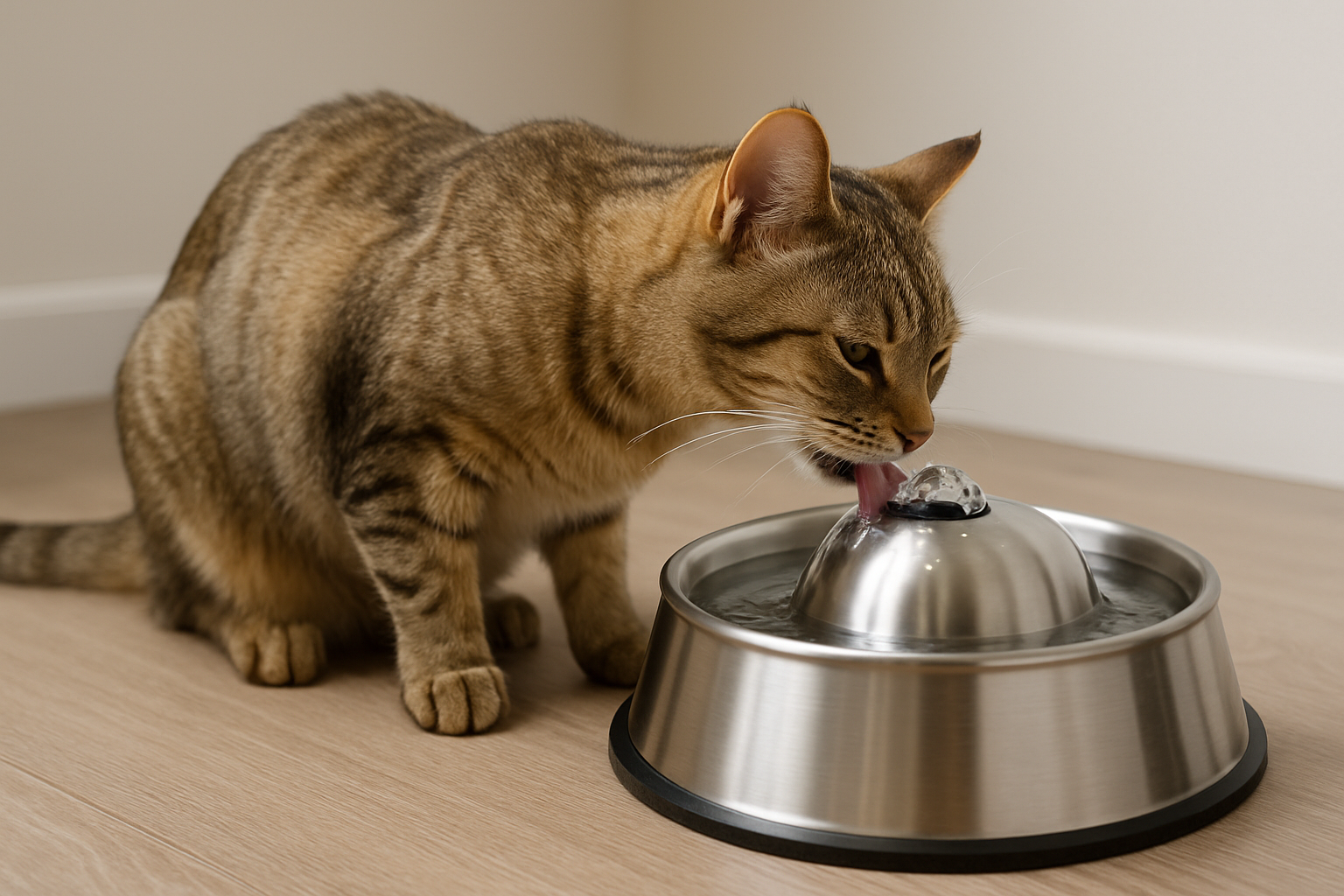
In nature, running water is usually safer than stagnant water, so many cats instinctively prefer movement. Some cats avoid bowls because the water is still, hard to see, or doesn’t smell “fresh” to them. This explains why so many cats try to drink from faucets or paw at the water before drinking.
If your cat often seems more curious about dripping or running water, they may benefit from a fountain. For guidance on choosing one, see our guide to the best cat water fountains.
Is Your Cat Dehydrated?
Dehydration means the body doesn’t have enough fluid to function well. Cats can become dehydrated from eating only dry food, drinking too little, vomiting, diarrhea, or simply feeling unwell. Early dehydration can be subtle, but the signs become clearer as it progresses.
Here are the symptoms most cat parents can check at home:
- Dry or sticky gums: Healthy gums should feel smooth and moist. If they feel tacky, your cat may be dehydrated.
- Skin tenting: Gently lift the skin between the shoulder blades. If it drops slowly instead of snapping back, dehydration is possible.
- Constipation: Dry stool or straining in the litter box often signals the body is pulling extra water from the colon.
- Low energy: Dehydrated cats often act tired or less social.
- Sunken eyes: Eyes may look less bright or slightly recessed.
If you see more than one of these signs, call your veterinarian for guidance.
How to Help Your Cat Drink More Water
Most cats can improve their hydration with simple changes at home. The best approach is to adjust one or two things at a time and watch how your cat responds. Even small changes can make a big difference to a sensitive drinker.
Clean the Water Bowl and Refresh Daily
Fresh, clean water is one of the easiest ways to encourage better drinking. Wash the bowl every day with mild soap, rinse well, and refill with cool water. Many cats drink more when the bowl smells neutral and the water tastes crisp.
Experiment with New Locations
Some cats drink more when their bowl is in a calm, predictable spot. A corner of the living room, a quiet bedroom, or a hallway away from appliances all work well. Avoid placing water near food — many cats prefer their eating and drinking areas to be separate.
Offer Wet Food for Extra Hydration
Wet food is one of the easiest ways to support hydration because it naturally contains much more moisture than kibble. Even a partial switch can help. You can also mix a spoonful of warm water or cat-safe broth into meals. For help choosing healthy options, visit our guide to the best wet cat food.
Try a Water Fountain
Some cats are naturally drawn to running water. If your cat taps at the bowl, watches faucets, or ignores still water, a fountain may help. Moving water stays fresher, is easier to see, and often feels more inviting to picky drinkers. If you’re exploring options, our guide to the best cat water fountains explains which features matter most and what to look for.
Provide More Than One Drinking Spot
Multiple water stations give your cat choices and reduce stress, especially in multi-pet homes. A cat who avoids one area may drink comfortably from a bowl placed in a quieter or more private location. This is also helpful for older cats who prefer not to walk far to drink.
When to Call Your Veterinarian
If your cat suddenly stops drinking, seems weak, or has vomiting, diarrhea, or a loss of appetite, it’s important to contact your veterinarian. Cats can become dehydrated faster than people expect, and even mild dehydration can make another health problem worse. Any sudden change in drinking habits is worth paying attention to, especially if it happens along with other symptoms.
You should also reach out for help if your cat has known dental pain, recently had surgery, or seems uncomfortable when eating or drinking. These issues can make water intake drop much lower than normal. Your veterinarian can examine your cat, look for possible causes, and recommend the safest way to help them feel better — whether that means home care, fluids, or further testing.
Frequently Asked Questions
Why is my cat not drinking water but eating normally?
Some cats stay hydrated from their food, especially if they eat mostly wet food. It can also be an issue with the bowl setup — the water may not taste fresh, or the location might feel too busy. Try refreshing the water, moving the bowl to a quieter spot, or offering wet food to add moisture.
Why does my cat stare at the water but not drink?
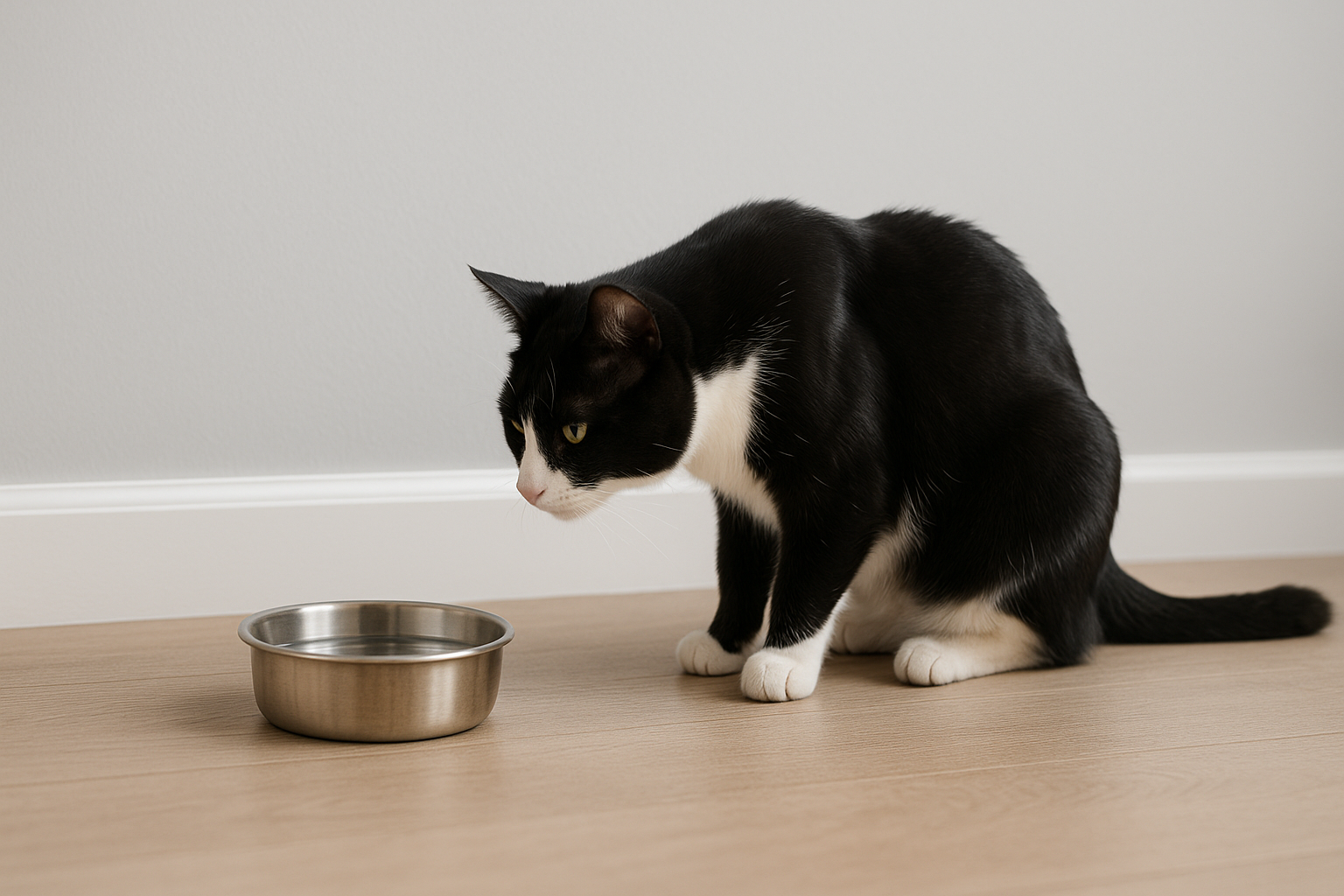
Still water can be hard for cats to see, so staring is often your cat trying to judge the depth. A wide, shallow bowl or a small fountain can make the surface easier to spot and help your cat feel more confident drinking.
Is it normal for cats to drink very little?
Yes. Many healthy cats drink less than people expect, especially if their diet includes wet food. Cats also tend to drink in short, quiet moments when no one is watching, so you may not notice every sip.
How can I get my cat to drink more?
Start with the basics: clean the bowl daily, keep the water cool, and try placing bowls in calm locations away from food or the litter box. Offering wet food or switching to a fountain can also encourage more steady drinking.
When should I worry about my cat not drinking?
Contact your veterinarian if the change happens suddenly or if your cat also shows low energy, vomiting, diarrhea, or stops eating. These signs can point to dehydration or an underlying health issue that needs attention.
Keeping Your Cat Hydrated
Cats don’t always make their drinking habits easy to understand, but small changes at home can make a big difference. A quiet water setup, clean bowls, and moisture-rich food often help even the pickiest drinkers stay hydrated.
If your cat’s drinking habits change suddenly or you notice signs of dehydration, it’s always safest to check in with your veterinarian. Early care can prevent bigger problems, and most issues are easier to manage when caught right away.