If you’ve ever been greeted at the door by your cat weaving between your legs, head-butting your hand, or pressing their whole body against you, you’ve experienced one of the most common — and misunderstood — feline behaviors.
Cats don’t rub against you by accident. This simple-looking behavior is one of the ways they communicate. Whether they’re saying “hello,” asking for something, or showing trust, rubbing is one of the main ways cats express themselves.
Let’s break down exactly why cats rub against you (and everything else) and what your cat is really trying to tell you.
Why Do Cats Rub Against You?
Cats rub against you for several specific reasons. This common behavior usually depends on what your cat is feeling in that moment.
To greet you
One of the most common reasons cats rub against you is to say hello. You’ll often notice this when you come home or when you move from room to room.
Many cats will weave between your legs, brush against you, or stay close as you walk. This is their natural way of greeting you and usually means they’re happy to see you and want some interaction.
To show affection and trust
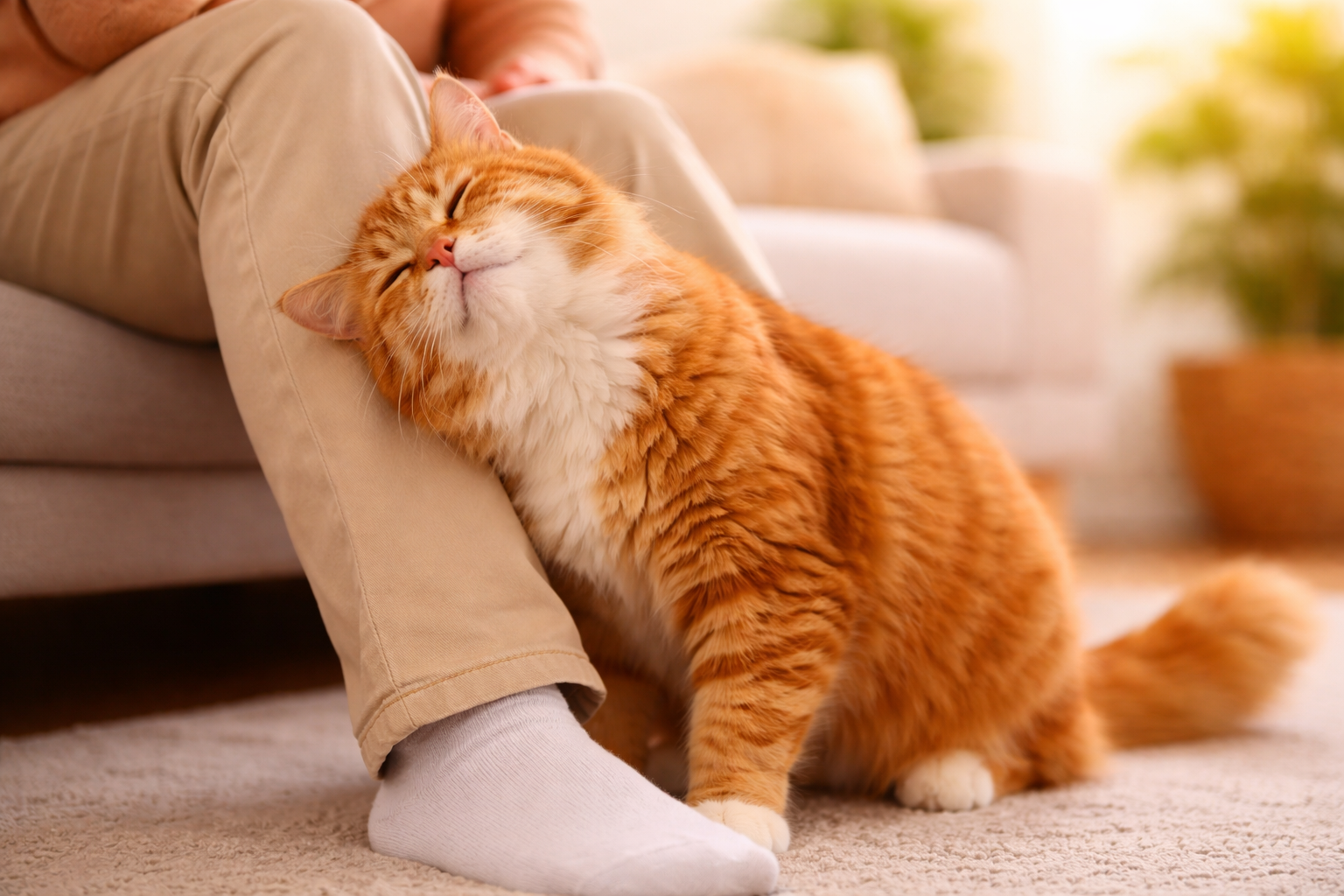
Cats often rub against people they feel safe with. This can include pressing their face into your hand, bumping their head against you, or leaning their body into yours.
If your cat rubs their face on you, it is often a strong sign of trust. This type of contact is deliberate and usually happens when your cat feels relaxed and comfortable around you.
To leave their scent behind
Cats rub against you to leave their scent on you and make you feel familiar to them. Because cats rely heavily on scent to understand their world, this behavior helps them recognize you as someone they trust and feel safe with.
This isn’t about possessiveness or aggression. Instead, it’s a comforting way for your cat to mix their scent with yours, making you smell like part of their family and environment. This “scent mixing” helps them feel more secure and reinforces their daily routine.
To get your attention
Sometimes, rubbing is your cat’s way of asking for something. This could be food, playtime, or just some attention.
Many cats quickly learn that rubbing gets a response from their humans, so they use it as a reliable way to communicate their needs — especially near mealtime or when they want interaction.
Why Do Cats Rub Against Each Other and Other Pets?
Cats don’t just rub against people — they also rub against each other and other pets. This behavior serves important social purposes and helps maintain harmony in multi-pet homes.
To create a shared group scent
When cats rub against each other, they are usually mixing their scents together. This creates a common group smell that helps every cat recognize who belongs in their social circle.
You’ll often see this in multi-cat households, where cats rub faces and bodies together. The shared scent makes interactions feel safer and more predictable.
To show bonding and familiarity
Cats rub against other animals mainly to express friendship and strengthen their relationship. They usually only do this with cats or dogs they like and feel safe around.
This friendly behavior, sometimes called social rubbing, helps reinforce the bond between them.
Why Do Cats Rub Against Objects?
To mark familiar spaces
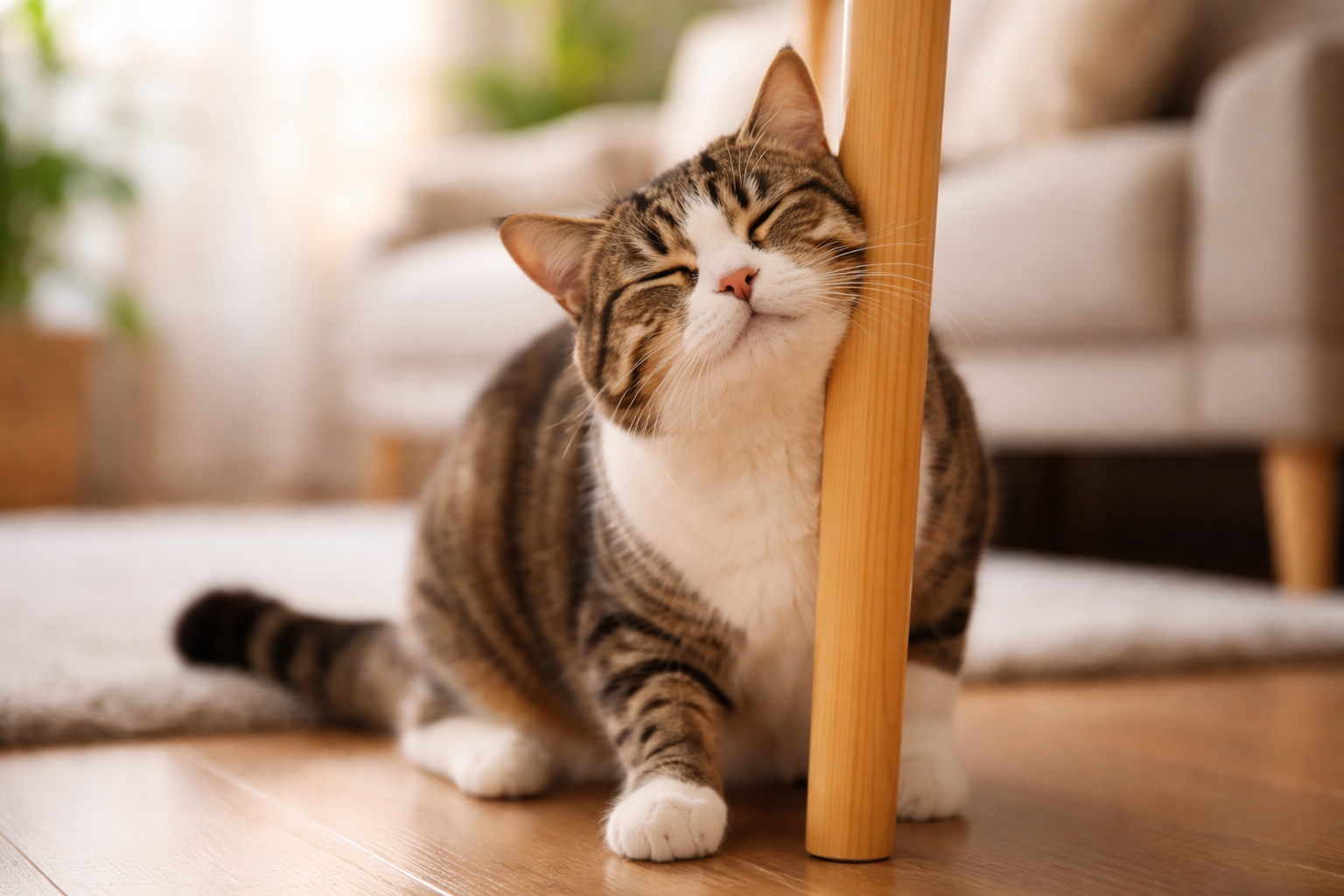
Cats often rub against objects to make their surroundings feel familiar and safe. You may see them rub against furniture, corners, door frames, or other items around the house.
By leaving their scent behind, they turn those spaces into something they recognize as their own. This helps them feel more settled and comfortable in their environment.
Head bunting on objects
Cats frequently target specific spots with their face — especially the cheeks, chin, and forehead. This focused rubbing, known as head bunting, is often repeated on the same areas like the edge of a couch or a doorway.
These favorite spots tend to hold scent well, which is why cats return to them regularly as part of their daily routine.
Rubbing during mating season
Some cats, especially females in heat, may rub more frequently as part of natural mating behavior. They can also become more vocal during this time.
This increase in rubbing is usually temporary and tied to their cycle. For most cats, however, rubbing is far more often about communication, comfort, and routine than mating.
Why Does My Cat Rub Against Me and Then Bite?
Many cat owners are surprised when their cat rubs against them lovingly and then suddenly gives a little bite. This doesn’t mean your cat is being mean. It usually just means the interaction has shifted.
The most common reason is overstimulation. What starts as pleasant affection can quickly become too much if petting continues too long or hits a sensitive spot.
In other cases, the bite is simply your cat’s way of communicating. They might be saying “I’ve had enough,” “pay attention to me,” or “let’s play.”
Context is key. A gentle nip with relaxed body language is very different from a hard bite with flattened ears or a swishing tail. Learning to read your cat’s signals will help you respond appropriately.
Should You Be Concerned if Your Cat Rubs All the Time?
In most cases, no. Rubbing is a normal behavior, and many cats do it throughout the day.
However, a sudden change in behavior is worth paying attention to. If your cat starts rubbing excessively or much more than usual, it could be a sign that something is off.
Watch for other signs like scratching more than usual, hair loss, skin irritation, restlessness, or unusual vocalizing. In those cases, the behavior may be linked to discomfort or a medical issue.
If the rubbing feels different from your cat’s normal routine or becomes intense, it is a good idea to check with your vet.
Final Thoughts
Rubbing is one of the ways cats communicate with the world around them. Whether it’s with you, other pets, or objects, it helps them interact with their environment in a way that feels familiar and comfortable.
In most cases, it’s a positive behavior that shows your cat feels safe and at ease.