
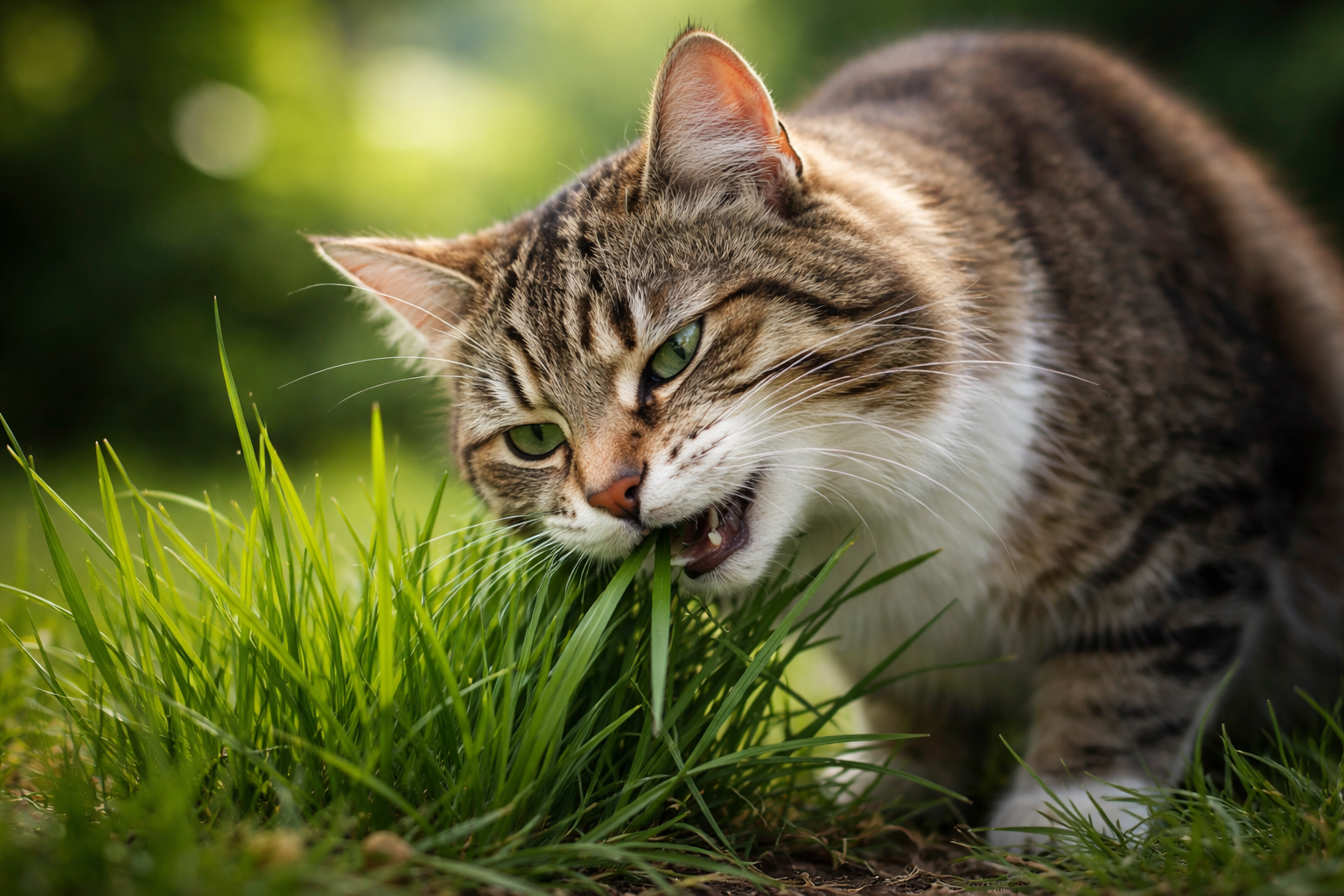
Is your cat constantly nibbling on the lawn or chewing on your indoor cat grass, only to throw up a few minutes later? If so, you’re not alone. This is a very common behavior that leaves many cat owners puzzled and a little worried.
While it can look alarming at first, eating grass and throwing up afterward is actually very common in cats. In most cases, it’s completely normal and nothing to worry about. Cats have been doing this for thousands of years.
In this post, we’ll explain why cats eat grass, why they often throw up afterward, when this behavior is perfectly fine, and when it makes sense to contact your vet.
Why Do Cats Eat Grass?
Cats are obligate carnivores, meaning their bodies are built for meat — not plants. So why do they suddenly turn into little lawnmowers?
One of the most popular explanations is that cats eat grass to help with hairballs. Because they groom themselves constantly, they swallow a lot of loose fur. The grass blades can act like a natural tickler, irritating the stomach enough to bring up hairballs before they become a bigger issue.
Grass may also provide a bit of fiber that helps with digestion and can relieve mild constipation. Some experts think it supplies small amounts of nutrients, such as folic acid.
This behavior is deeply instinctual. It likely comes from their wild ancestors, who ate grass to clear indigestible material like bones, feathers, or parasites from their stomachs.
Many cats also seem to simply enjoy the taste and texture of fresh grass, or they chew on it when they’re bored. Interestingly, studies show that vomiting only happens in roughly 25–30% of cases after a cat eats grass. This suggests that while grass can trigger vomiting (which sometimes helps expel hair or other material), inducing vomit is often just a side effect rather than the cat’s main intention.
Why Do Cats Throw Up After Eating Grass?
If your cat eats grass and throws up shortly afterward, it’s usually because their body isn’t designed to digest it.
They lack the enzymes needed to break down the tough, fibrous blades. As the grass moves through the stomach, it can irritate the lining and trigger the vomit reflex. This is why many cats bring the grass right back up, often mixed with hairballs or other swallowed fur.
Another factor to keep in mind is what the grass has been exposed to. Outdoor grass is often treated with pesticides, fertilizers, or herbicides, all of which can irritate your cat’s stomach and trigger vomiting. If your cat seems to get sick more often after eating grass outside, this could be the reason.
Most of the time, this vomiting isn’t a sign of sickness. It’s simply the body’s way of getting rid of something it can’t process. If your cat seems fine afterward and returns to normal behavior, it’s usually harmless.
When Is Grass Eating Normal vs. When Should You Worry?
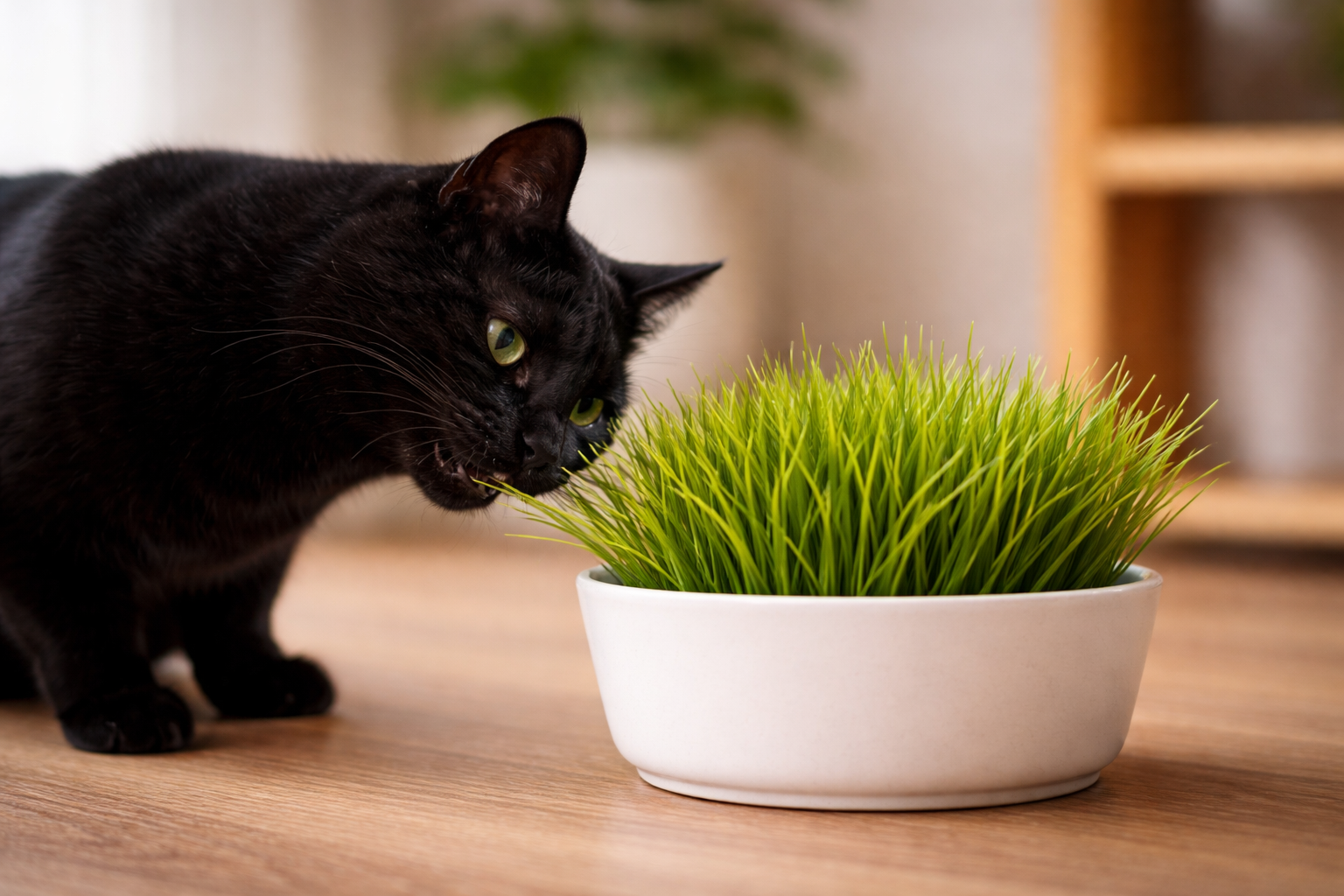
It’s usually normal if it only happens occasionally, perhaps a few times a month, and your cat seems happy and healthy afterward. As long as there’s no blood or mucus in the vomit and your cat continues eating, drinking, and using the litter box normally, this behavior is typically harmless.
However, you should see your vet if your cat:
- Eats grass and vomits frequently (more than once a week)
- Shows other symptoms like diarrhea, loss of appetite, weight loss, or lethargy
- Has blood in the vomit
- Seems to be eating grass obsessively
- Has sudden changes in behavior
Frequent vomiting after eating grass can sometimes point to underlying issues such as inflammatory bowel disease, parasites, or other digestive problems. When in doubt, it’s always better to check with your veterinarian for peace of mind.
How to Keep Your Cat Safe While Letting Them Enjoy Grass
You don’t need to stop your cat from eating grass completely because it’s a natural instinct. However, you can make the habit much safer.
The best solution for most cat parents is to grow safe cat grass indoors. This type of grass is pesticide-free and gives indoor cats a clean, healthy option.
Always avoid letting your cat eat grass that has been treated with chemicals, fertilizers, or herbicides. If your cat goes outside, try to supervise their grazing time when possible and make sure they always have access to fresh water.
Many cat owners find that keeping a pot of cat grass in the house greatly reduces the urge to snack on outdoor plants that may not be safe.

Final Thoughts
Seeing your cat eat grass and throw up can be alarming at first, but it’s usually just part of being a cat. This behavior often helps them stay comfortable by managing hairballs and supporting digestion.
As long as your kitty bounces back quickly and seems their normal self, you can relax. You’re doing a great job by paying close attention to these little habits.
If you’re ever unsure, your vet is always the best person to ask — they know your cat’s full history.
Frequently Asked Questions
Why does my cat eat grass and then throw up?
It’s usually a natural way for them to clear hairballs or irritants from their stomach. The grass triggers vomiting as a helpful reflex, not because they’re sick.
Is it bad if my cat eats grass?
No — it’s normal and often beneficial in moderation. Just make sure the grass is safe and chemical-free.
Why do cats like eating grass even though they can’t digest it?
They may enjoy the texture, or it helps with digestion and hairball control. Some experts also believe it provides small amounts of nutrients like folic acid.
Should I stop my cat from eating grass?
Only if it’s treated with chemicals or if they’re vomiting excessively. Otherwise, it’s best to provide safe alternatives like cat grass.
Can eating grass mean my cat has worms or parasites?
It’s possible but not common in well-cared-for indoor cats. If vomiting becomes frequent or you notice other symptoms, a vet check (including a fecal test) is a good idea.