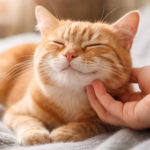
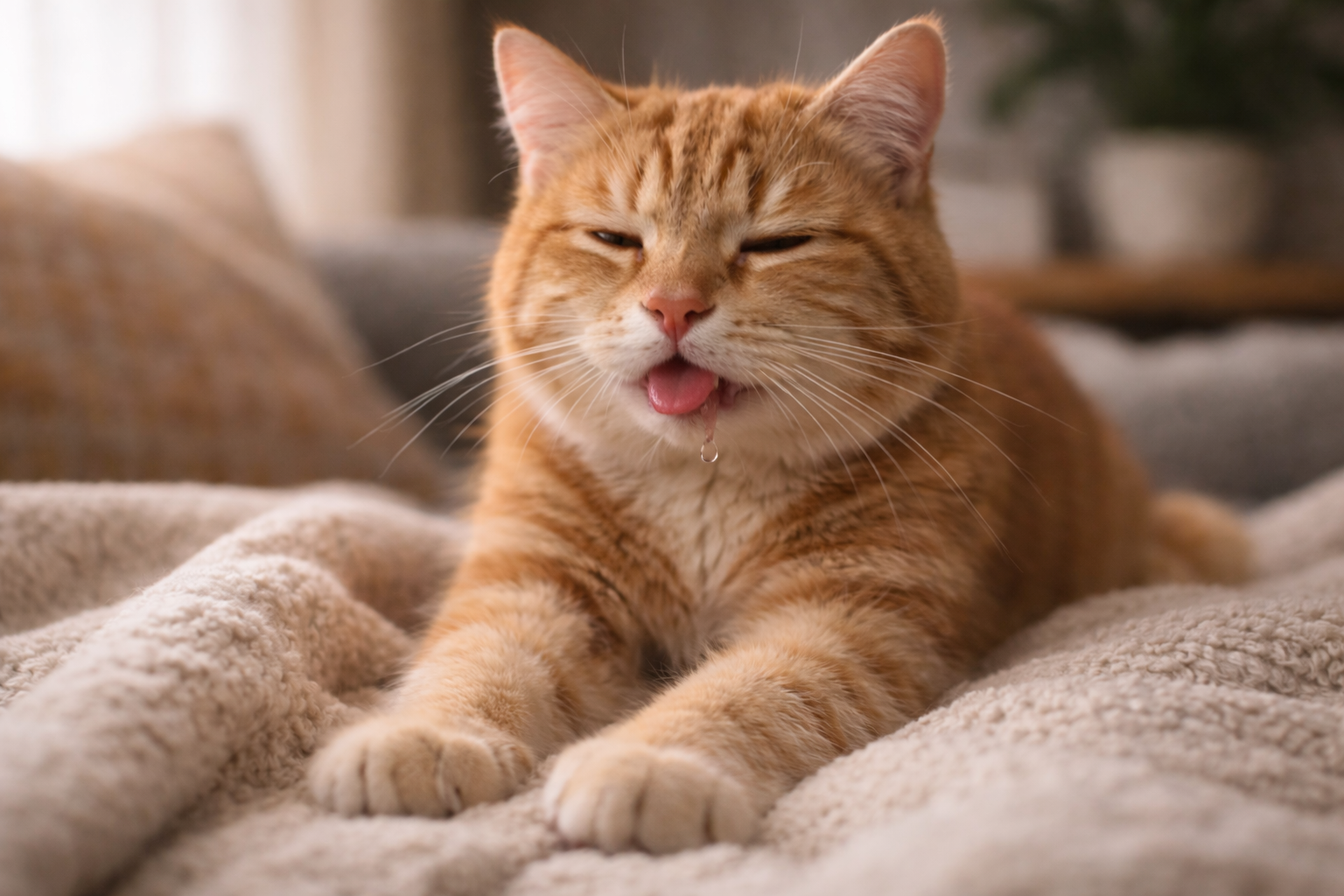
It’s not unusual for some cats to drool during purring, kneading, or quiet cuddle time. Many cat owners first notice it when their cat is relaxed and affectionate, leaving a small wet spot behind after a petting session.
While occasional drooling can be completely normal, frequent or sudden drooling can leave you wondering whether it’s simply a sign of comfort or something that needs attention. In many cases, there is a clear reason behind the behavior.
We’ll walk through the most common reasons cats drool, why it often happens during purring or cuddle time, what different types of drool can signal, and when it may be time to call your vet.
Quick answer: Why cats drool
Cats drool for a mix of emotional and physical reasons. On the emotional side, some cats drool when they feel safe and content. It often happens when they’re purring, kneading, or deeply relaxed during petting or cuddle time. This is what many people call “happy drooling,” and for certain cats, it’s simply part of how they show comfort.
On the physical side, drooling can happen when something is bothering your cat’s mouth or stomach. Dental disease, gum inflammation, mouth ulcers, nausea, motion sickness, or a foreign object stuck in the mouth can all cause extra saliva. Cats may also drool if they’ve tasted something bitter, if they’re very anxious, or if they’ve been exposed to something irritating.
So here’s the simplest way to think about it: if your cat drools only during relaxation moments and acts normal otherwise, it’s often harmless. If drooling is new, frequent, or comes with other symptoms, it deserves a closer look.
Is cat drooling normal?
It can be normal, but it depends on the pattern. Some cats are “drooler cats” and always have been. They start drooling as kittens or young cats during purring and kneading, and they keep doing it throughout adulthood. For those cats, a little drool during cuddle time is usually just a quirky trait.
What’s more concerning is drooling that feels different from your cat’s usual behavior. Cats are excellent at hiding pain, so drooling can sometimes be one of the first obvious clues that something isn’t right. That’s why timing matters. Drooling that only happens when your cat is relaxed is one thing. Drooling that shows up out of nowhere, happens all day, or comes with appetite or behavior changes is another.
If you’re not sure where your cat fits, the most helpful question to ask is: “Is this normal for my cat?” New drooling or heavier drooling is almost always worth paying attention to.
What cat drool can look like (and what it can mean)
Not all drool looks the same, and the texture can sometimes hint at what’s going on. Some cats produce a little clear saliva that just drips when they’re deeply relaxed. It’s thin, watery, and doesn’t come with any other symptoms. That kind of drool is often the “happy” kind, especially if it happens only during purring or petting.
Thicker drool can be a different story. If the saliva looks ropey, sticky, or more intense than usual, it can be linked to mouth irritation, nausea, or dental discomfort. Foamy drool can also happen if your cat is stressed, tasted something bitter, or is feeling nauseous. And if you ever see blood in the drool, a strong foul smell, or drooling that looks constant, it’s time to take it more seriously.
Drool by itself doesn’t always tell you the cause, but it can point you toward what to watch next. The big clues are changes in eating, breath, energy, or any sign your cat’s mouth feels sore.
Why do cats drool when they purr or while being petted?
For a lot of cats, drooling happens during their happiest moments. They’re purring, leaning into your hand, and looking half asleep like they just melted into the furniture. In many cases, this kind of cat drooling is simply a strong relaxation response. Your cat feels safe, comfortable, and completely at ease, so drooling can become part of that deep comfort response.
There can also be a simple physical reason behind it. When cats get deeply relaxed, their jaw and facial muscles may loosen, and they may swallow less often. Saliva that would normally be swallowed can start to pool and dribble out instead. That’s why you might notice a little wet spot on your sleeve, your blanket, or your lap during a long cuddle session.
That said, drooling during purring or petting can sometimes have another explanation: overstimulation. A cat can enjoy being petted and still get overwhelmed, especially during longer sessions or when touched in sensitive areas. You might see the body start to tense, the tail flick, the skin ripple, or the head turn suddenly. If drooling seems to happen right before your cat gets twitchy or nippy, it may be part of an overstimulated response rather than pure relaxation.
It’s also worth paying attention to where you’re petting. If drooling happens most when you touch the cheeks, chin, jawline, or mouth area, it may be a clue that something is tender. Cats with sore gums or teeth can still crave affection and still purr, but mouth discomfort can make saliva build up more easily.
The biggest “pause and check” moment is when the drooling is new for your cat. If your cat suddenly starts drooling when purring and has never done it before, or the amount increases a lot, it’s worth mentioning to your vet to rule out mouth discomfort or other underlying issues.
Why do cats drool when they’re happy or kneading?
Kneading is one of the clearest signs a cat feels safe. Some cats knead softly with slow paws. Others go full “biscuit factory” on your lap, a blanket, or a favorite pillow. When drooling shows up during kneading, it’s usually because your cat is in a deep comfort state, not because something is wrong.
There’s a strong kittenhood connection here. When kittens nurse, they knead their mother’s belly to help stimulate milk flow. That combination of warmth, safety, and satisfaction creates a powerful comfort pattern in the brain. In adulthood, many cats still knead when they feel calm and secure, and for some cats, drooling is simply part of that same comfort loop.
Happy drooling usually happens in short bursts. Your cat drools a little while kneading or purring, and then it stops once they get up and move on. Everything else stays normal: appetite, energy, grooming, and mood. In those cases, drooling is basically your cat’s messy way of saying, “I feel really good right now.”
Some cats also drool more on certain textures or in certain routines. A soft fleece blanket, a warm lap, bedtime cuddles, or quiet morning petting can trigger the whole set of comfort behaviors at once. If you’ve noticed your cat only drools during these cozy moments, it’s usually nothing to worry about. It’s just one of those odd little cat habits that looks strange but often means your cat feels safe with you.
Stress drooling: why it happens and what helps
Drooling isn’t always a happy sign. Stress can also cause cats to drool, sometimes heavily. Car rides and vet visits are the classic examples. A cat might drool in the carrier, swallow repeatedly, or pant a little. It can look scary, but it’s often a stress response mixed with motion sickness during travel.
In these situations, the drooling usually stops once the stressful event ends. If your cat only drools during travel or scary events, that pattern points more toward anxiety than illness. The goal becomes reducing the stress so your cat doesn’t have to go into panic mode every time something changes.
For some cats, small changes help a lot, like leaving the carrier out at home so it doesn’t only appear before “bad things,” using a soft blanket that smells like home, or doing short practice trips that end with something positive. If your cat has severe travel stress, your vet can also suggest options to make those situations easier.

FELIWAY® Classic Cat Calming Spray can help take the edge off travel and stressful outings.
When drooling is a health problem
If drooling is happening often, happening at random times, or showing up along with appetite or behavior changes, it may be linked to a medical issue. Cats don’t usually drool constantly “just because,” so abnormal drooling is one of those symptoms that deserves attention.
Below are the most common causes vets see. The goal isn’t to diagnose your cat at home, but to help you recognize patterns. That way, if you do call the vet, you’ll have clear details about what you’re seeing.
Oral and dental disease
Dental problems are one of the biggest reasons cats drool. Gum inflammation, infected teeth, mouth ulcers, broken teeth, and painful lesions can all make saliva build up. Some cats also stop swallowing normally when their mouth hurts, so drool spills out more easily.
What makes this tricky is that cats can still eat even with a painful mouth. They may chew on one side, drop kibble, swallow food whole, or suddenly prefer soft food. Bad breath, pawing at the face, or seeing your cat “chatter” their jaw can also be clues. If drooling is paired with bad breath, mouth pain signs, or picky eating, a vet exam is a smart move.
Nausea, vomiting, or motion sickness
Drooling can be a sign of nausea in cats. Some cats drool right before vomiting, while others drool during car rides because motion sickness makes their stomach feel unsettled. Hairballs, sudden diet changes, and stomach irritation can all trigger that same “queasy” drooling response.
When a cat feels nauseated, you may also notice lip licking, repeated swallowing, hiding, or a sudden loss of appetite. In some cases, drooling is the first visible sign that something doesn’t feel right internally.
If drooling shows up alongside vomiting, refusal to eat, or repeated nausea signs, it’s a good idea to call your vet. A single mild episode may pass on its own, but ongoing nausea or appetite changes shouldn’t be ignored.
Something stuck in the mouth
Foreign objects in the mouth can sometimes cause sudden drooling. A small piece of toy, plant material, or something caught between the teeth can irritate the mouth and make saliva build up quickly. Some cats will paw at their face, gag, or refuse food if something feels stuck.
In rare cases, cats may get string, ribbon, or thread caught in the mouth. If you ever see a string hanging from your cat’s mouth, do not pull it. String can become wrapped internally, and pulling can cause serious injury. This is one of the situations where contacting a vet right away is safest.
Toxins or irritating substances
Cats may drool after licking or chewing something irritating. Sometimes it’s a harmless bitter taste, but other times it can involve toxic plants, cleaners, essential oils, human medications, or topical flea products not made for cats. Drooling can happen because the mouth is irritated, because the stomach is upset, or because the substance affects the nervous system.
If you suspect toxin exposure, treat it as urgent. Even if your cat “seems okay” at first, some toxins cause delayed symptoms. Calling your vet quickly is the safest choice.
Mouth injury or trauma
Injuries to the mouth can lead to drooling, sometimes with blood-tinged saliva. This can happen with a broken tooth, chewing on something very hard, burns from biting an electrical cord, or other direct mouth injuries. Cats that have been in a fight can also have mouth wounds that aren’t easy to see at first.
More general accidents, like falls or rough impacts, can also injure the jaw or mouth area and lead to drooling. If drooling is paired with sudden pain behavior, hiding, trouble eating, or visible mouth swelling, a vet should check it out.
When to call the vet (and when to go now)
Some drooling can wait for a routine appointment. Other drooling should be treated like an emergency. The difference usually comes down to what other symptoms are happening at the same time.
Use the guide below as a practical “gut check.” If your cat is struggling to breathe, seems extremely weak, or you suspect toxin exposure, don’t wait it out.
Go to an emergency vet now if you notice:
- Difficulty breathing, open-mouth breathing, or collapse
- Suspected toxin exposure (plants, cleaners, essential oils, human meds)
- Swelling of the face or mouth
- Inability to swallow, repeated gagging, or choking
- Severe lethargy, shaking, or seizures
- Drooling with heat stress signs like panting or extreme weakness
Call your vet soon if:
- Drooling is new or increasing
- Your cat has bad breath, mouth pawing, or chewing changes
- Your cat is not eating normally or is hiding more than usual
- You see blood-tinged drool or drooling that keeps happening
Even if your cat is acting “mostly normal,” a new drooling pattern is worth mentioning to your vet. Cats can hide discomfort for a long time, so small changes matter.
What you can do at home right now
If your cat is drooling and you’re trying to decide what to do next, start with the basics: look for patterns and look for red flags. Notice whether the drooling happens only during cuddles or whether it shows up randomly throughout the day. Also notice whether your cat is still eating and drinking like usual.
If your cat will allow it and you can do it safely, take a quick look at the mouth without forcing anything. You’re not trying to do a full exam — just checking for obvious signs like a bad smell, visible swelling, a stuck piece of something, or drool that seems thick and constant. If your cat resists or seems painful, don’t push it. A bite is the last thing you need, and forcing the mouth can make a sore cat panic.
Most importantly, if you see string, don’t pull it. If you suspect toxin exposure, don’t wait to “see if it passes.” Those are both situations where quick action is safest.
Cat drooling FAQs
Still have questions about cat drooling? These quick answers cover the most common things cat owners notice at home.
Why do cats drool when you pet them?
Many cats drool during petting because they feel relaxed and safe. It often happens alongside purring or kneading during calm cuddle time. For some cats, it’s simply a comfort habit.
Why is my cat drooling when purring all of a sudden?
If your cat has never drooled before and suddenly starts, it’s worth paying attention. Sudden drooling can be linked to dental discomfort, nausea, or stress, especially if you notice changes in eating, behavior, or energy.
Is it normal for cats to drool?
It can be normal if it only happens during relaxed moments like cuddling or kneading and your cat acts healthy otherwise. Frequent drooling, heavy drooling, or drooling with other symptoms usually means something else is going on.
When should I worry about cat drooling?
You should call your vet if drooling is new, constant, or paired with signs like bad breath, trouble eating, vomiting, hiding, mouth pawing, or low energy. Sudden changes are usually the biggest clue that something isn’t right.
Is your cat’s drooling the cute kind or the vet kind?
If your cat drools only when purring, kneading, or being petted, and everything else looks normal, it’s usually just a quirky comfort behavior. It’s messy, but it often means your cat feels safe with you.
But if drooling is new, happens frequently, or comes with changes like bad breath, trouble eating, vomiting, hiding, or mouth pawing, it’s worth checking in with your vet. Ongoing drooling can sometimes be linked to dental discomfort or stomach upset, and it’s always better to ask early rather than ignore a new pattern.