
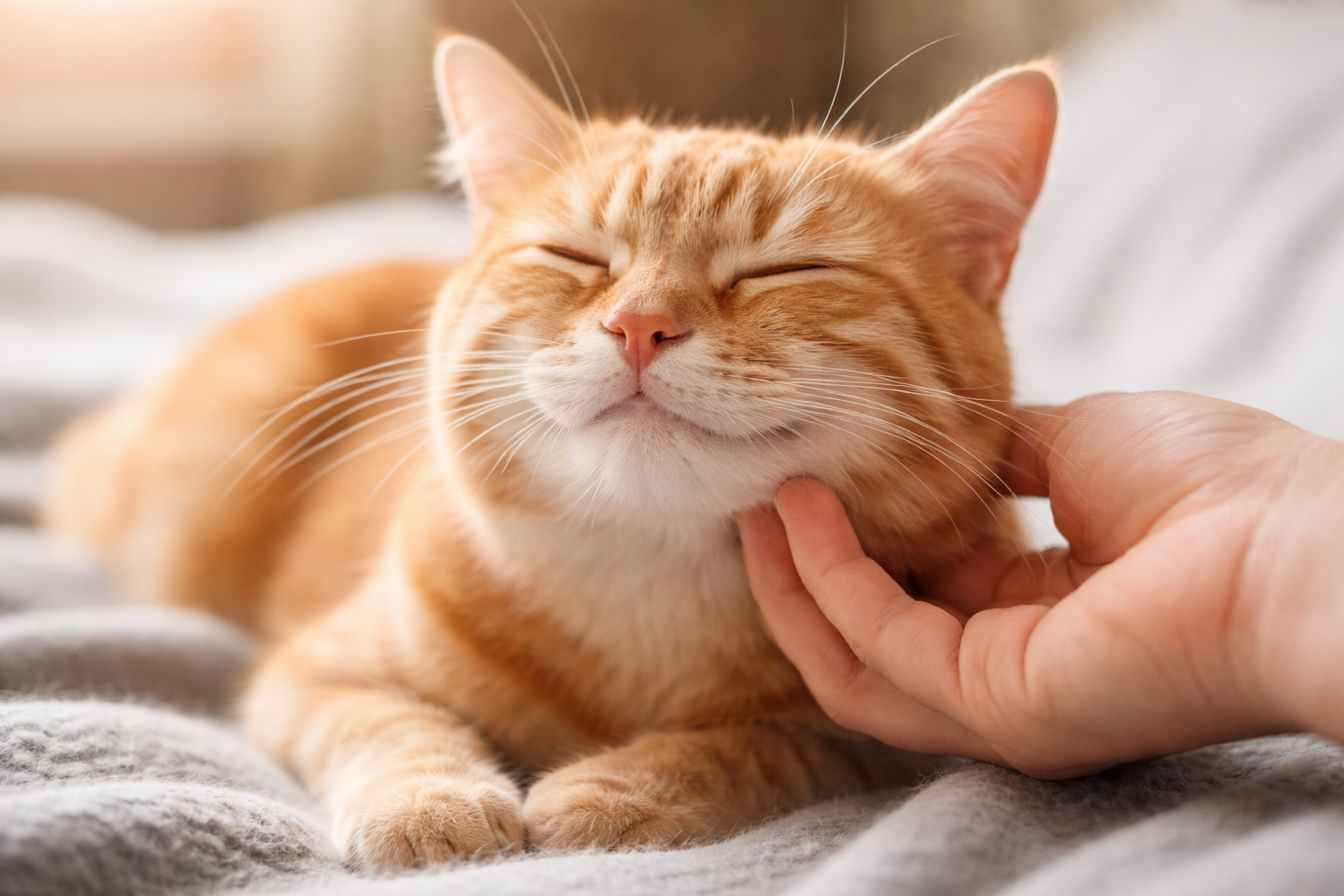
There are few cat sounds more comforting than a steady purr. One minute your cat is minding their business, and the next they are curled up next to you, vibrating like a tiny fuzzy engine. It feels like a clear message: “I’m happy.”
Most of the time, that is true. But purring is not always just about happiness. Cats can purr when they are relaxed, when they want attention, and sometimes even when they are stressed or not feeling well. If you have ever wondered what a cat’s purr really means, let’s break down the most common reasons — and the few times it can mean something else.
What Does It Mean When a Cat Purrs?
In many homes, purring is the “all is well” signal. A cat may purr when they are cozy on a blanket, snoozing in a sunbeam, or tucked against your leg. In those moments, it usually means comfort, safety, and contentment.
But purring is not just about feeling relaxed. Cats also use it to get close to you and keep your attention, kind of like when they rub against you or lick you. That is why it helps to look at the full picture. The purr matters, but so do the ears, eyes, tail, posture, and what is happening around them.
If you have ever wondered why your cat purrs, some of the most common reasons include:
- They feel safe and relaxed
- They are bonding with you
- They want attention or food
- They are calming themselves
- They are responding to something that feels good
Why Do Cats Purr When You Pet Them or Sit Near You?
If your cat starts purring the moment you reach out to pet them, that is usually a great sign that they feel safe and comfortable with you.
It can also be a gentle way of saying, “This feels nice, don’t stop.” Over time, cats learn that purring often leads to more attention, soft voices, and longer cuddle sessions, so the sound can become part of how they keep a good moment going.

If your cat is purring while sitting near you but not being touched, that can still be perfectly normal. Some cats purr simply because they enjoy being close to their favorite person. Others may be hoping for something, like a lap to curl up in, a warm blanket, or a snack from the kitchen.
Can Cats Control Their Purring or Is It Automatic?
This is one of the most interesting questions about purring: can cats control their purring, or does it just happen on its own?
Purring is closely connected to the brain and nervous system, which means emotions can trigger it without a cat making a conscious choice. When a cat feels safe, comforted, or deeply relaxed, purring may start automatically, especially during rest or sleep.
At the same time, many cats seem able to start purring in certain situations, like when they want attention or food. You might notice purring begin when you stand up, open a treat drawer, or sit down on the couch. That is why the answer to whether purring is voluntary or automatic is not completely black and white. It can be a bit of both.
Instead of worrying about the science behind it, it is often more helpful to watch your cat’s habits. If purring shows up in the same situations over and over, your cat may be using it as part of their normal way of communicating with you.
Why Would a Cat Purr When Something Is Wrong?
This is the part that surprises many cat parents. Cats do not only purr when they are happy. They may also purr when they are scared, stressed, or even in pain. That is why you might hear purring at the vet, during fireworks, or after a fall.
Many experts believe purring can be a form of self-soothing, similar to comfort behaviors like kneading (often called making biscuits). The steady rhythm may help a cat feel calmer when something is uncomfortable or frightening. This is why excessive purring can sometimes be confusing. The sound feels positive, but the situation may not be.
If you notice your cat is purring much more than usual, it is important to look for other clues. A relaxed purr usually comes with loose muscles and calm behavior. A stress or pain purr may come with hiding, tense posture, pinned ears, squinted eyes, or behavior that just feels off compared to how your cat normally acts.
When purring should prompt a vet visit
Consider checking in with your vet if your cat is purring more than usual and you also notice any of these:
- Not eating or drinking normally
- Hiding more than usual
- Limping, stiffness, or trouble jumping
- Vomiting or diarrhea that does not improve
- Breathing changes, open-mouth breathing, or panting
- Sudden behavior changes, crankiness, or unusual quietness
Purring alone is not a diagnosis. But purring along with other warning signs is worth taking seriously.
What If My Cat Purrs All the Time?
Some cats are simply big purrers. They purr when you walk into the room, when they hop on the bed, and even when you talk to them. For these cats, purring is just part of their personality.
Social and confident cats tend to be more expressive, and purring is one of the easiest ways for them to show it. Some cats also learn that purring often leads to attention, so it becomes part of how they interact with the people they love.
What matters most is whether anything has changed. If your cat has always been a “purr machine,” it is probably just who they are. If your cat suddenly starts purring much more than usual and seems off in other ways, that is when it makes sense to pay closer attention.
Do Kittens Purr for the Same Reasons as Adult Cats?
In many ways, they do. Kittens purr for comfort and connection, just like adult cats. From a very young age, purring helps them bond with their mother and feel safe while nursing and sleeping.

When kittens move into new homes, purring often shows up during cuddles and quiet moments. It can be a sign that they are settling in and starting to feel secure with their new family.
Kittens may also purr to calm themselves when something feels unfamiliar. New sounds, new smells, and new routines can be overwhelming, and purring may help them relax as they adjust.
When Do Kittens Start Purring?
Many kittens start purring within their first few days to weeks of life. It often happens while they are nursing or curled up close to their mother and littermates.
Not every kitten sounds the same, though. Some purr loudly and often, while others are much quieter. Both can be completely normal and usually come down to individual personality.
The best way to tell if everything is okay is to look at overall health and behavior, not just the sound of the purr. A kitten who is eating well, growing, and staying playful is usually doing just fine.
Should You Ever Worry About Purring?
Most of the time, purring is a wonderful sign that your cat feels safe, comfortable, and connected to you. It is one of those small daily moments that makes sharing your home with a cat feel special.
But purring is not always a guarantee that everything is perfect. It can also be part of how cats cope with stress or discomfort. That is why it is always worth paying attention to changes in behavior, energy, appetite, and posture, instead of focusing only on whether your cat is purring.
When purring matches relaxed body language, enjoy it. When it feels out of place, trust your instincts and take a closer look. You know your cat better than anyone else does.