Ragdoll cats are famous for their soft coats, striking blue eyes, and calm, affectionate personalities. But one of the first things most people notice is just how many different Ragdoll cat colors and patterns exist.
If you have ever seen photos labeled “seal point,” “blue lynx,” or “bicolor” and felt a little confused, you are definitely not alone. The names can sound technical at first, but once you understand how Ragdoll coloring works, it becomes surprisingly easy to tell the difference.
This guide walks you through 24 of the most common Ragdoll colors and patterns, complete with pictures and simple explanations. By the end, you will be able to confidently recognize what you are seeing, whether you already own a Ragdoll or are choosing your future kitten.
Jump to a Color or Pattern
Want to skip ahead? Tap a link below and go straight to the one you’re looking for.
Point Colors
Seal | Blue | Chocolate | Lilac | Red | Cream
Lynx Points
Seal Lynx | Blue Lynx | Chocolate Lynx | Lilac Lynx | Red Lynx | Cream Lynx
Tortie & Cream Points
Seal Tortie | Chocolate Tortie | Blue Cream | Lilac Cream
Tortie Lynx & Cream Lynx
Seal Tortie Lynx | Chocolate Tortie Lynx | Blue Cream Lynx | Lilac Cream Lynx
Patterns
Colorpoint | Mitted | Bicolor | Van
How Ragdoll Colors and Patterns Work
Ragdoll cats are a pointed breed, similar to the Siamese cat. That means the coolest areas of the body develop the darkest color. Even Ragdolls with white patterns like mitted, bicolor, or van still have points underneath, so the ears, face, legs, and tail will always be darker than the body.
This happens because the pigment that creates color in the fur is “temperature sensitive.” It stays quieter on the warm torso, but it activates more in the cooler areas like the mask, ears, legs, and tail. That is why Ragdolls have that classic pointed look.
Ragdoll kittens are often born almost all white. As they grow and their body temperature settles, their points slowly darken over the first year or two of life. Some cats keep developing richer color into adulthood, especially in cooler seasons.
Color refers to the shade of the points (seal, blue, chocolate, lilac, red, cream).
Pattern refers to how white is distributed on the body (colorpoint, mitted, bicolor, van).
Then you can also have overlays like lynx (tabby striping) or tortie (mottled red or cream patches).
Once you learn to separate color from pattern, the naming suddenly makes sense.
Point Colors
Point colors describe the shade of color that appears on a Ragdoll’s ears, face, legs, and tail.
The six main point colors are seal, blue, chocolate, lilac, red, and cream, and they form the foundation for all Ragdoll color combinations, including lynx, tortie, and cream variations.
Seal Point Ragdoll

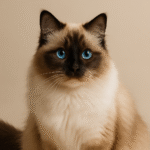
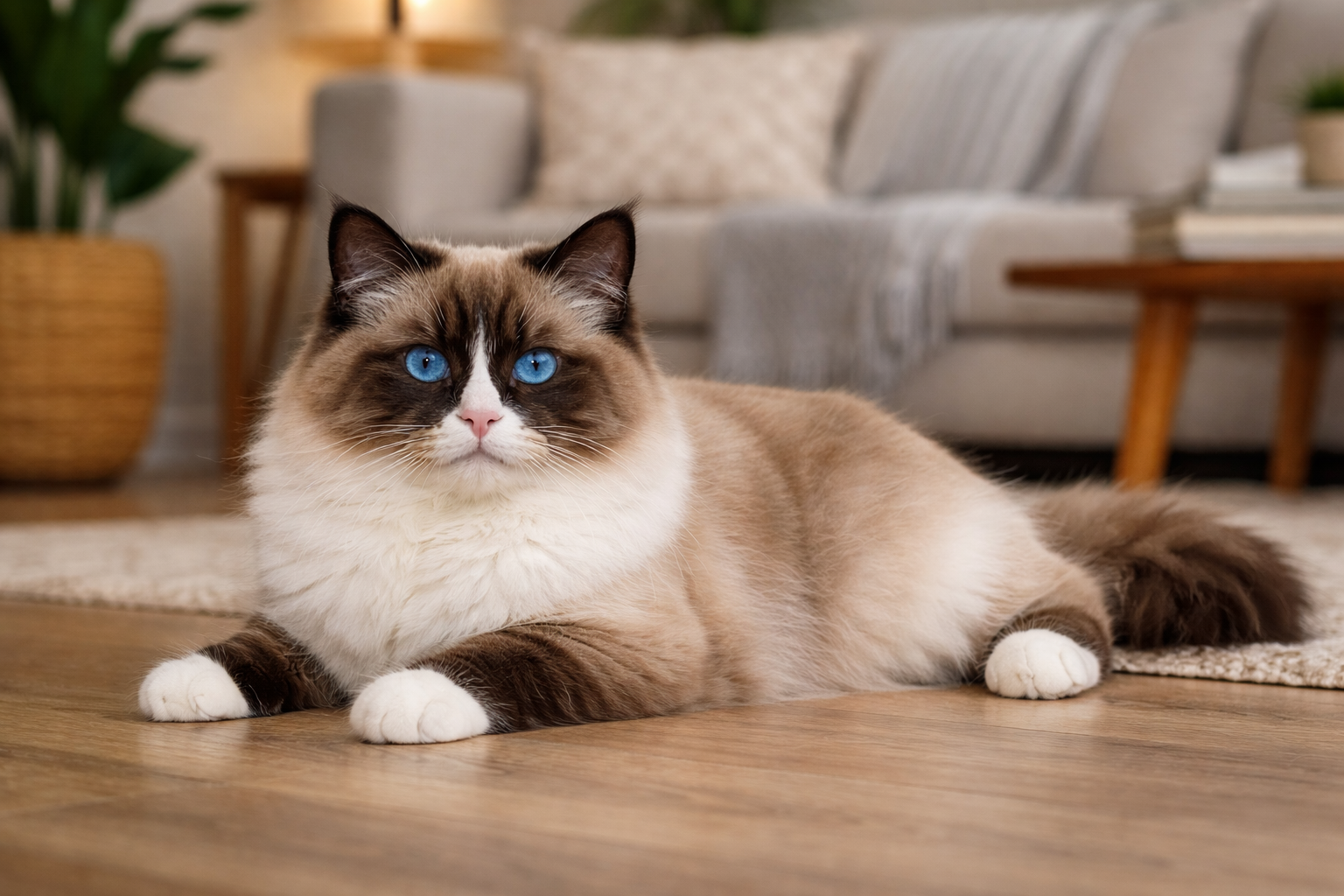
Seal point Ragdoll cats have deep brown points that can look almost black in low light. Their bodies stay creamy or warm beige, creating a beautiful contrast between the dark face mask, ears, legs, and tail and the lighter torso.
This is the most traditional and widely recognized Ragdoll color. When most people picture a classic Ragdoll cat, seal point is usually what comes to mind.
Blue Point Ragdoll

Blue point Ragdoll cats have soft gray-blue points instead of dark brown. The coloring feels cooler and more muted, often giving the coat a gentle, smoky appearance.
Their bodies usually appear icy cream or pale silver, which creates an elegant, soft look compared to the stronger contrast seen in seal point Ragdolls.
Chocolate Point Ragdoll
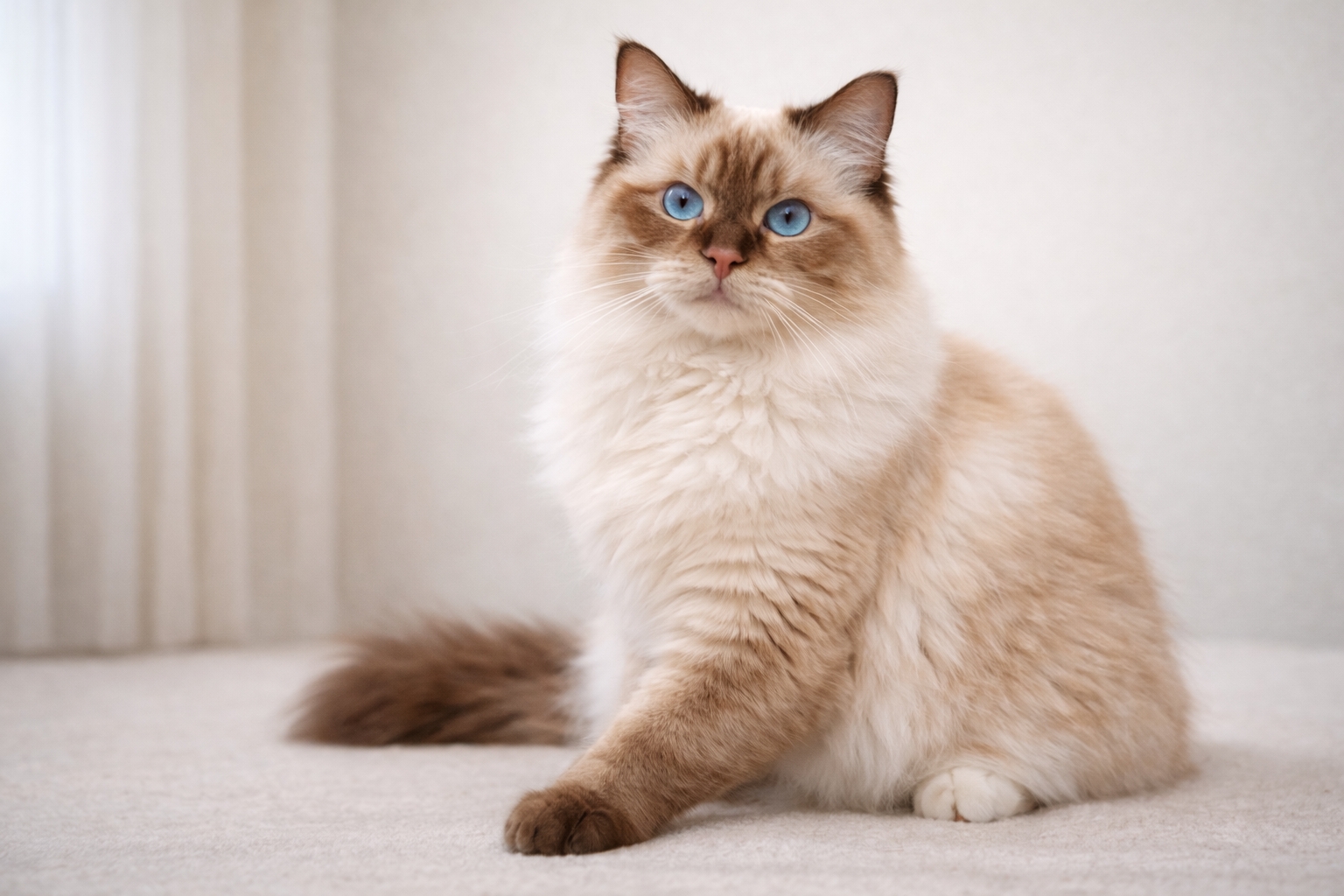
Chocolate point Ragdoll cats have points that are lighter than seal points and closer to the color of milk chocolate rather than dark cocoa. This creates a softer, more gentle contrast between the body and the points.
These cats often have a warm, sweet appearance, especially when seen in bright natural light.
Lilac Point Ragdoll

Lilac point Ragdoll cats are the lightest of the traditional point colors. Their points appear pale gray with a subtle pink tone, giving them a very soft, airy look.
Because the contrast is so gentle, lilac Ragdolls often appear especially delicate and pastel compared to darker point colors.
Red (Flame) Point Ragdoll
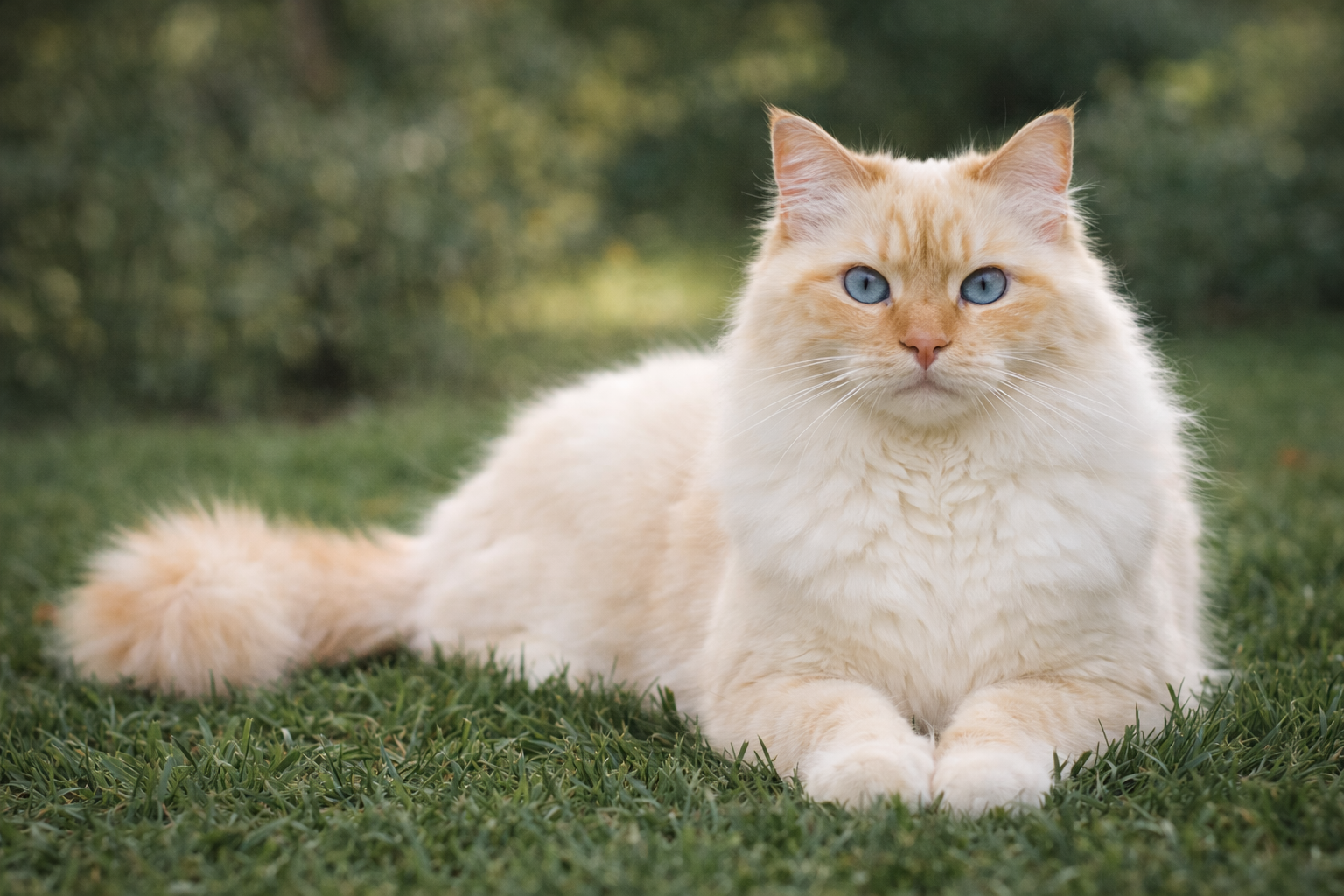
Red point Ragdoll cats, sometimes called flame points, have warm orange or reddish points. The shade can range from soft apricot to deep copper, giving each cat a slightly different look.
These cats really stand out because their warm coloring feels very different from the traditional cool-toned point colors.
Cream Point Ragdoll
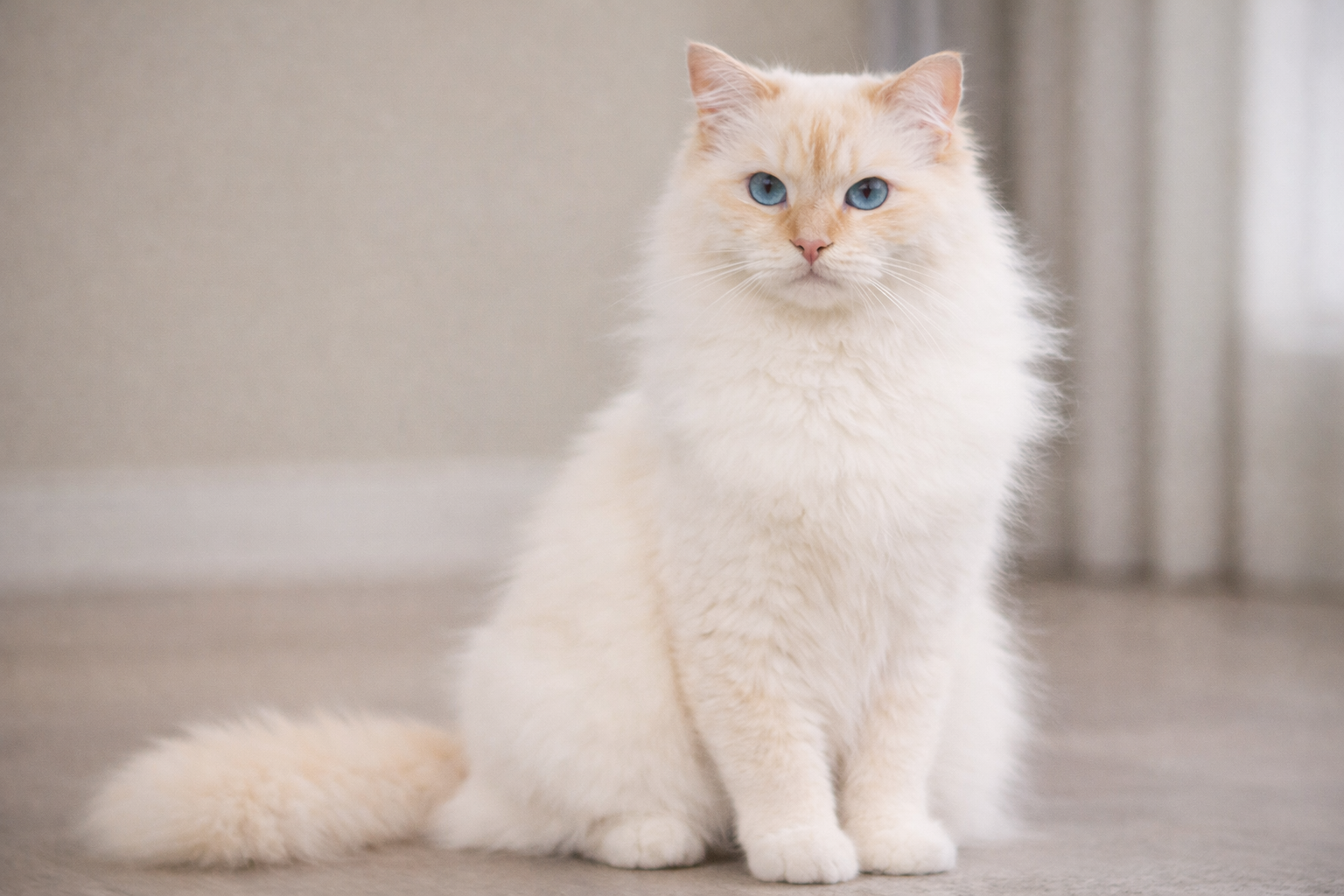
Cream point Ragdoll cats are a softer, lighter version of red points. Their points appear pale peach or buff rather than a strong orange, giving the coat a very gentle tone.
This coloring creates a soft, blended appearance that feels calm and delicate.
Lynx Point Colors
Lynx point Ragdolls have tabby striping layered over their point color, giving them a striped or patterned look. You will often notice forehead lines, soft “eyeliner” markings around the eyes, and gentle striping on the legs and tail.
Seal Lynx Point Ragdoll
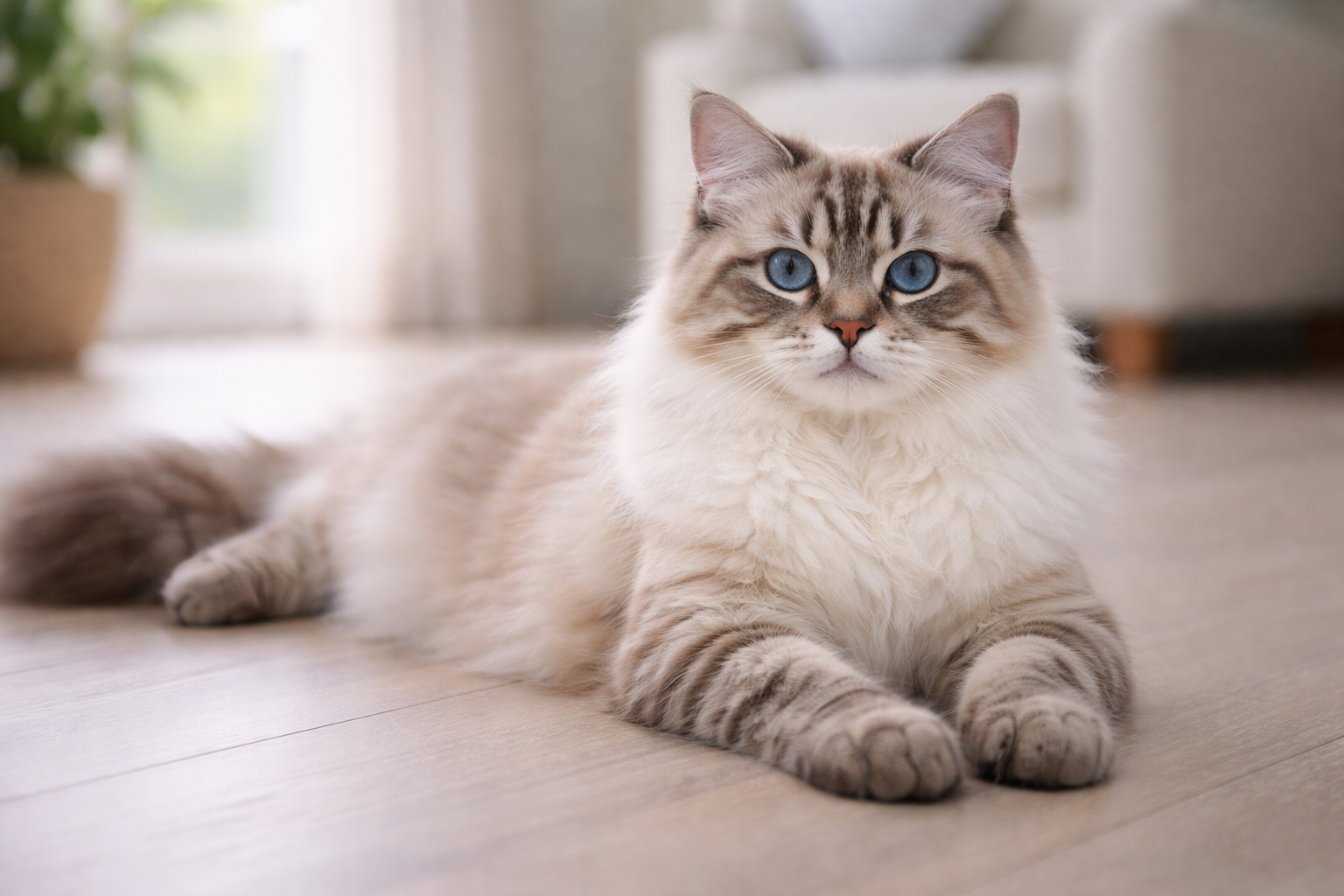
Seal lynx point Ragdolls combine deep brown points with visible tabby striping, creating a bold and expressive look. You will often see clear forehead lines, a striped mask, and darker markings along the legs and tail.
This pattern keeps the rich contrast of a traditional seal point, but adds extra personality through the striped details. Many owners love seal lynx points because the markings give the face more character and make each cat look a little different.
Blue Lynx Point Ragdoll
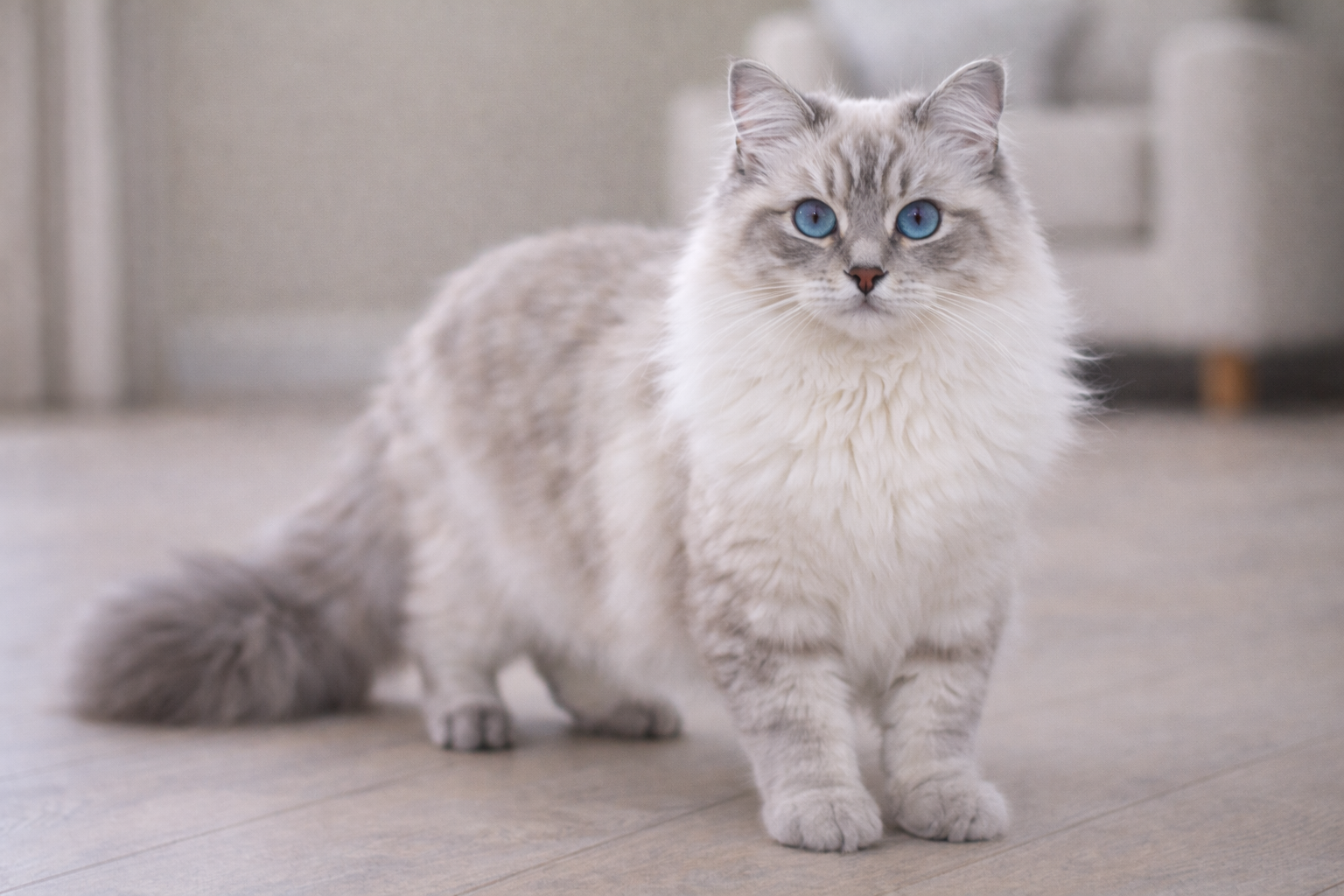
Blue lynx point Ragdolls have soft gray striping layered over cool blue points, creating a gentle, frosted look. The stripes are usually most visible on the face, legs, and tail.
Compared to seal lynx points, the contrast is lighter and more subtle, which gives these cats a calm, airy appearance. Many people love this pattern because the markings look delicate while still showing clear lynx striping.
Chocolate Lynx Point Ragdoll
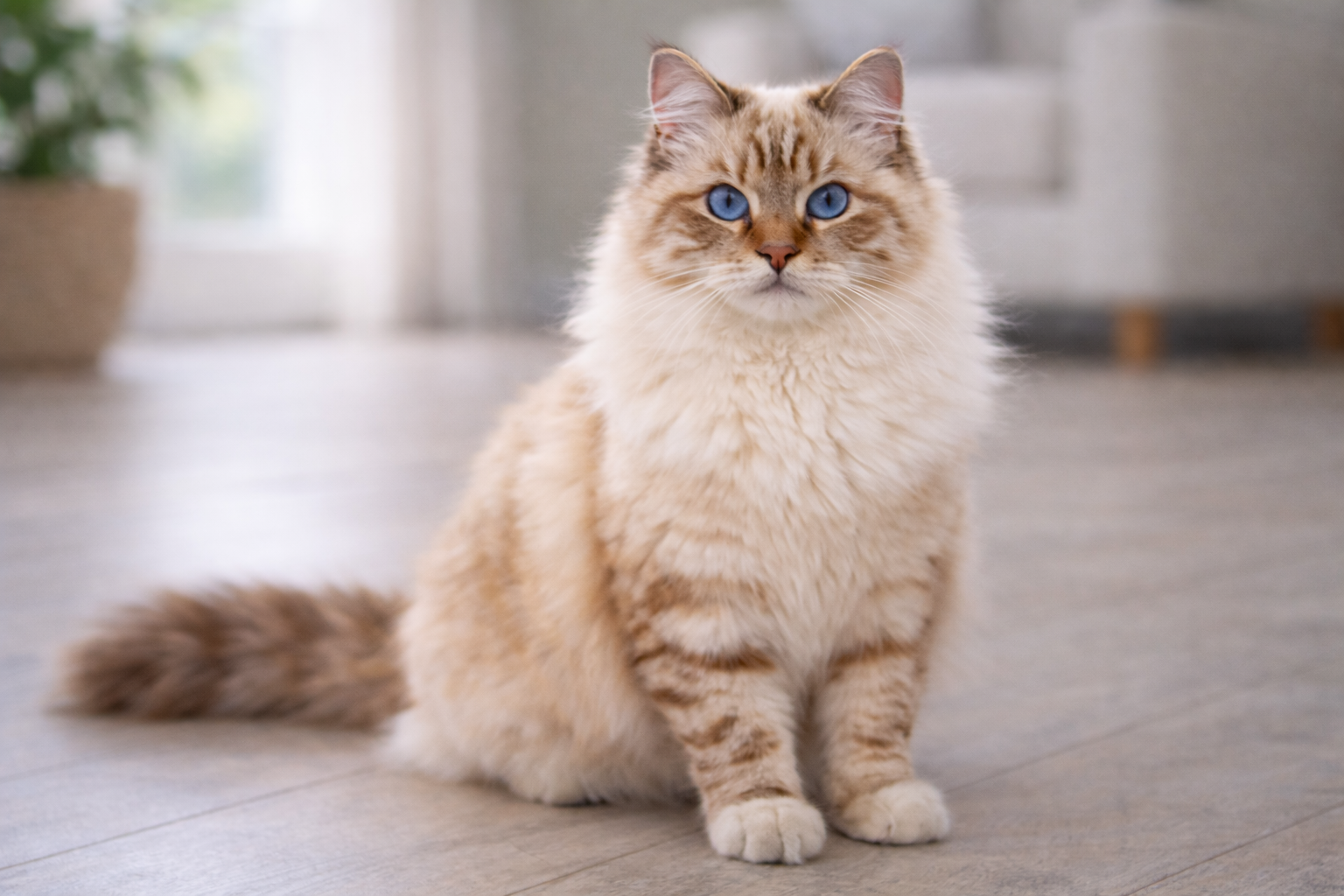
Chocolate lynx point Ragdolls show warm brown striping layered over lighter chocolate points. The markings often appear softer and more blended than darker lynx patterns.
The overall look feels warm and creamy rather than bold or high-contrast. In good lighting, you can usually see gentle striping on the face, legs, and tail, which gives these cats a sweet, relaxed appearance.
Lilac Lynx Point Ragdoll
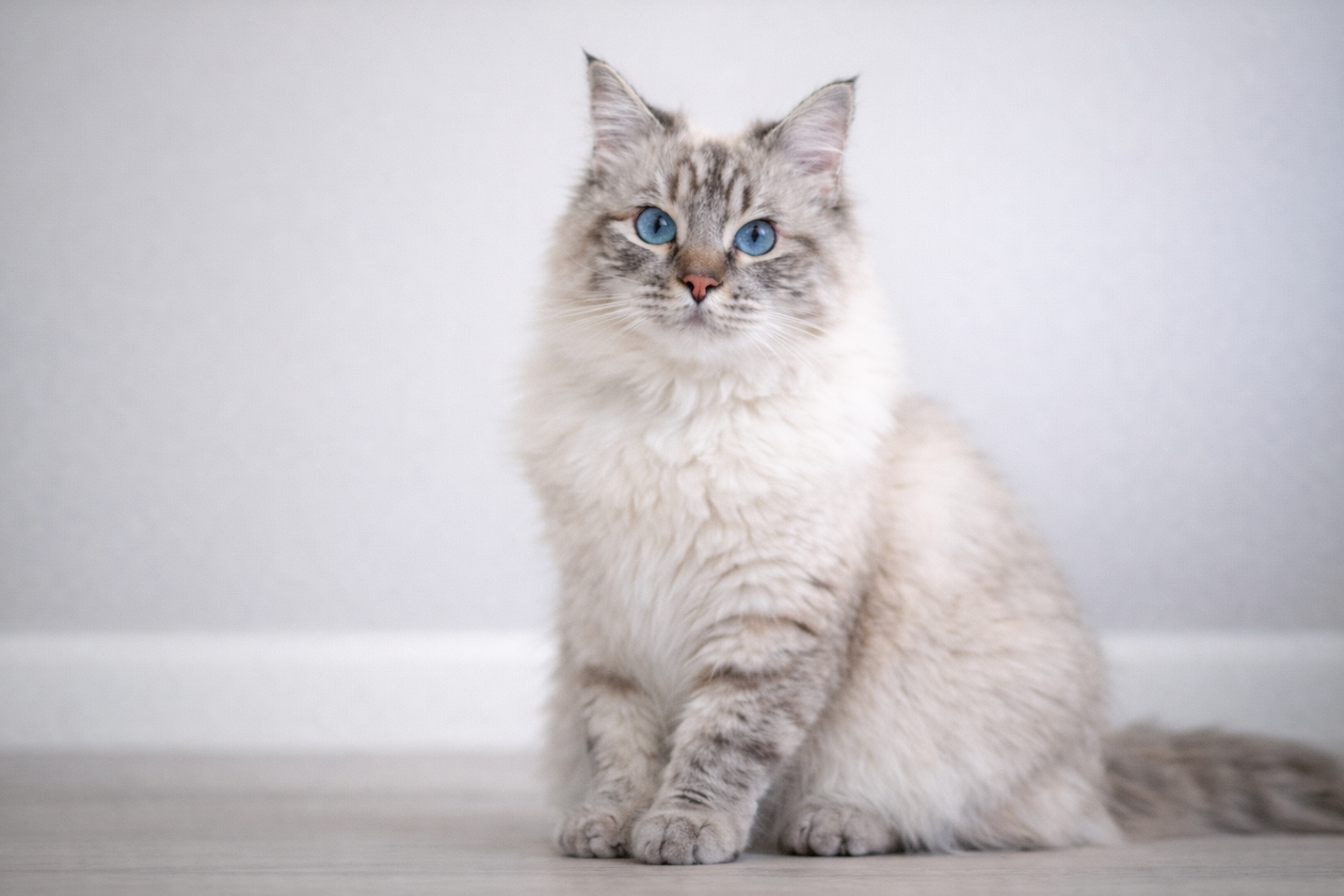
Lilac lynx point Ragdolls have very soft, pale striping layered over light gray points with a subtle pink tone. The markings can be faint and sometimes hard to see at first glance.
In bright natural light, you may notice gentle tabby lines on the face, legs, and tail. Because the contrast is so delicate, these cats often look pastel and airy compared to darker lynx colors.
Red Lynx Point Ragdoll
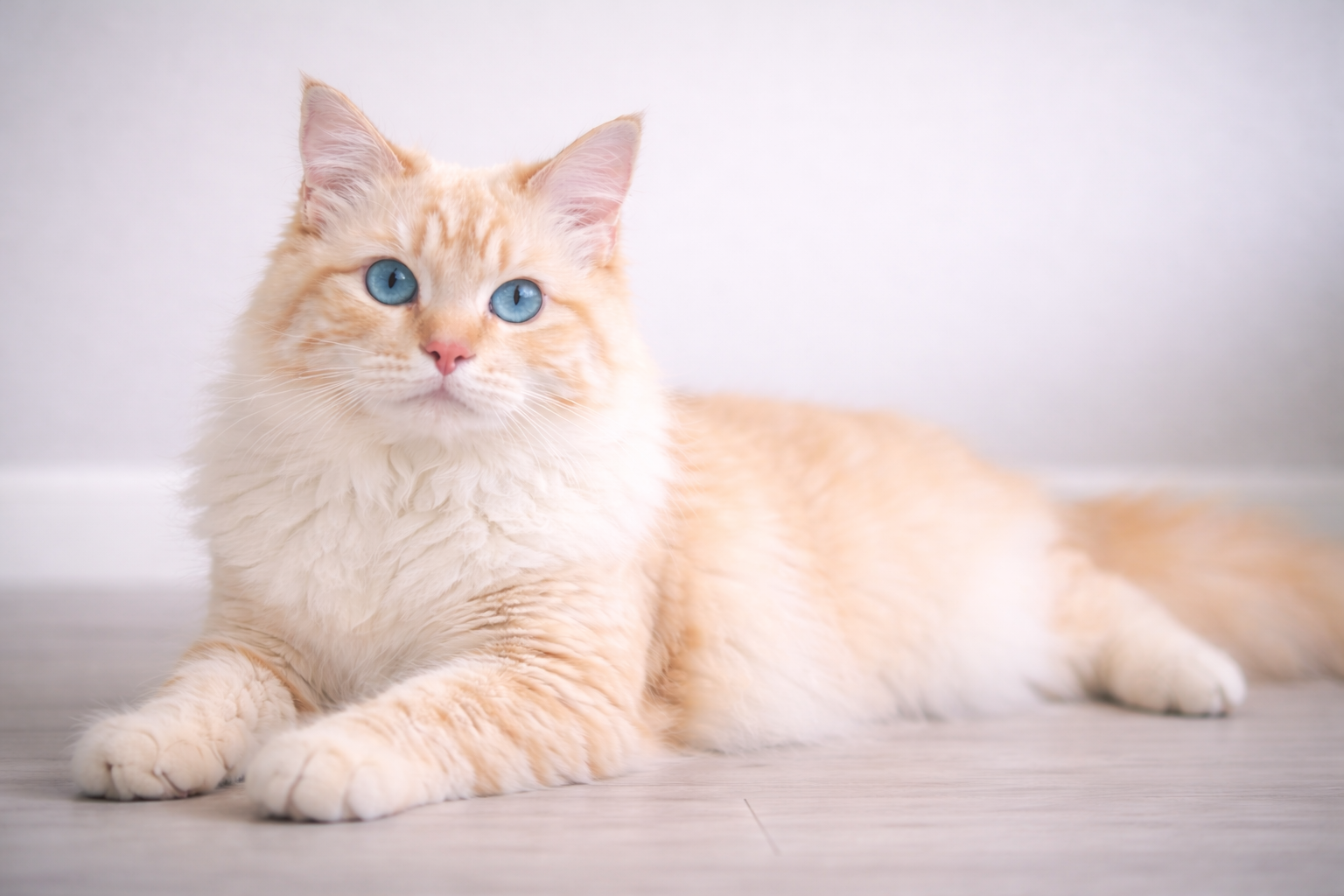
Red lynx point Ragdolls resemble orange tabby patterns layered onto pointed coloring. The stripes are often warm and vibrant, ranging from soft apricot to deeper copper tones.
You will usually see clear tabby markings on the face, legs, and tail, which gives these cats a lively, playful look. Because the coloring is warmer than most other Ragdoll points, red lynx cats tend to stand out quickly in photos.
Cream Lynx Point Ragdoll
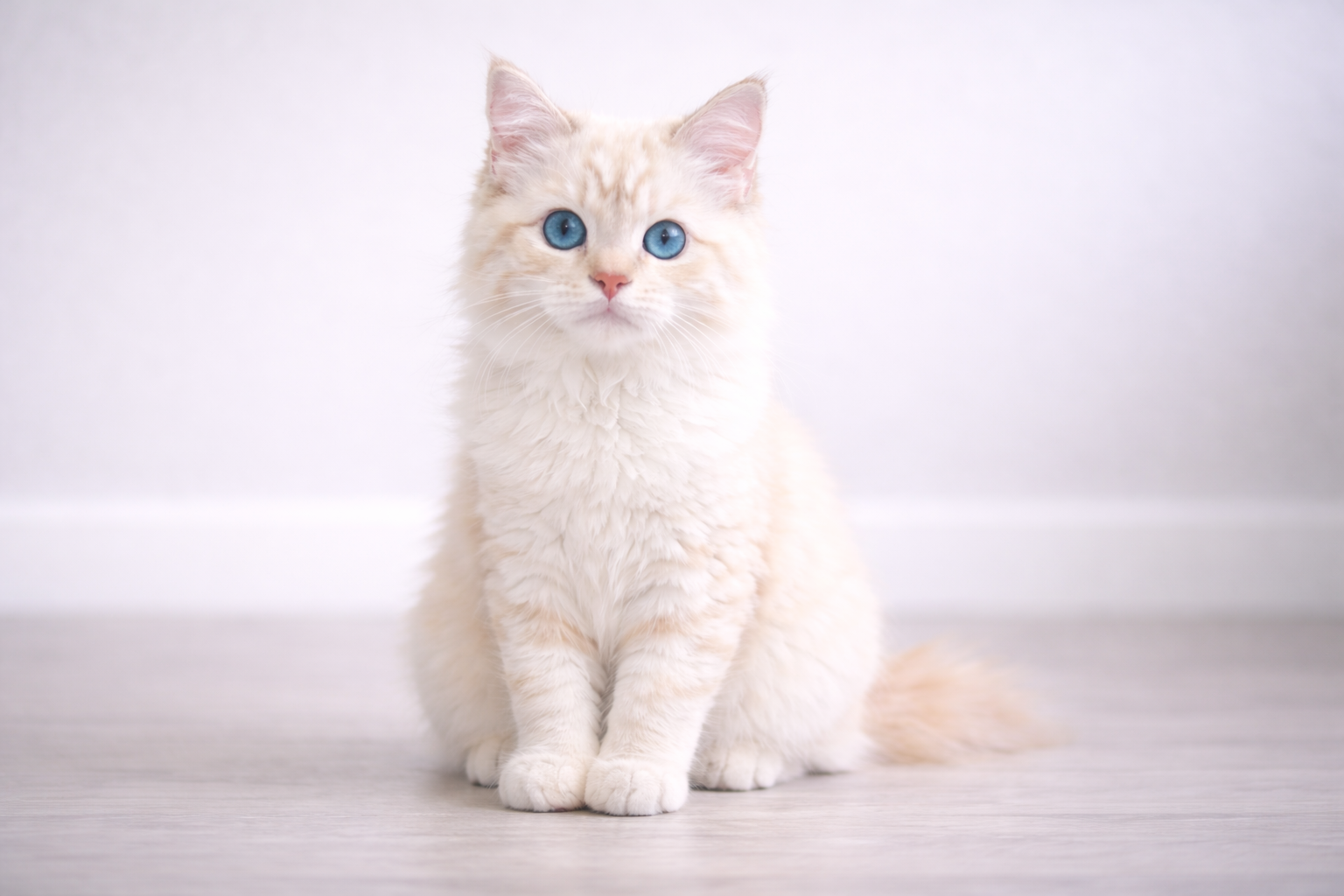
Cream lynx point Ragdolls show soft, blended striping layered over pale cream points. The markings are gentle and often much lighter than red or blue lynx patterns.
In bright light, you may notice faint tabby lines on the face, legs, and tail. Because the contrast is subtle, these cats often appear smooth and softly shaded rather than boldly striped.
Tortie and Cream Point Colors
Tortie point Ragdolls have mottled patches of red or cream mixed into darker point colors. Instead of one solid shade, the points look marbled or speckled with warm highlights.
These patterns are most commonly seen in female cats and give each Ragdoll a truly unique look. No two tortie cats have the same markings, which makes this group especially fun to recognize.
Seal Tortie Point Ragdoll
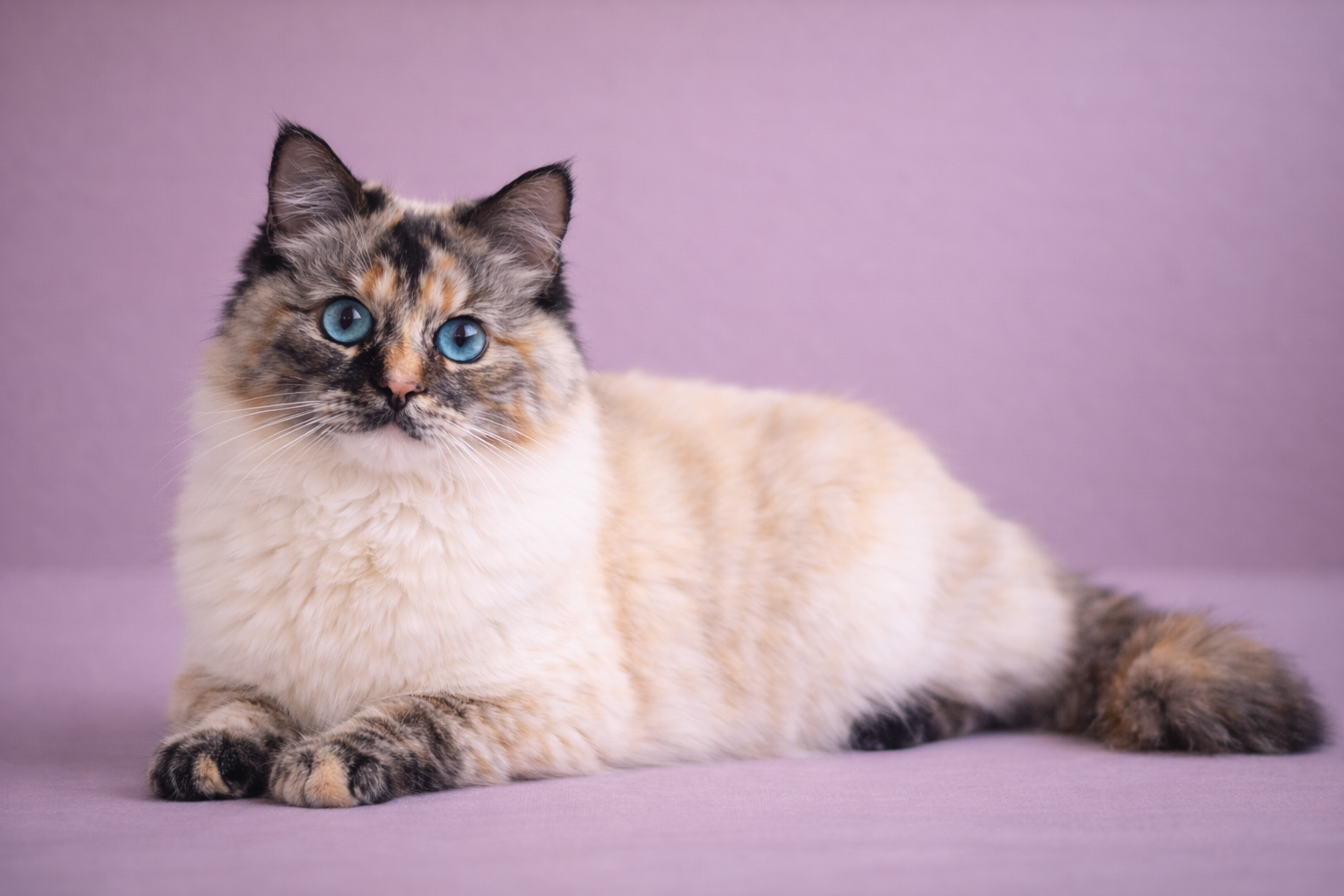
Seal tortie point Ragdolls mix deep brown points with splashes of warm red or creamy peach. The colors appear marbled or lightly patched rather than solid.
Some cats show bold color contrast, while others have softer blended markings. This variation gives each seal tortie Ragdoll a one-of-a-kind look that changes subtly as the coat matures.
Chocolate Tortie Point Ragdoll
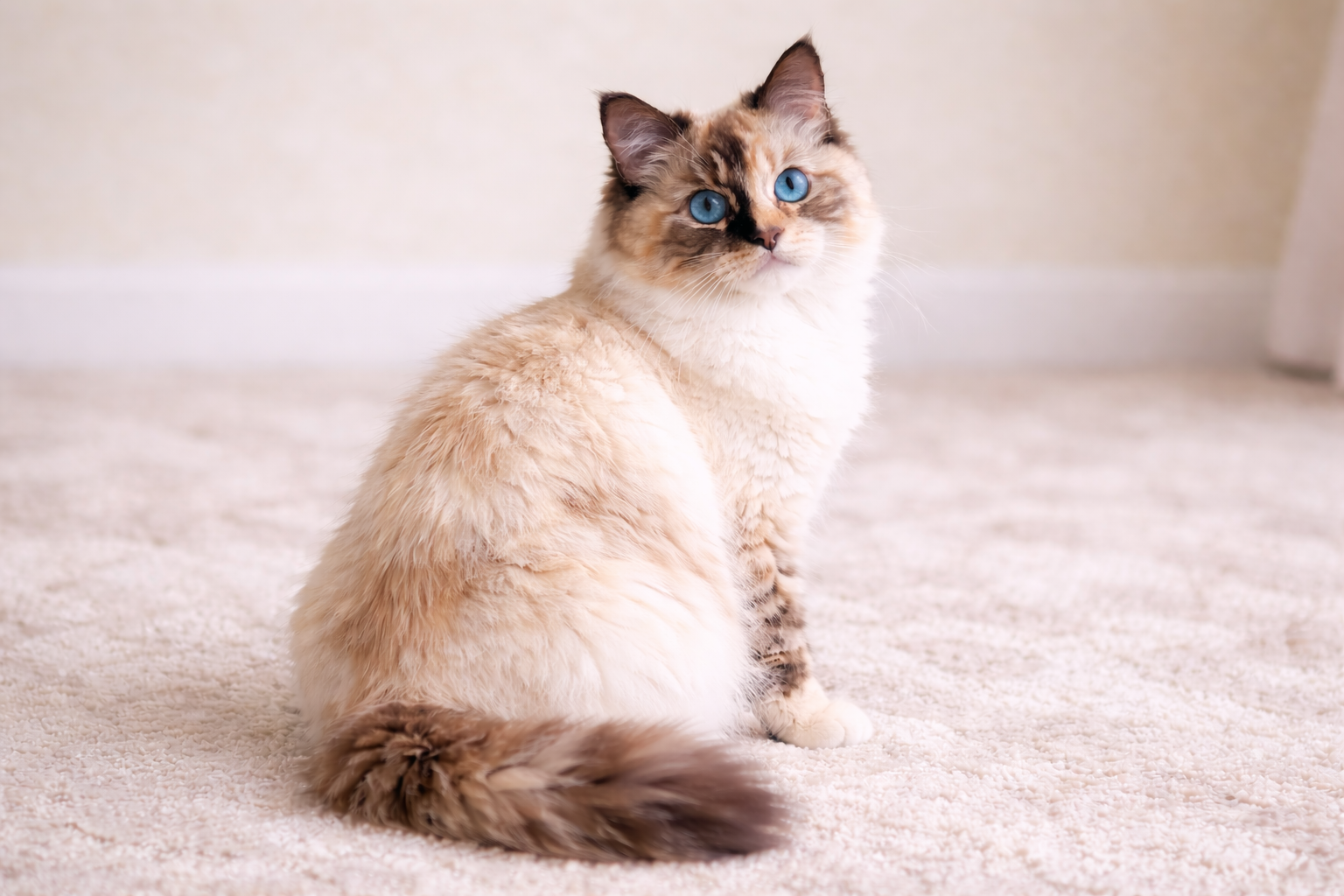
Chocolate tortie point Ragdolls blend lighter milk-chocolate points with warm mottled accents of red or cream. The overall coloring feels softer and warmer than seal tortie points.
The pattern can appear gently speckled or lightly marbled, giving the coat a sweet, blended look rather than sharp contrast. Each cat’s markings develop differently as the coat matures.
Blue Cream Point Ragdoll
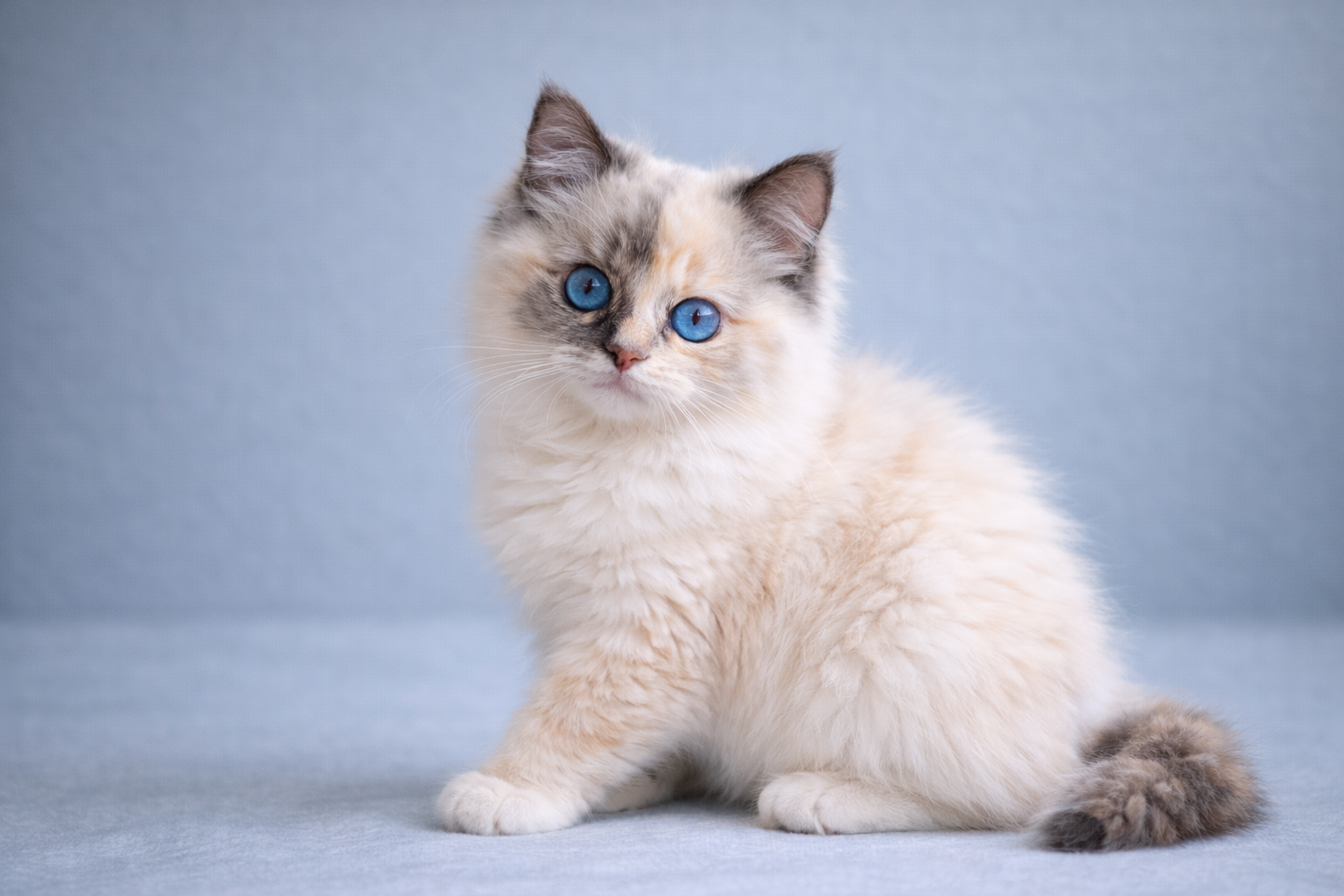
Blue cream point Ragdolls combine soft gray-blue points with gentle creamy patches scattered through the darker areas.
The mix creates a marbled, pastel look that feels lighter and more blended than traditional tortie coloring. Each cat’s pattern is unique and often becomes more noticeable as the coat matures.
Lilac Cream Point Ragdoll
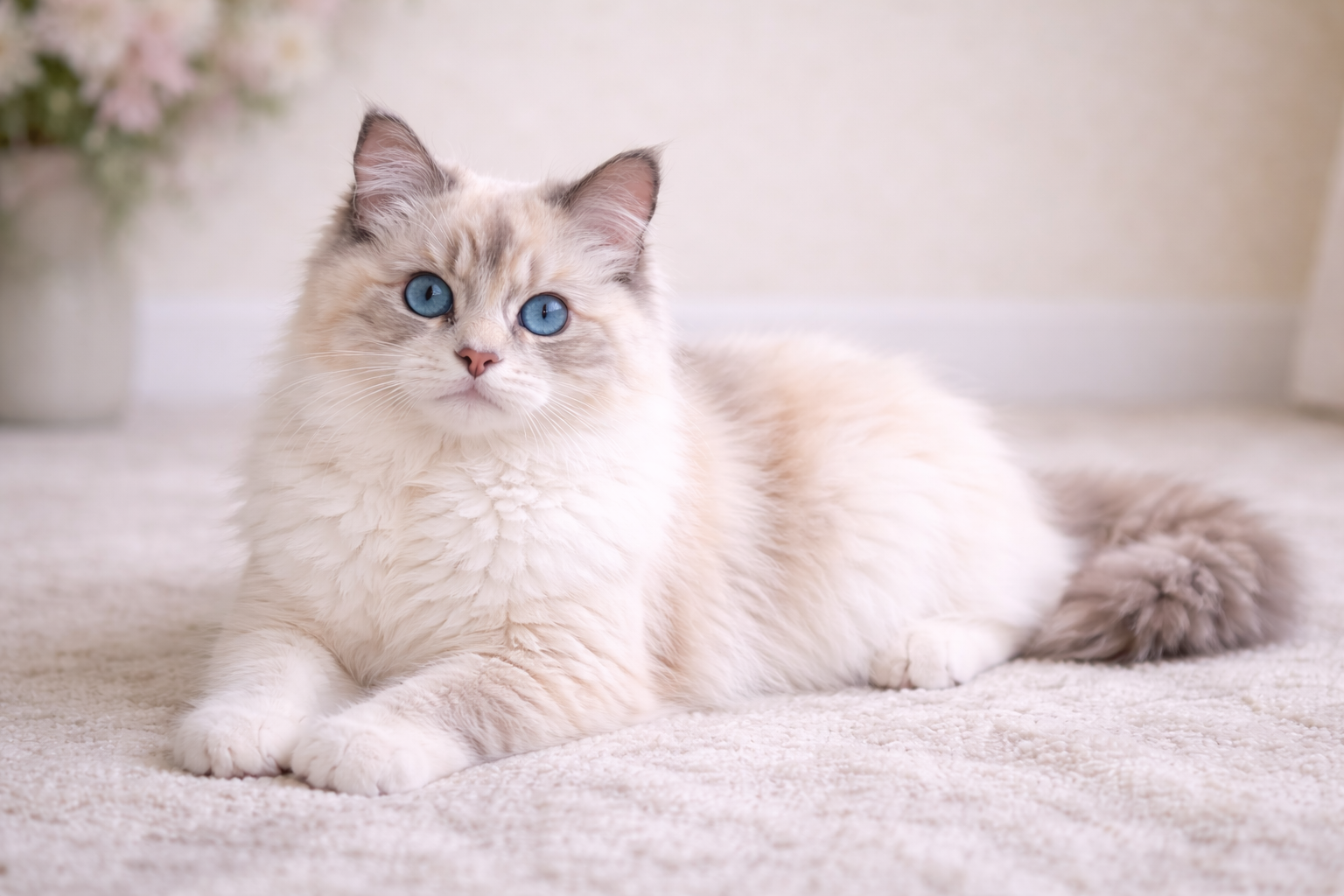
Lilac cream points are very light and pastel, often appearing soft and gently blended.
The subtle mix of pale gray and warm cream gives these cats a delicate, almost airy look that can be easy to miss in low light or shadow.
Tortie Lynx and Cream Lynx
These combinations show both striping and mottling together, creating highly unique patterns.
You may see tabby lines layered over soft patches of red or cream, which makes every cat look a little different from the next.
Seal Tortie Lynx Point Ragdoll
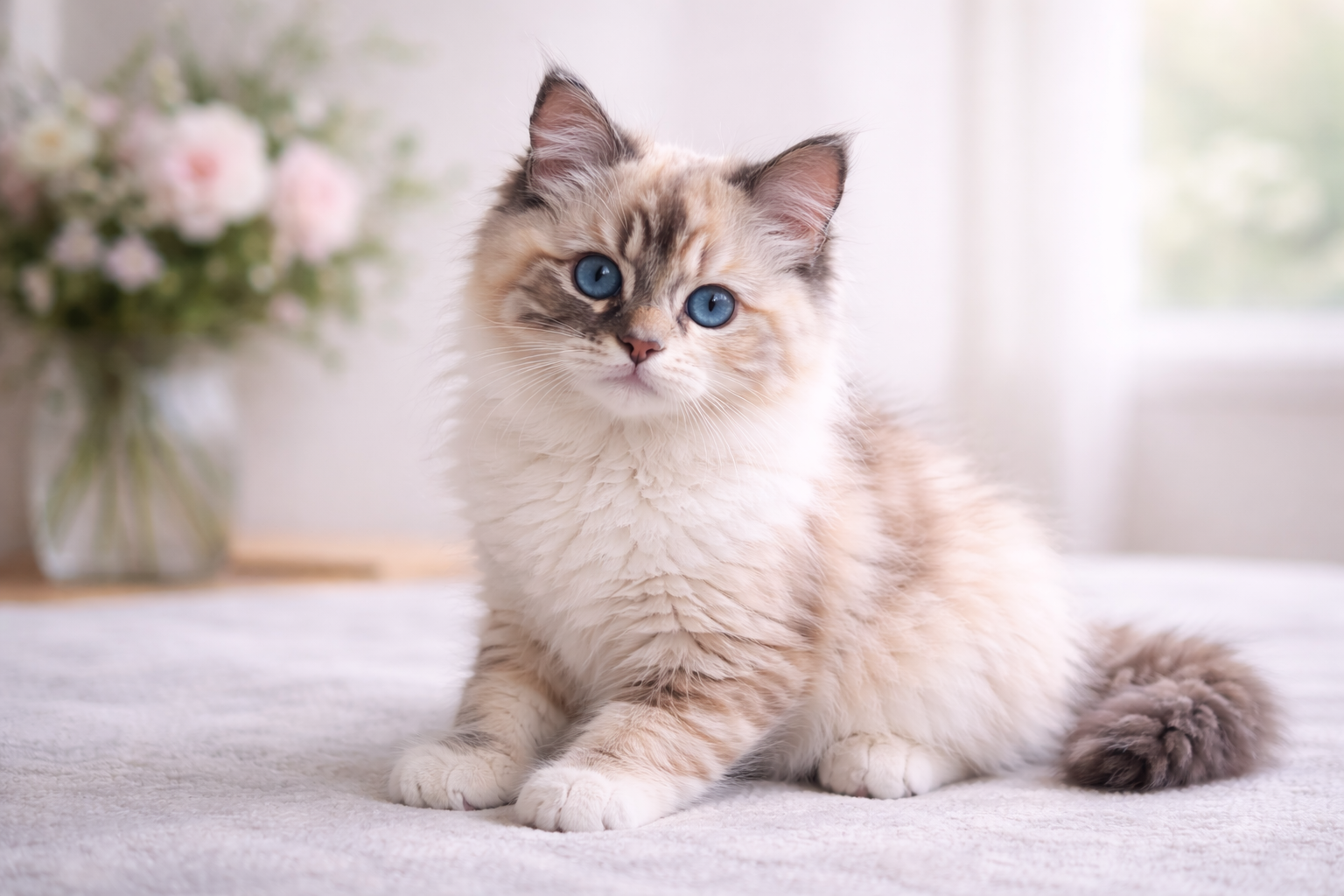
This variation blends dark brown points with visible tabby striping and soft patches of red or cream.
The mix of stripes and mottled color gives each seal tortie lynx point Ragdoll a very one-of-a-kind look, especially on the face and legs where the markings tend to stand out the most.
Chocolate Tortie Lynx Point Ragdoll
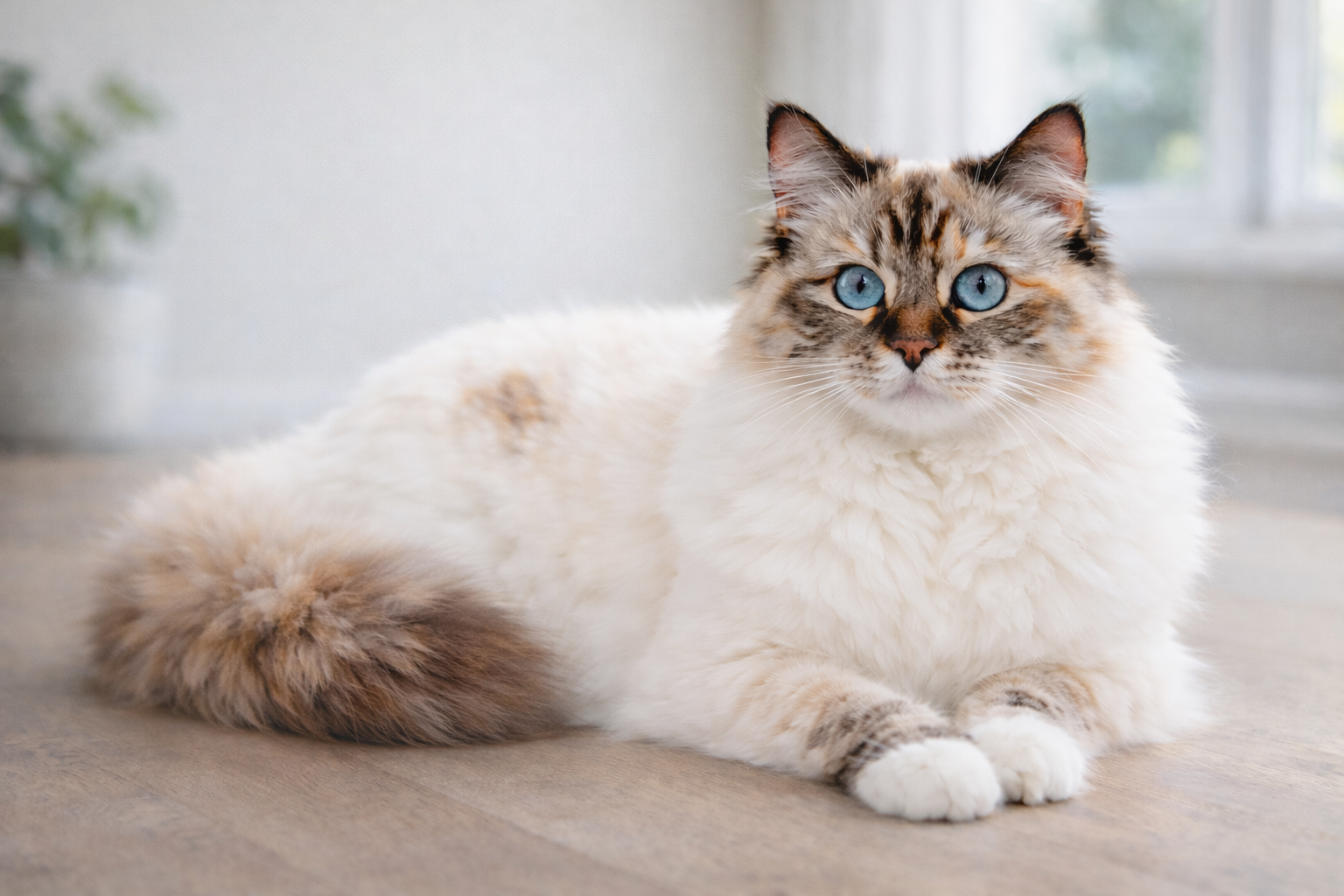
Chocolate tortie lynx point Ragdolls have warm milk-chocolate points layered with lighter tabby striping and soft red or cream mottling.
Because the base color is lighter than seal, the stripes and color patches tend to stand out more clearly, giving this pattern a bright, detailed look across the face, legs, and tail.
Blue Cream Lynx Point Ragdoll
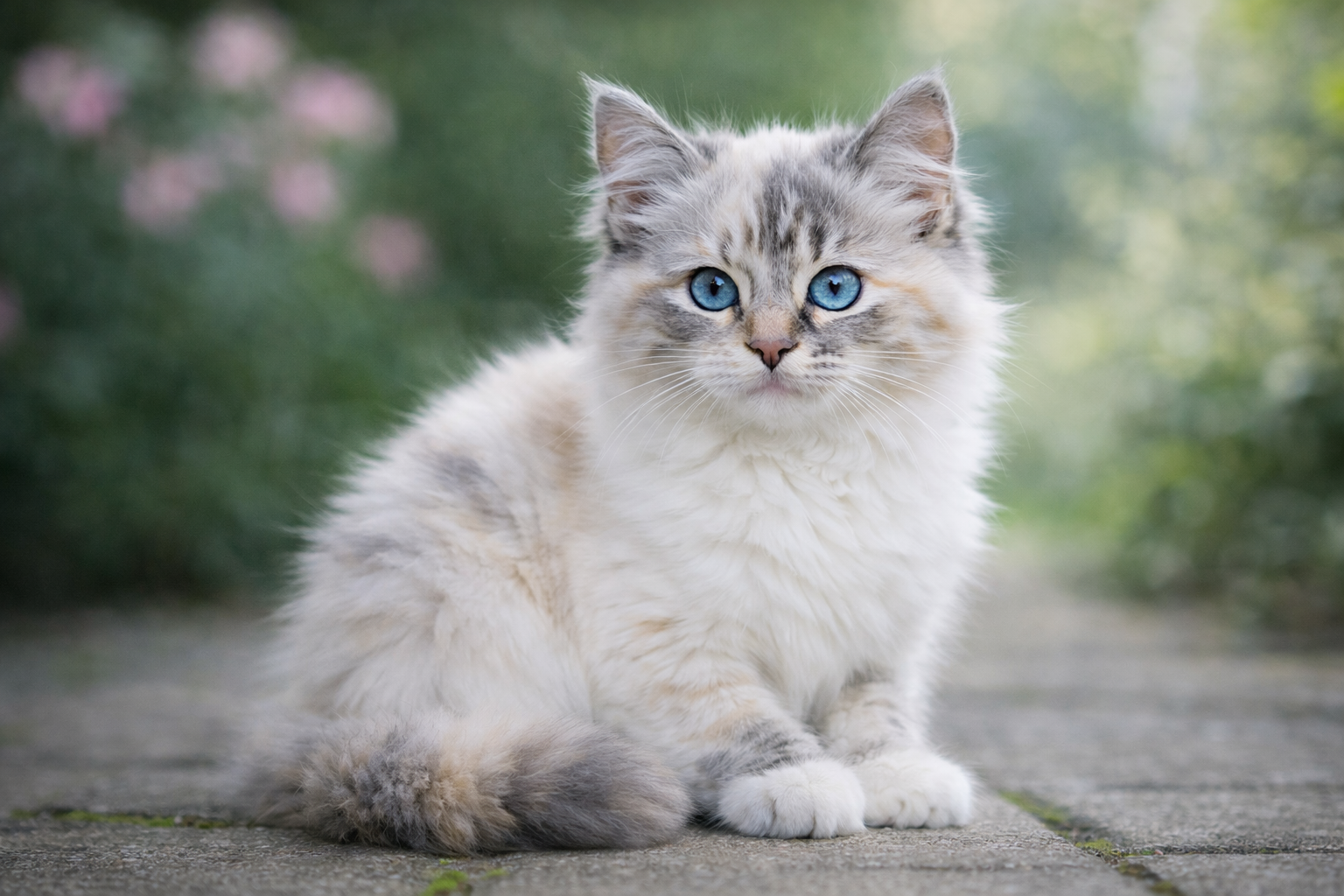
Blue cream lynx point Ragdolls combine cool gray-blue points with soft cream mottling and gentle tabby striping layered on top.
The mix of pale stripes and warm cream patches creates a blended, marbled look rather than sharp contrast, giving these cats a soft, watercolor-like appearance.
Lilac Cream Lynx Point Ragdoll
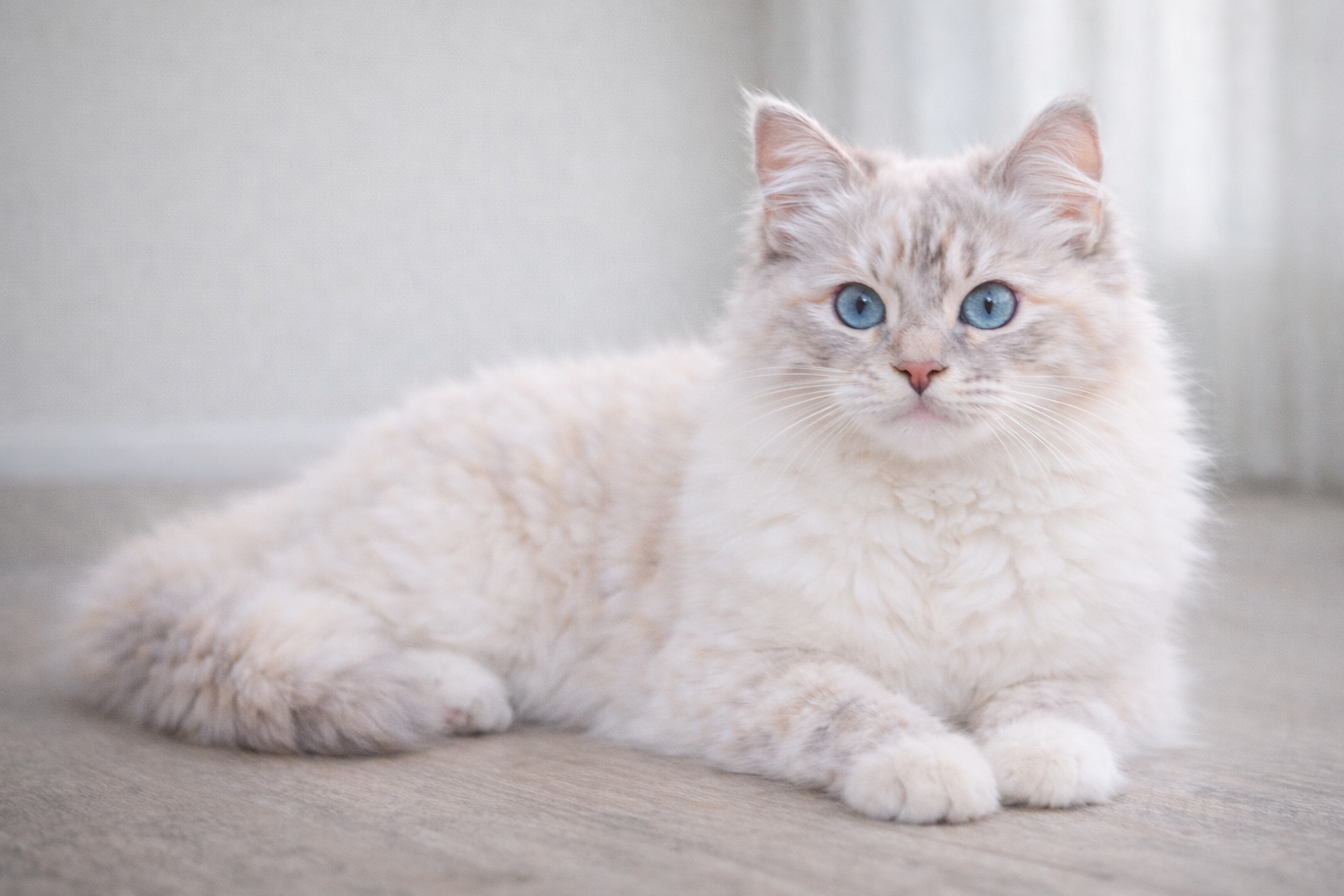
Lilac cream lynx point Ragdolls have very pale gray points with a soft pink undertone, layered with gentle tabby striping and light cream mottling.
Because all the colors are so light and blended, these cats often look airy, pastel, and almost glowing in natural light, making them one of the most delicate-looking Ragdoll combinations.
Ragdoll Coat Patterns
While color describes the shade of a Ragdoll’s points, pattern describes how much white appears on the body and where that white is placed.
All Ragdoll patterns still follow the pointed coloring underneath, but the amount of white can range from almost none to mostly white depending on the pattern.
There are four official Ragdoll coat patterns: colorpoint, mitted, bicolor, and van. Let’s take a closer look at what each one looks like.
Colorpoint Pattern
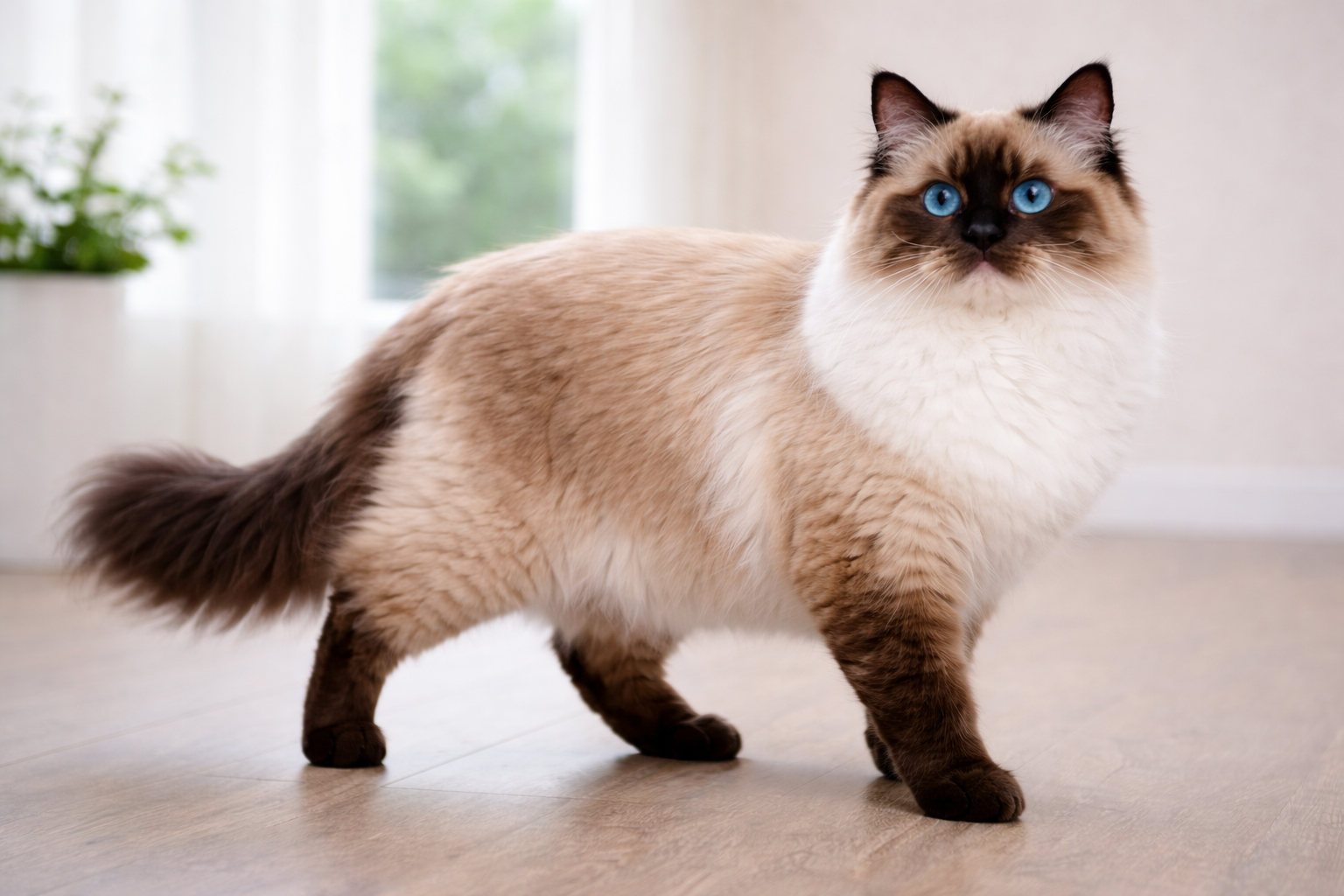
Colorpoint Ragdolls show the classic pointed look, where the ears, face mask, legs, and tail are clearly darker than the rest of the body. There is little to no white on the coat, aside from slightly lighter shading on the chest or belly.
This pattern highlights the contrast between the creamy body and the darker points, making the markings easy to recognize even in young cats. When most people picture a traditional Ragdoll appearance, this clean, high-contrast colorpoint pattern is usually what they imagine.
Mitted Pattern
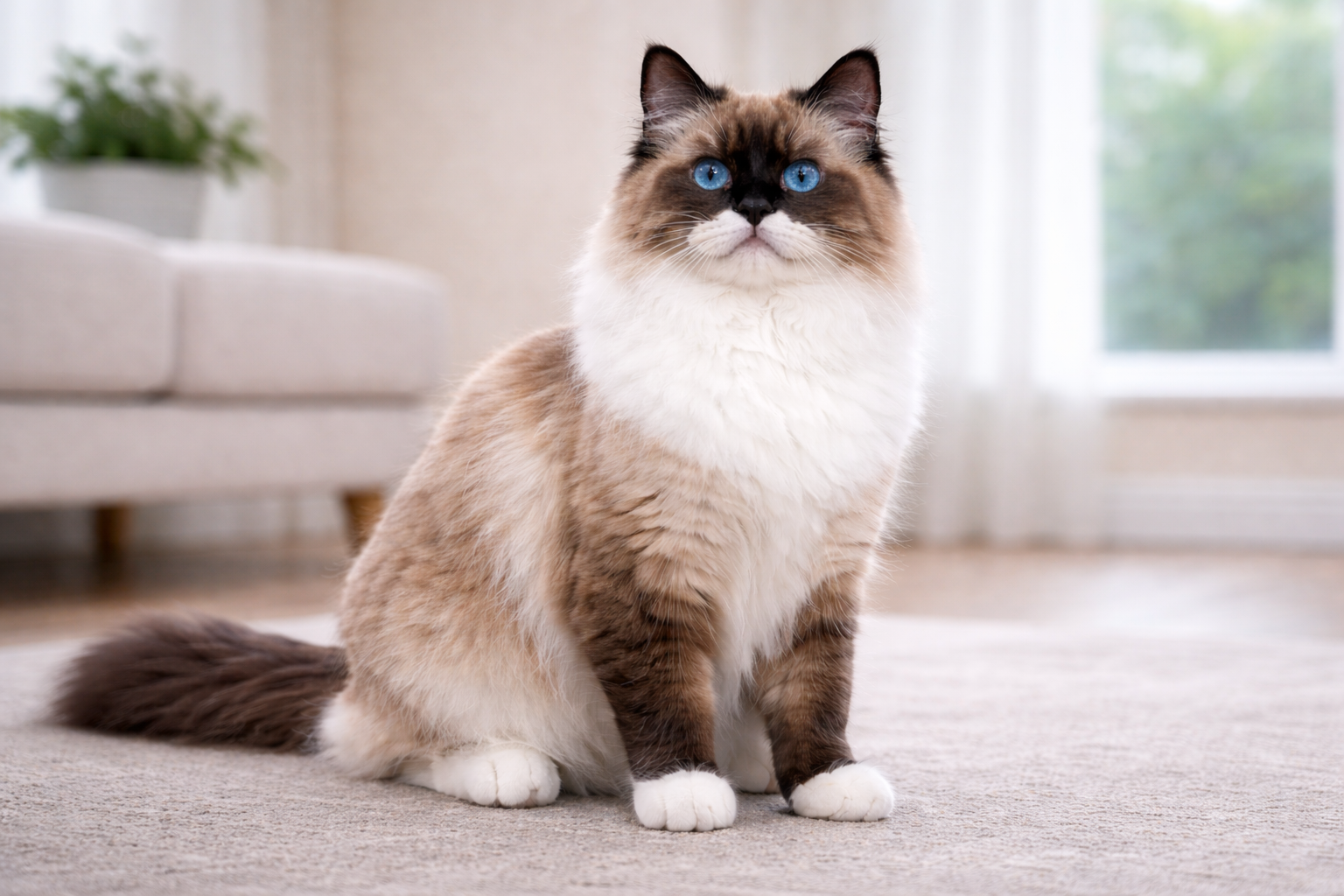
Mitted Ragdolls look similar to colorpoint cats at first glance, but the big difference is the bright white “mittens” on their paws. The front paws usually have neat white gloves, while the back legs may show taller white socks that rise slightly up the legs.
Many mitted Ragdolls also have a white chin and a white stripe running along the belly, sometimes called a belly blaze. Some cats may show a small white marking on the face, but the rest of the body keeps the darker point coloring. This mix of pointed color and clean white markings gives the mitted pattern a balanced, polished look.
Bicolor Pattern
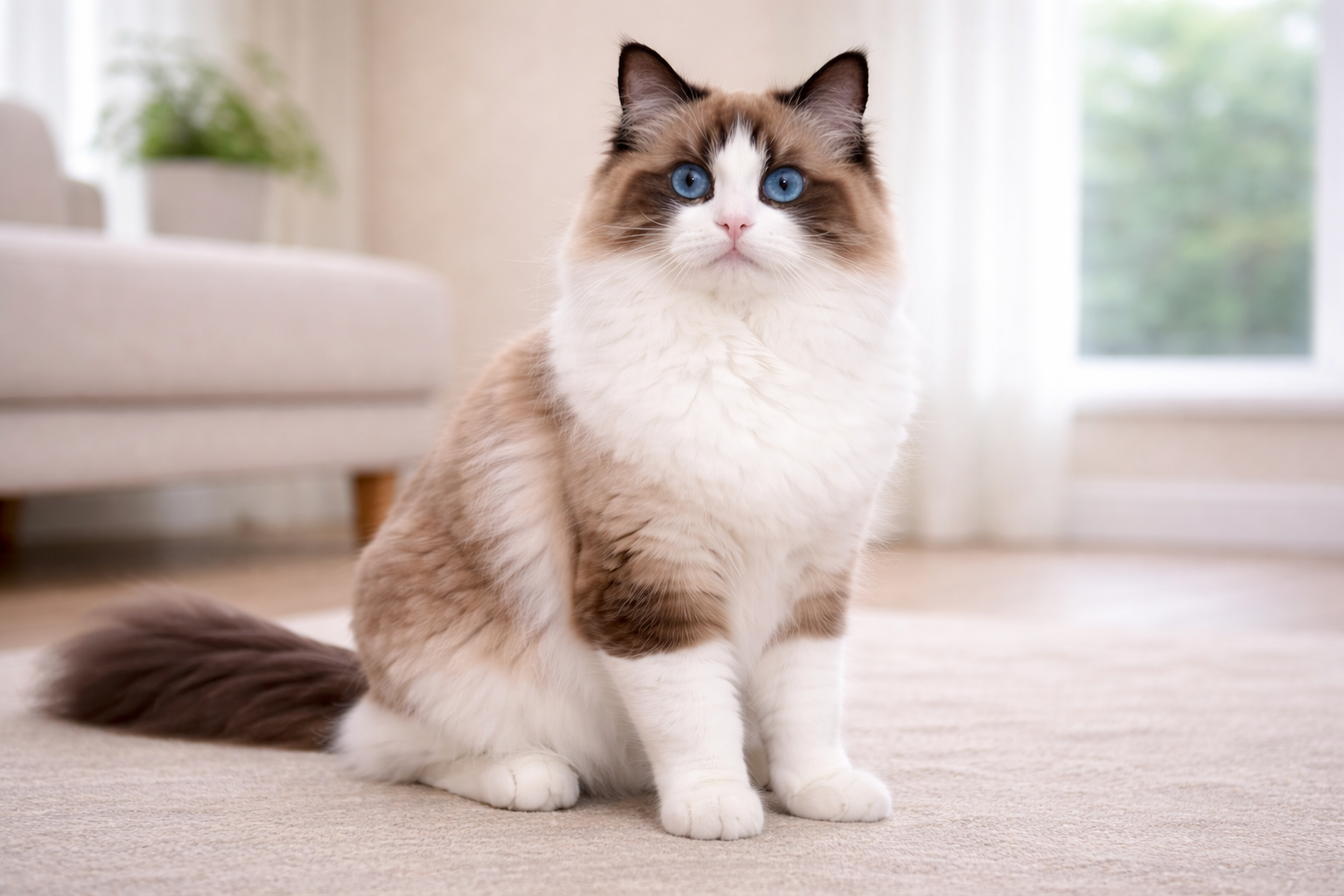
Bicolor Ragdolls have large white areas across the body and a bold, upside-down white “V” shape on the face. The colored mask is split cleanly by the white blaze, which makes this pattern easy to recognize in photos.
The legs, chest, and belly are usually white, while color remains on the ears, parts of the face, back, and tail. Compared to mitted Ragdolls, bicolors show much more white overall, and the facial markings are more dramatic and symmetrical. This high-contrast look is one of the most popular Ragdoll patterns.
Van Pattern
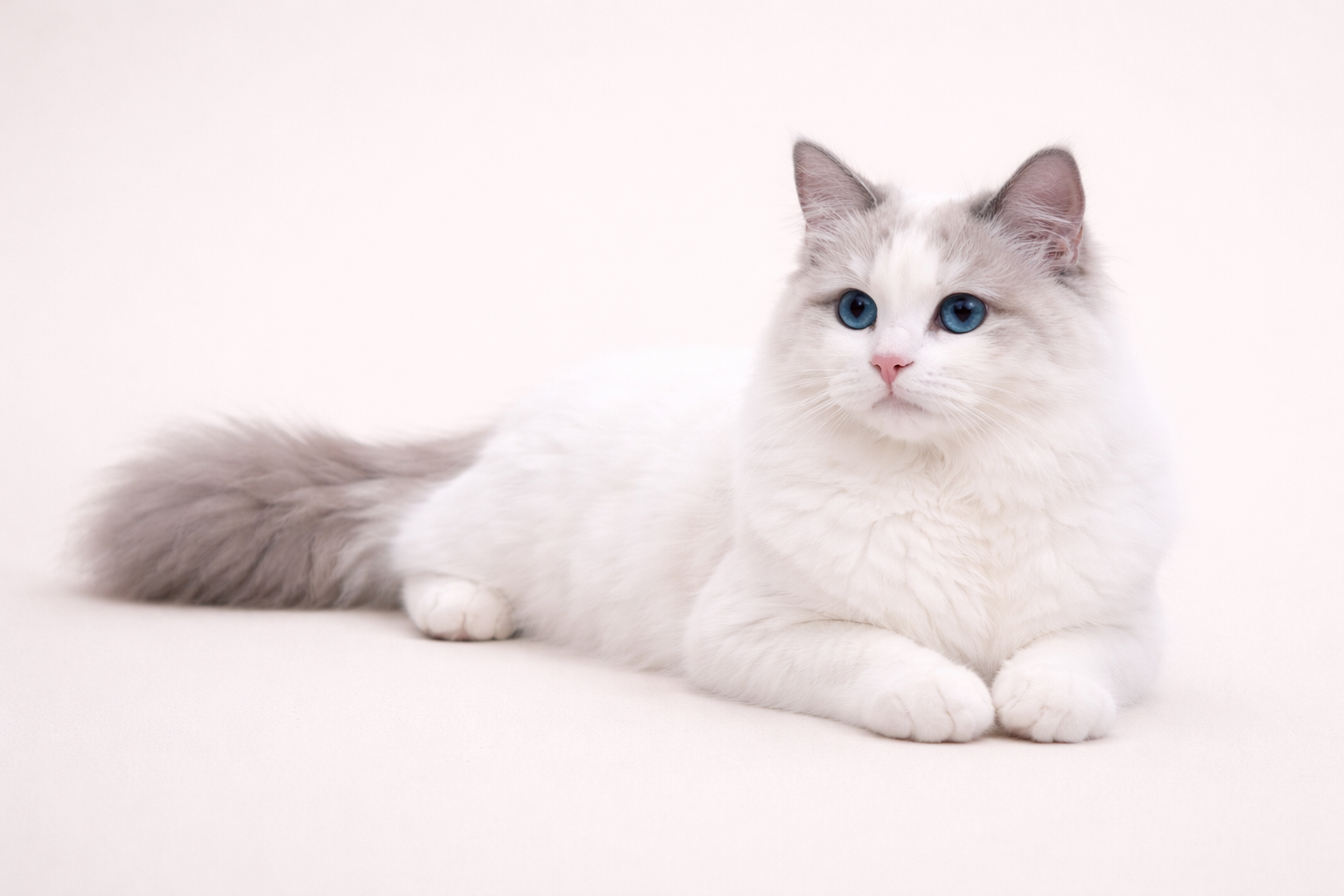
Van pattern Ragdolls are almost entirely white, with color appearing only on the ears, parts of the face, and the tail. The body, legs, chest, and belly remain bright white, giving these cats a very clean, high-contrast look.
Small color spots on the body are allowed, but most of the coat should stay white. Compared to bicolor Ragdolls, van patterns have much less color overall and do not show a full facial mask or saddle pattern on the back. This makes the van pattern one of the rarest and most striking Ragdoll patterns.
Final Thoughts
Ragdoll colors and patterns can seem complicated at first, but once you break them down into color, pattern, and overlays, everything starts to make sense.
Lighting, age, and even the season can change how a cat looks in photos, so it always helps to compare a few pictures and see the cat in natural light when possible.
Whether you love bold seal points, soft lilac tones, playful lynx stripes, or dramatic bicolor markings, there truly is a Ragdoll look for every kind of cat lover.