The Japanese Bobtail Cat is known for that short, pom-pom tail, but spend an afternoon with one and the tail becomes the least interesting thing about them. They are talkative, smart, and social, with a lively personality that makes them feel like part of whatever is happening in the house.
This is an active, people-oriented breed. Japanese Bobtails want to be in the middle of things, not watching from a distance, so boredom can become a problem fast. Leave one alone with nothing to do, and you may come home to opened cabinets, knocked-over items, or a cat that clearly found its own project while you were gone.
Quick Breed Facts
- Origin: Japan
- Breed registries: CFA, TICA, FIFe, ACFA
- Weight range: 5–10 lbs
- Lifespan: 12–16 years
- Coat: Short or long, silky texture
- Colors and patterns: Wide variety; tricolor (Mi-ke) is most iconic
- Eye color: Gold, copper, blue, or odd-eyed
- Grooming: Low maintenance
- Activity level: High
- Affection level: Very high
- Vocality: Talkative and expressive
- Good with children: Yes
- Good with other pets: Yes
History & Origin of the Japanese Bobtail Cat
The Japanese Bobtail is one of the oldest cat breeds with documented roots, appearing in Japanese paintings, woodblock prints, and manuscripts dating back more than a thousand years. These cats were valued in temples, palaces, and silk farms, where they helped protect manuscripts, stored goods, and silkworm cocoons from rodents.
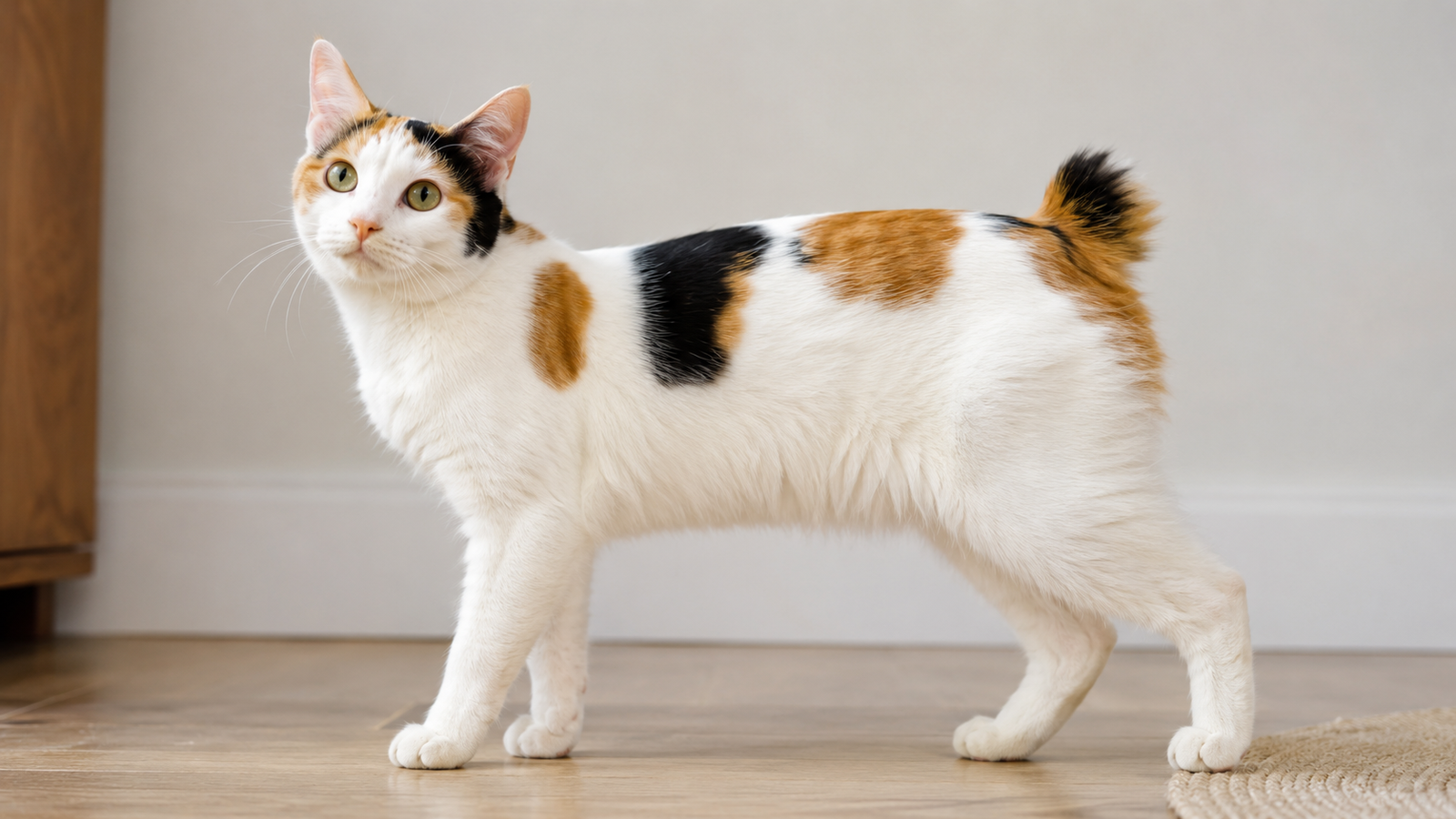
Over time, the breed became closely tied to Japanese art and folklore. The tricolor Mi-ke pattern, white with patches of red and black, is the most iconic version of the Japanese Bobtail, and the one most commonly linked with the maneki-neko, the lucky beckoning cat figure seen in shops and homes.
The breed’s bobbed tail comes from a naturally occurring genetic mutation that has been part of the population for centuries. Unlike the short or missing tail seen in the Manx or Cymric, the Japanese Bobtail’s mutation does not affect the spine, and the breed has no associated skeletal health issues. Each cat’s tail is slightly different in shape and curve, which is part of what makes the breed so distinctive.
Elizabeth Freret imported the first Japanese Bobtails to the United States in 1968, and the CFA granted full recognition to the shorthair variety in 1976, with the longhair following in 1993.
Japanese Bobtail Cat Personality & Temperament
Japanese Bobtails are often compared to dogs, and not just because they play fetch. They follow their people from room to room, take an active interest in household activity, and have a range of vocalizations that goes well beyond a standard meow. They chirp, trill, and carry on in a way that sounds almost conversational. For owners who like a cat that communicates, it’s charming. For those who prefer a quieter companion, it’s something to factor in.
They are confident, adaptable, and handle busy households well. Japanese Bobtails tend to bond with the whole family rather than picking one favorite person, which can make them a good fit for homes with kids or multiple adults. They’re playful well into adulthood and have enough intelligence to stay interested in puzzle toys and interactive games. The one thing they don’t do well with is being ignored. They want involvement, not just coexistence.
Japanese Bobtail Cat Appearance & Physical Traits
The Japanese Bobtail has a lean, athletic build with long legs, high cheekbones, and large upright ears that give them an alert, lively expression. They’re a medium-sized cat, typically weighing between five and ten pounds, with females on the smaller end. Their most distinctive feature is the tail, which is short, usually no longer than three inches, and often curves or fans out in a way that looks like a pom-pom. No two tails are exactly alike.
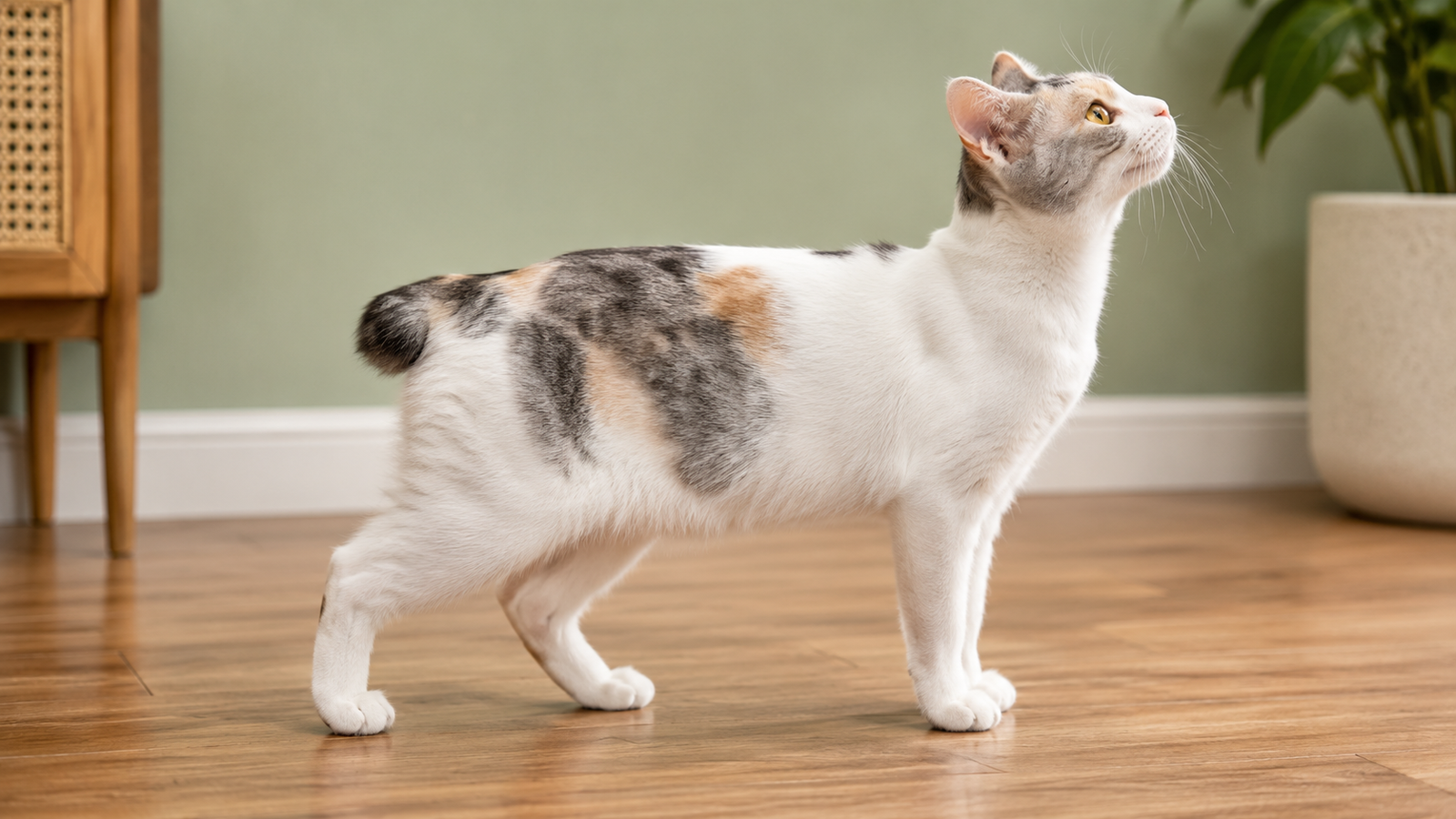
The breed comes in both shorthair and longhair varieties, both with a silky texture that lacks the dense undercoat found in many other breeds. The Mi-ke tricolor pattern is the most recognizable and the one most closely associated with the breed’s cultural history in Japan, but Japanese Bobtails come in a wide range of solid, bicolor, and tabby variations. Odd-eyed cats, with one blue eye and one gold or copper, are particularly prized and appear with some frequency in white and tricolor cats.
Japanese Bobtail Cat Grooming & Shedding
Despite coming in both short and long coat varieties, Japanese Bobtails are low-maintenance groomers. Their silky coat lacks the thick undercoat that causes heavy shedding and matting in other breeds, so weekly brushing is enough to keep things tidy year-round. Longhaired Bobtails need slightly more attention during seasonal changes, but nothing close to what you’d manage with a Maine Coon or a Persian.
Beyond the coat, the usual basics apply: nail trims every couple of weeks, ear checks for debris, and dental care as part of a regular routine. They’re a practical breed in this regard, and the grooming commitment is minimal for what you get in return.
Activity & Play
Japanese Bobtails are high-energy cats, so they need an environment that reflects that. They’re agile climbers and jumpers, and their long, muscular legs give them a real spring. A tall, sturdy cat tree is a good starting point, but they also benefit from daily interactive play. Feather wands, fetch games, and puzzle feeders all suit the breed well. Many Japanese Bobtails will retrieve toys reliably enough that fetch becomes a genuine part of the daily routine rather than an occasional trick.
They do well with another active cat for companionship, especially if you’re out of the house during the day. A bored Bobtail will entertain itself, and that doesn’t always mean in ways you’d choose.

Japanese Bobtail Cat Health & Lifespan
Japanese Bobtails are considered a healthy, sturdy breed. Most live between 12 and 16 years, with some reaching beyond that.
Their short tail is a natural breed trait, not an injury or docked tail. It comes from a recessive gene and is not typically linked to spinal or neurological problems, which is an important distinction for this breed.
Like any cat, they still need regular vet checkups, vaccinations, parasite prevention, dental care, and weight management. Because this is an active breed, a high-protein, meat-based diet and plenty of fresh water help support their lean, athletic build.
Family Compatibility
Japanese Bobtails fit well into active households. Their outgoing, adaptable nature means they handle the unpredictability of families with children better than more sensitive breeds, and they tend to get along with other cats and cat-friendly dogs when introductions are handled gradually. They often bond with the whole household rather than choosing one favorite person, which works well in families where attention is shared among several people.
They also suit solo owners and quieter households, provided there’s enough interaction and stimulation during the day. The key is that they need engagement. They’re not a breed that thrives on being left to their own devices for long stretches. A companion animal helps considerably if your schedule keeps you away from home most of the day.
Recommended Supplies for a Japanese Bobtail Cat
For a Japanese Bobtail, enrichment matters more than fancy comfort gear. This is a breed that needs to stay busy.
- Tall, sturdy cat tree with multiple levels for climbing and perching
- Interactive toys including feather wands and motion toys
- Puzzle feeders to engage their intelligence at mealtimes
- Window perch or cat shelf for environmental watching
- Lightweight fetch toys, tennis balls or crinkle balls work well
- Roomy, consistently clean litter box

Japanese Bobtail Cat Price and Cost
Japanese Bobtail kittens from reputable breeders typically cost between $800 and $2,000, with price varying based on coat type, color pattern, and bloodline. Mi-ke tricolor cats and odd-eyed individuals often sit at the higher end. The breed is relatively rare in the United States, so finding a reputable breeder may take some patience. Breed-specific rescues do exist and are worth searching if you’re open to an adult cat, since rehomed Bobtails tend to retain their personality fully and come already vetted.
Japanese Bobtail Cat FAQs
Are Japanese Bobtail cats hypoallergenic?
No cat is truly hypoallergenic, and the Japanese Bobtail is no exception. Their low-shedding coat may mean less airborne dander than heavier-coated breeds, which some allergy sufferers find easier to tolerate, but they still produce the Fel d 1 protein responsible for most cat allergies. Spending time with the breed before committing is always a good idea if allergies are a concern.
How much do Japanese Bobtail cats cost?
Most pet-quality Japanese Bobtail kittens from a reputable breeder fall between $800 and $2,000. Show-quality cats or rare color patterns can run higher. Because the breed is uncommon in the US, it may take time to find a breeder with available kittens.
Do Japanese Bobtail cats need a companion?
They don’t require one, but they do better with company than many breeds. Japanese Bobtails are social by nature and can become bored or restless if left alone for long periods. A second cat, particularly another active breed, can help considerably if your schedule keeps you away from home regularly.
Are Japanese Bobtail cats rare?
In the United States, yes. They’re a well-established breed with a long history in Japan, but the population of dedicated breeders in North America remains small. Finding one may require joining a waitlist or searching more broadly than you would for a more common pedigreed breed.
How long do Japanese Bobtail cats live?
Most Japanese Bobtails live between 12 and 16 years with proper care. They’re a generally healthy breed without the concentrated hereditary conditions seen in some other purebreds, which contributes to their solid lifespan.
Is the Japanese Bobtail Cat Right for You?
If you want a cat that’s active, communicative, and fully invested in being part of daily life, the Japanese Bobtail delivers that in a package that’s also low-maintenance to groom and resilient enough for a busy household. They’re a good fit for families with children, owners who enjoy interactive play, and anyone who wants a cat that behaves more like a companion than a tenant.
What they aren’t is low-key or hands-off. They need stimulation, interaction, and ideally someone around for a reasonable portion of the day. In a home that gives them that, they can be lively, funny, and deeply involved companions. Without enough attention or enrichment, they may become vocal, restless, or far too creative with their free time.
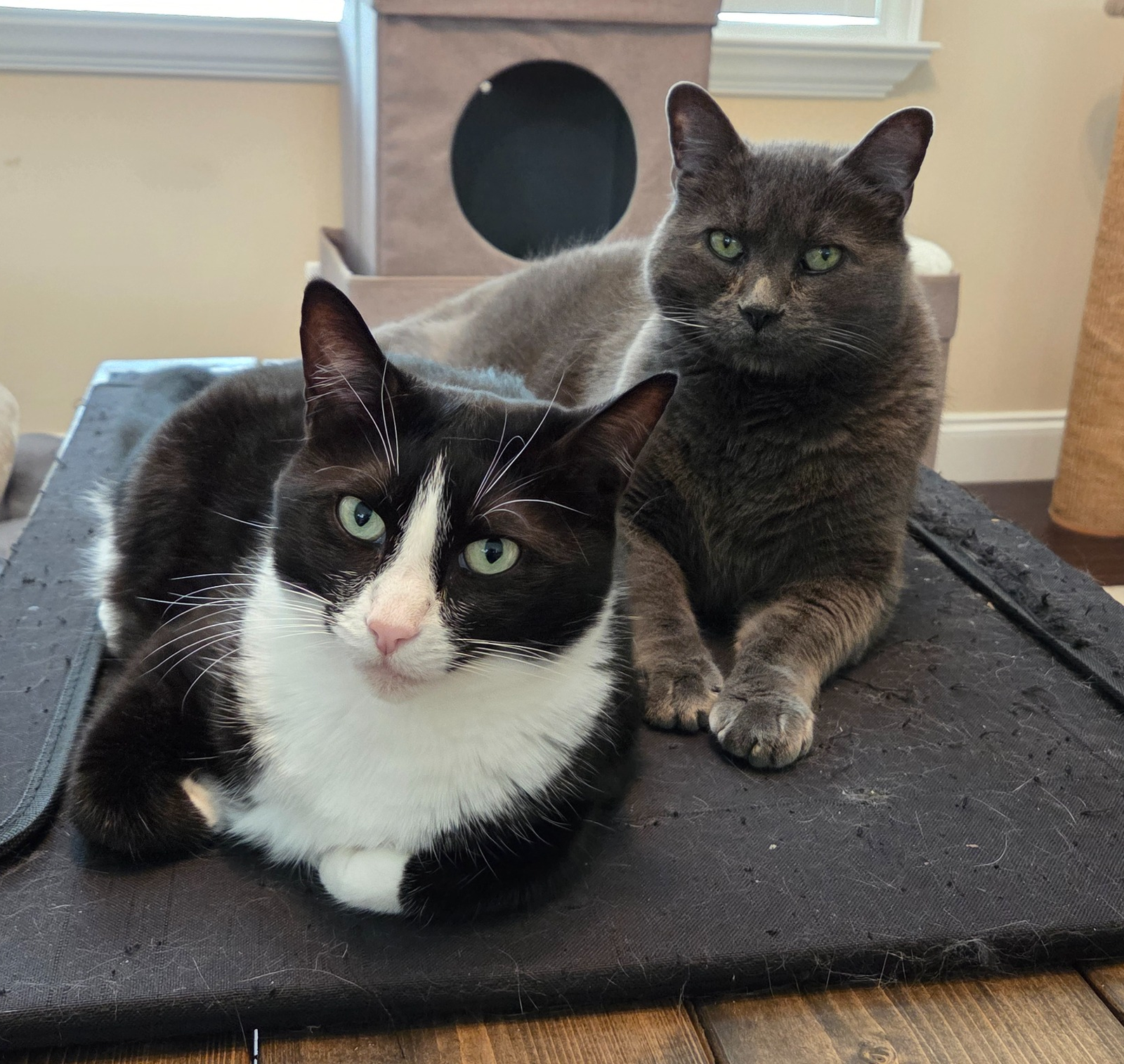
Debbie Reid is the founder and chief editor of CatPedia.net, with over 25 years of hands-on experience in feline care, rescue, and behavior research. Inspired by her rescue cats Snickers and Bigboy, she collaborates with animal welfare resources and consults veterinary literature to turn complex feline health, nutrition, and behavior topics into clear, actionable guides.