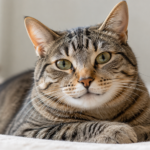
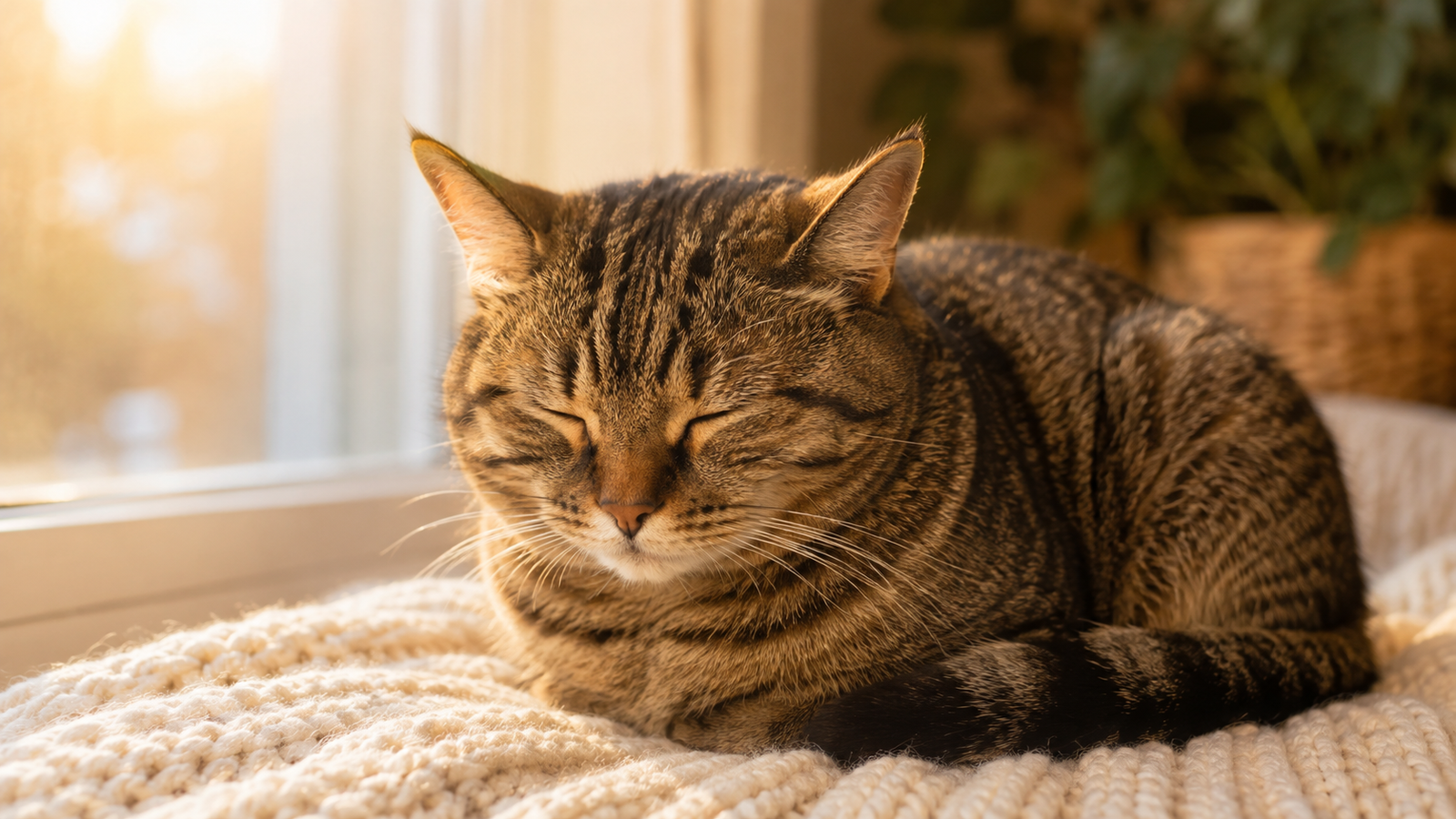
Cats have plenty of unusual sitting positions, but one of the most recognizable is the cat loaf. With their paws tucked, tail wrapped, and body settled into a rounded rectangle, they look a lot like a loaf of bread. Most of the time, loafing means your cat feels comfortable and relaxed—but not always.
Here’s what loafing means, the different variations you may see, and how to tell when the position could be a sign your cat isn’t feeling well.
What Is a Cat Loaf?
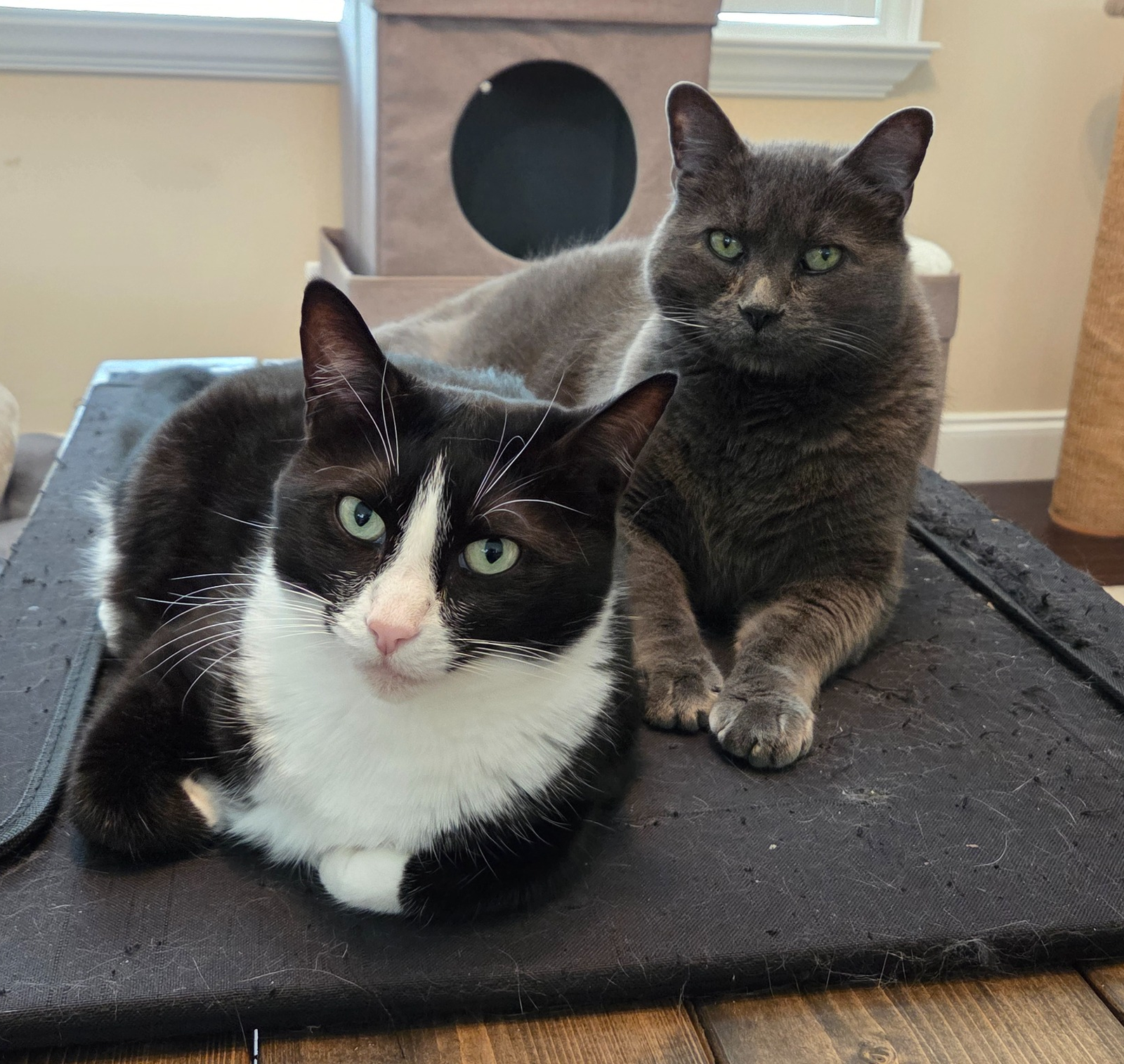
A cat loaf happens when your cat sits with their front paws tucked under their chest, their back legs folded beneath them, and their body settled into a rounded, rectangular shape. From above, they look almost exactly like a loaf of bread cooling on the counter.
Their tail might be curled around their body, tucked underneath, or stretched out behind them. Some cats close their eyes fully. Others watch you the whole time.
Cat lovers have come up with plenty of names for it: potato cat, turkey cat, hovercat, cat bread, bread cat. Take your pick.
What Are the Different Types of Cat Loaf?
Not every loaf looks the same, and your cat probably has a favorite.
- Classic loaf. All four paws hidden, tail tucked, rounded rectangle shape. The textbook version.
- Half loaf. One paw poking out, or the tail draped to the side instead of tucked. A more casual loaf.
- Sphinx loaf. Front paws stretched forward instead of tucked, body still low and settled. Named after the Egyptian Sphinx for obvious reasons.
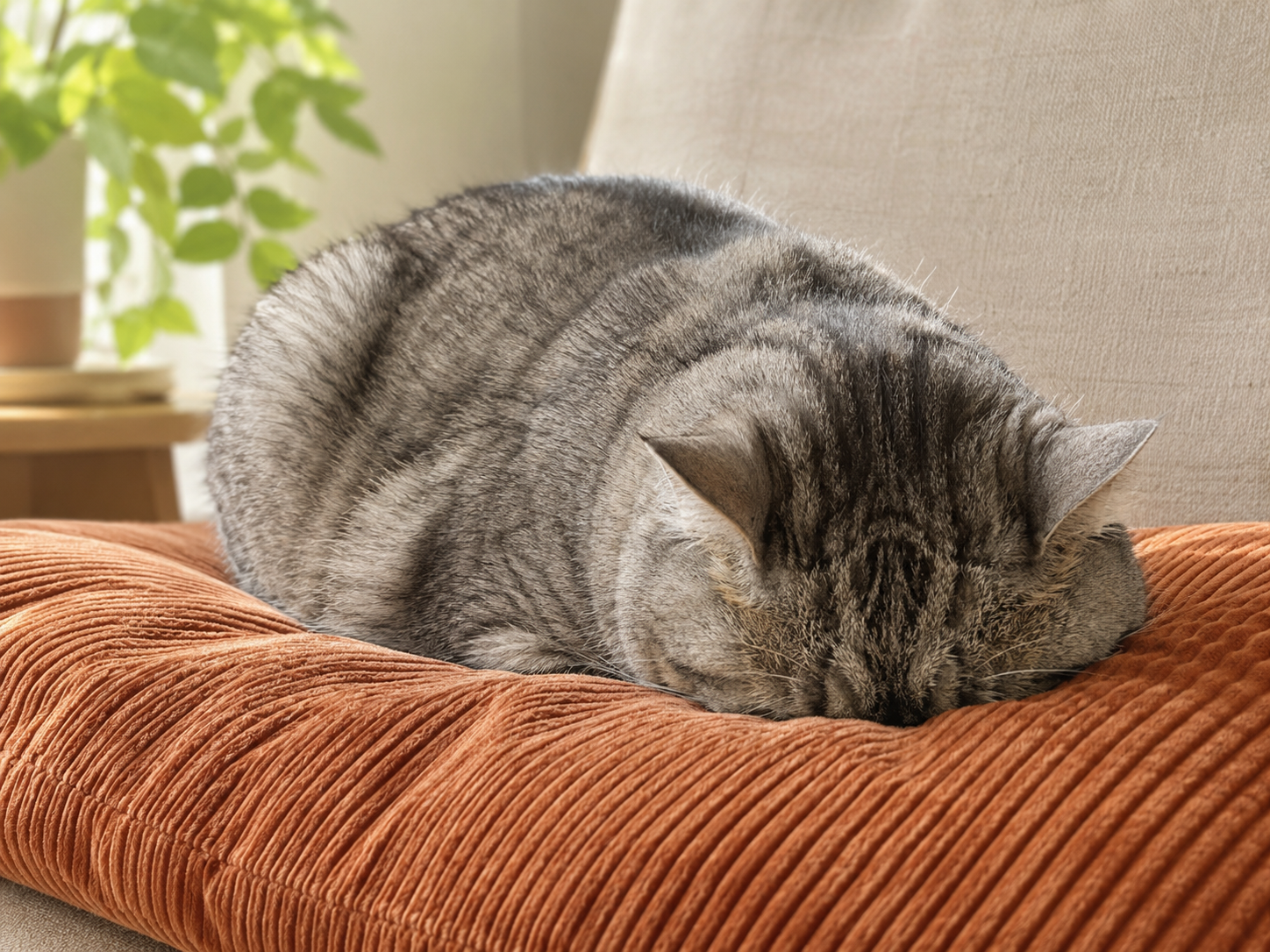
- Face loaf. Forehead pressed down into the surface, sometimes with their nose fully smushed into a blanket. Extremely tired energy.
- Box loaf. Loafing inside something — a cardboard box, a shoebox, a sink, a laundry basket. If it fits, they loafs.
- Chest loaf. Your cat, but on top of you. Usually accompanied by purring and, at some point, sleep.
Why Do Cats Loaf?
1. They’re Comfortable and Relaxed
The loaf position is genuinely comfortable for cats, and it lets them rest without fully committing to a nap.
Cat researcher Mikel Delgado, of the UC Davis School of Veterinary Medicine, has pointed out that a cat with their paws tucked under them is not preparing to run or defend themselves. They’re settled.
Heavy, half-closed eyes and relaxed whiskers are the clearest signs you’re looking at a happy loaf.
2. They Trust You
When your cat picks a loafing spot right next to you (on the couch, at your feet, on your lap), that’s a bond signal. They could settle anywhere in the house. They chose your space.
If your cat is doing the full bread-loaf pose in the same room as you, take the compliment.
3. They’re Cold
A cat’s paws and lower legs have very little fat covering them, so they lose heat quickly, in the same way your fingers get cold before the rest of your body does. Tucking those paws underneath keeps them warm and helps your cat conserve overall body heat.
Two signs your cat may be loafing for extra warmth: their tail is wrapped tightly around their body, and their ears feel cool to the touch.
You’ll also see the “cold loaf” in specific spots: near a heater vent, on top of a warm laptop, in a sunny window, or on a fresh laundry pile.

4. They Feel Threatened
This one’s easy to miss because a defensive loaf can look almost identical to a comfortable one.
The pose does two things at once: it tucks the paws underneath so your cat can stand and move quickly, and it keeps the vital organs low and protected. It’s a compact, ready posture that looks restful but isn’t.
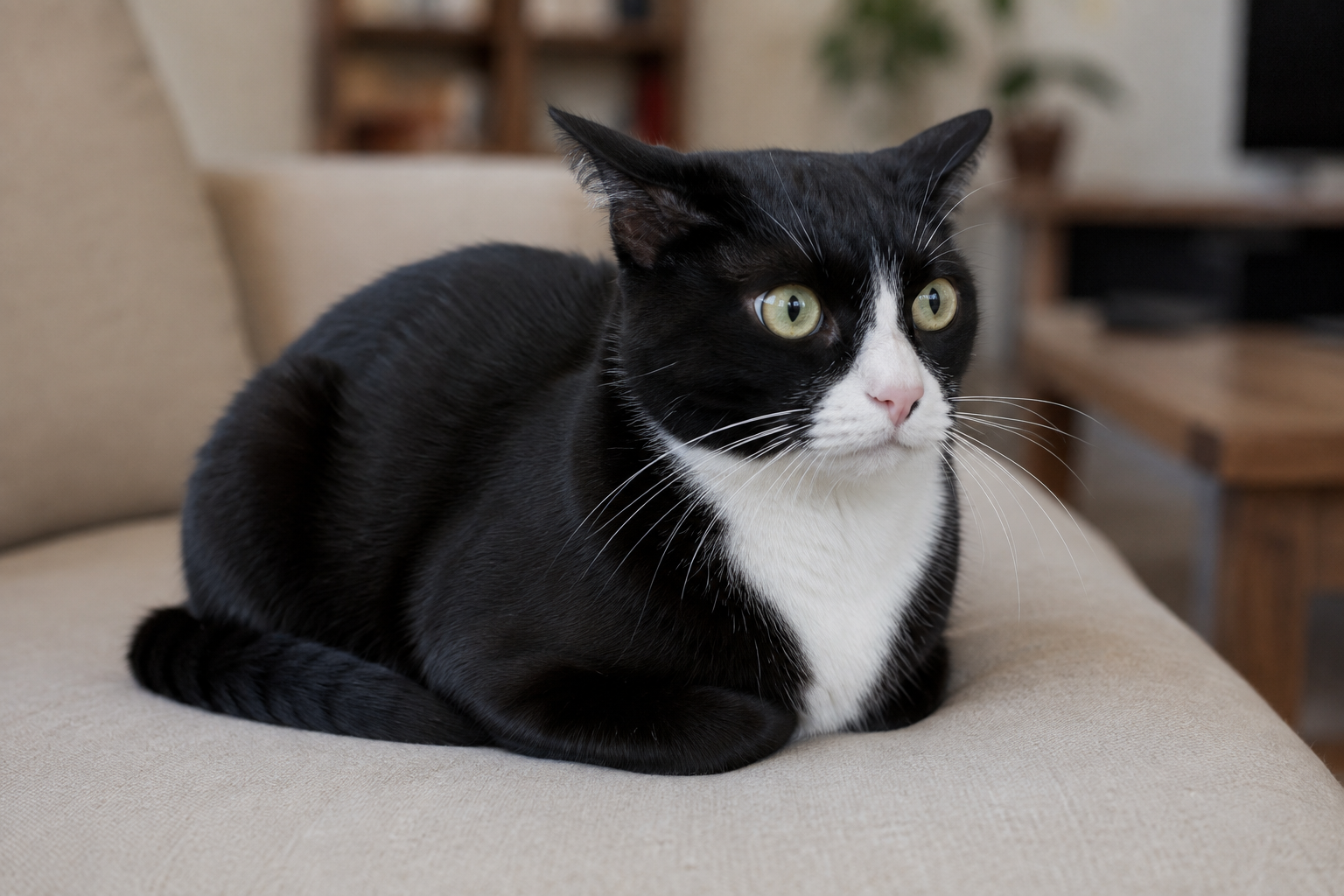
Look for wide or watchful eyes, tense shoulders, ears turned sideways or slightly back, forward-pointing whiskers, and a tail held tightly against the body.
You’ll see this version at the vet, in a new environment, or when there’s an unfamiliar visitor in the house. Their body is telling you they’re not fully relaxed, even if the shape looks the same as when they’re happy on the couch.
5. They Might Not Be Feeling Well
The loaf position can also be a sign your cat is uncomfortable, in pain, or unwell, especially when paired with a hunched back, a tense expression, or a head held unusually low while they’re awake.
Unlike a defensive loaf, a sick loaf usually comes with other changes — in appetite, energy, litter box habits, or responsiveness.
How Can You Tell a Happy Loaf From a Sick or Painful One?
A happy loaf usually shows:
- Half-closed or heavy eyes
- Neutral or slightly forward whiskers
- Ears facing forward or gently swiveling to follow sounds
- Paws fully tucked
- Calm, even breathing
- A tail that’s either wrapped around the body or trailing loosely
- A response when you talk to them (a look, a blink, an ear flick)
A sick or painful loaf may show:
- Tense or squinting eyes — the feline grimace scale can help you assess this at home
- Whiskers pinched forward
- Ears flattened back or held stiff
- Face pressed down or shoulders hunched high
- Audible or labored breathing
- Paws not fully tucked, or limbs held rigidly close to the body
- Little to no response when you interact with them
If something feels off, trust that instinct.
When Should You Worry About Your Cat Loafing?
Any sudden change in how often your cat loafs, where they choose to loaf, or how they hold the position deserves attention. Cats are stoic. They evolved to hide pain, because in the wild, showing weakness is dangerous. A cat who is genuinely uncomfortable often looks nearly identical to one who is fine, and body language becomes your main clue.
One specific pattern that requires urgent attention is the respiratory-distress loaf. When a cat is struggling to breathe, they may adopt a posture that looks similar to a loaf but functions completely differently. Their chest and belly stay flat against the ground, their limbs stay close to the body, and their diaphragm is positioned to pull in as much air as possible per breath. This is not resting. This is a cat trying to survive.
Signs of respiratory distress include:
- Heavy breathing where the abdomen visibly moves with each breath
- Audible breathing, sometimes paired with heavy purring
- Coughing
- Lethargy
- Refusal to eat or a reduced appetite
- Extremities that feel cold to the touch
- Pale or grayish gums
If you see any combination of these signs in a loafing cat, do not wait. This is a veterinary emergency.
For non-emergency changes (a cat who is suddenly loafing more, or loafing in unusual spots like under the bed or behind furniture), keep an eye on their appetite, litter box habits, willingness to jump onto favorite perches, and general energy level over the next day or two. If anything else seems off, it’s always worth checking in with your veterinarian.
Do Kittens and Senior Cats Loaf Differently?
Kittens loaf less than adult cats do, mostly because kittens are busy. Their default state is motion, not stillness, so a proper loaf tends to appear more often once they mellow out into adulthood. When kittens do loaf, it’s usually brief, and it often turns into a nap within a minute or two.
Senior cats, on the other hand, may loaf more often as they age. Some of that is preference. Some of it is arthritis. Older cats with joint stiffness sometimes find loafing more comfortable than lying fully stretched out, because the position takes pressure off certain joints.
If your senior cat has recently started loafing much more than they used to, and they seem reluctant to jump onto favorite spots, mention it to your vet.
What Should You Do When Your Cat Loafs?
Just let them be. Most of the time, a loafing cat is a content cat.
The one useful habit is to notice what your cat’s normal loaf looks like: their posture, expression, and where they tend to settle. That gives you a baseline for spotting when something is off.
Cat Loafing FAQs
Are cats happy when they loaf?
Most of the time, yes. But the same pose can also mean your cat is cold, on guard, or in some kind of discomfort. Tension in the face, ears, or whiskers — or a hunched, face-down posture — are the signs to watch for.
Why does my cat loaf and stare at me?
Your cat is relaxed but still paying attention. They want to be near you and they’re keeping tabs on what you’re doing — possibly waiting for food, pets, or just content to share the same space.
Why does my cat loaf on my chest?
Your chest is warm, soft, and close to you. If your cat chooses it as a loafing spot, they feel comfortable in your company and enjoy the body heat. Sometimes it’s affection. Sometimes you’re simply the warmest seat in the house.
Do kittens loaf?
They do, but usually less than adult cats. Kittens spend most of their time playing, exploring, and eating, so a proper loaf tends to be brief. You’ll see it more once they settle into adulthood.
What does it mean when my cat loafs with their face down?
A face-down loaf can mean your cat is very tired and about to fall asleep, but it can also signal that something is wrong. If the pose is paired with a hunched back, labored breathing, or a reduced response when you approach, contact your veterinarian.
Should I stop my cat from loafing?
No. It’s a normal cat behavior and there’s no reason to interrupt it. The only time to be concerned is if the pose changes shape, becomes more frequent without explanation, or appears alongside other signs of illness.
Debbie Reid is the founder and chief editor of CatPedia.net, with over 25 years of hands-on experience in feline care, rescue, and behavior research. Inspired by her rescue cats Snickers and Bigboy, she collaborates with animal welfare resources and consults veterinary literature to turn complex feline health, nutrition, and behavior topics into clear, actionable guides.