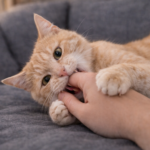
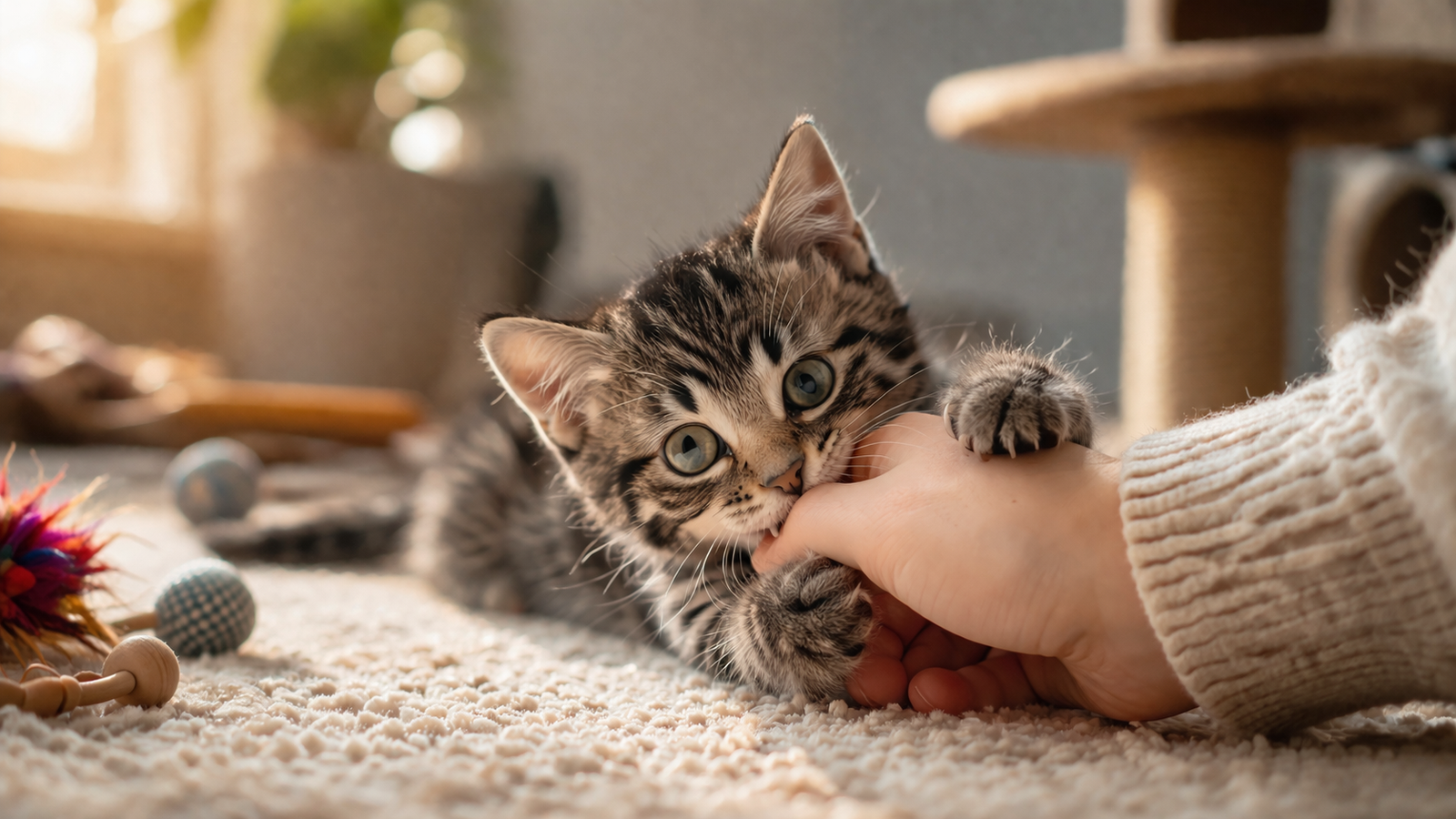
Kittens are adorable right up until those tiny teeth sink into your hand, ankle, or toes. One minute they are cuddly and playful, and the next they are hanging off your arm like a tiny furry alligator.
The good news is that kitten biting is usually normal. Most kittens bite because they are playing, teething, or following instincts that make them chase and grab anything that moves. But that doesn’t mean you should just wait and hope it stops on its own.
We’ll walk through why kittens bite, how to stop the behavior without punishment, what mistakes can make it worse, and when biting could be a sign of something more serious.
Why Is My Kitten Biting Me?
Biting is a natural behavior for kittens. As instinctive hunters, they use their mouths to explore, play, and practice the skills they use to hunt.
Here are the most common reasons why kittens bite, and why your kitten may be biting you specifically:
Teething
Kittens go through teething just like babies do. As their baby teeth fall out and adult teeth come in, their gums can feel sore and irritated.
To relieve that discomfort, many kittens chew and bite more than usual. If your kitten suddenly seems extra mouthy around 3 to 6 months old, teething is often the cause.
Play Behavior
Kittens are naturally playful and full of energy. From a young age, they practice behaviors like chasing, pouncing, grabbing, and mouthing as part of how they learn to hunt and interact with the world around them.
When your kitten bites your hands or feet, they are usually treating them like moving targets. This often happens more if they are bored or not getting enough structured playtime. It may feel like an attack, but in most cases, it is just play behavior directed at the wrong thing.
Hunting Instinct
Kittens are born with strong hunting instincts. Even at a young age, they are wired to track movement and go after anything that looks like prey.
That is why sudden movement often triggers biting. Fingers and toes are especially tempting because they move quickly and unpredictably. To your kitten, they look like something to chase, grab, and catch.
Overstimulation
Some kittens get so excited during play or petting that they become overstimulated. When that happens, they may suddenly bite even if they seemed calm just moments before.
This tends to happen during long or intense play sessions, especially if your kitten has trouble settling down. The biting is not meant to be aggressive. It is usually just a sign they are too wound up.
Fear, Stress, or Pain
Not all biting is playful. A kitten that feels scared, stressed, or uncomfortable may bite to protect themselves or create space.
If your kitten is hissing, hiding, flattening their ears, or biting when touched, it could be a sign something is wrong. In those cases, it is important to look more closely at what may be causing the reaction.
How to Stop a Kitten From Biting
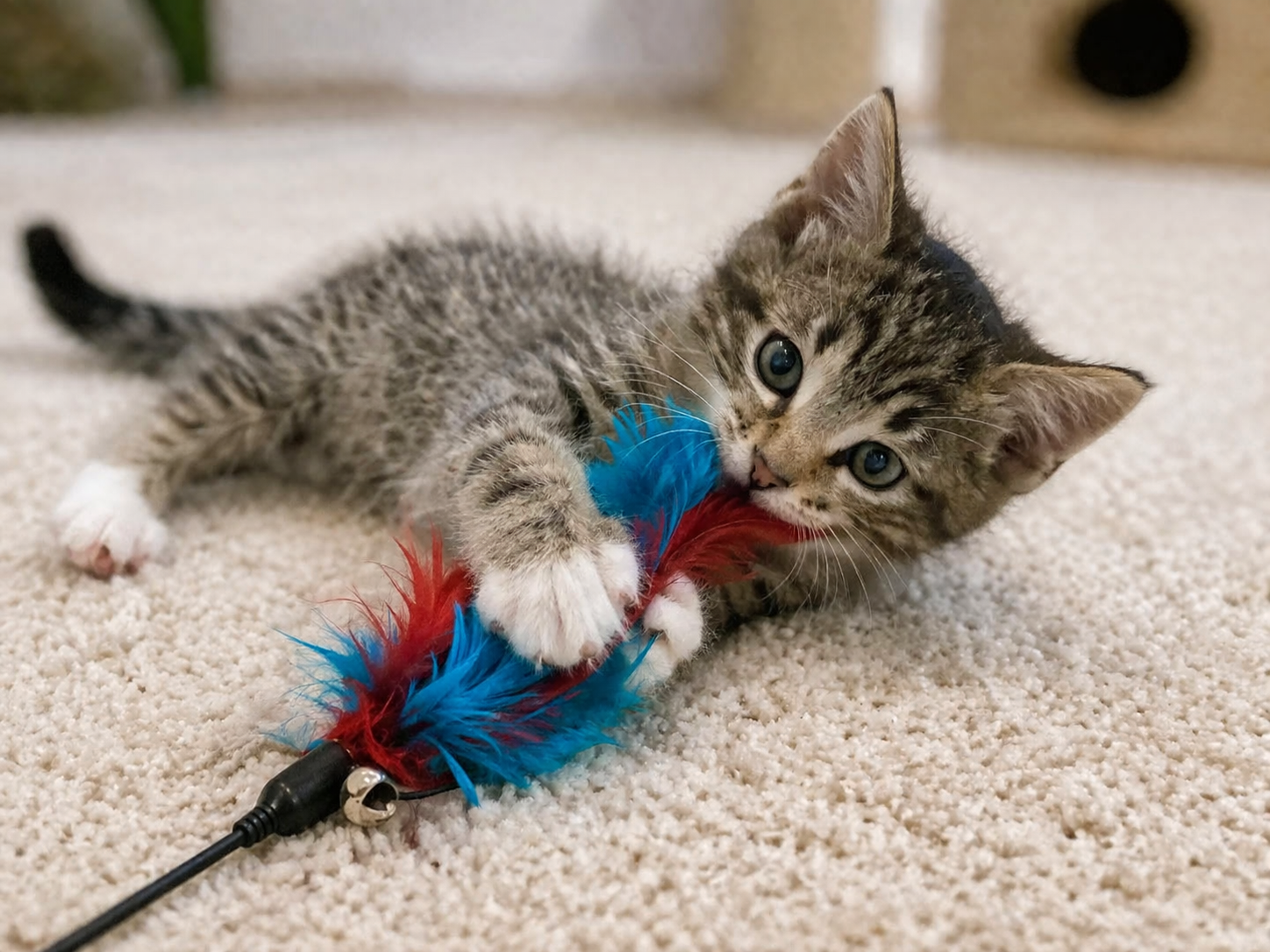
The goal isn’t to stop kitten biting completely. The goal is to teach your kitten what they are allowed to bite instead.
That’s why punishment usually doesn’t work. What works better is redirecting the behavior, setting clear boundaries, and giving your kitten better ways to use that playful energy.
Once you focus on redirecting instead of stopping the behavior, it becomes much easier to break the habit.
Redirect Biting to Toys
When your kitten bites, the best first move is to redirect them to something appropriate. This is one of the most effective ways to stop the behavior because it gives them a safe outlet.
Wand toys, soft mice, crinkle toys, and kicker toys all work well for grabbing, chewing, and bunny-kicking. These toys also create a little distance, which helps keep your hands from becoming part of the game.
Try to keep toys within easy reach in the places where biting usually happens. That way, when your kitten starts going after your hand or ankle, you can quickly switch their focus onto a toy instead.
Use the “Ouch and Disengage” Method
If your kitten bites you during play, give a short “ouch” and stop the interaction right away. This shows that the fun ends. Pull your hand away calmly without jerking, and end the play for a moment.
This teaches your kitten that biting makes play stop. Staying calm is key. Big reactions, yelling, or fast movements can make some kittens more excited and more likely to keep going.
Increase Interactive Playtime
Many biting problems get better when a kitten has more structured play. Giving them a healthy outlet for that energy makes a big difference. If they do not have one, they often turn you into the toy.
Short, active play sessions throughout the day can help a lot. Toys that let your kitten stalk, chase, pounce, and catch something are especially helpful because they satisfy that natural hunt sequence.
Play before meals can work especially well. It follows the natural rhythm of hunt, eat, and rest, which can help your kitten settle down afterward.

Watch for Overstimulation
Some kittens get extra bitey when they are overtired or overstimulated. This can lead to sudden biting, even if they seemed calm just moments before. If your kitten starts lashing their tail, pinning their ears back, or getting more intense during play, it may be time to pause before a bite happens.
If your kitten tends to go from playful to wild very quickly, shorter play sessions can help prevent things from escalating.
Use Positive Reinforcement
Kittens learn through what gets rewarded and what does not. When your kitten plays nicely with toys or redirects instead of biting, you can reward that moment with attention, praise, or a treat.
Over time, your kitten starts repeating what leads to good outcomes. Playing with toys keeps the interaction going, while biting people makes it stop.
What Not to Do When Your Kitten Bites
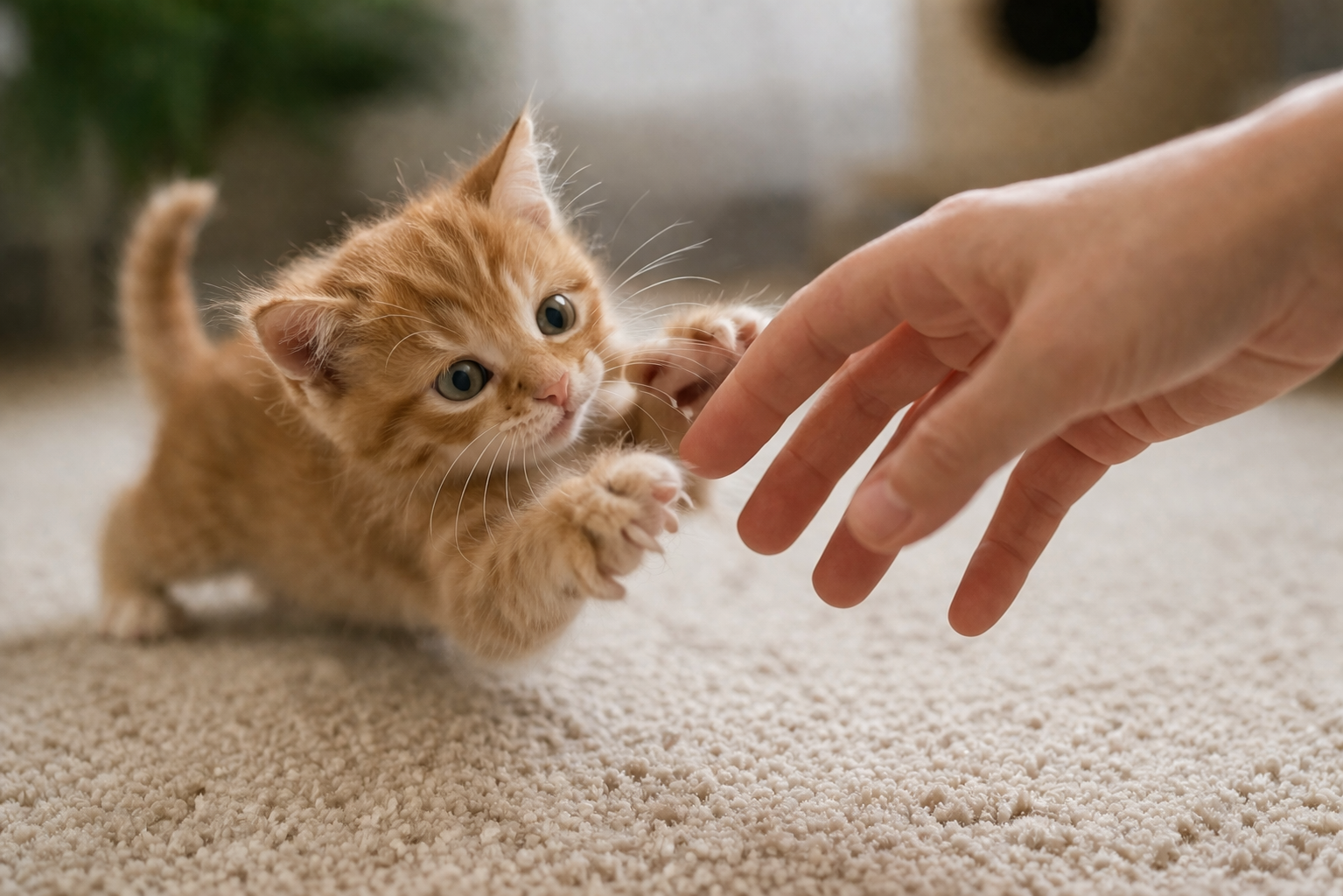
Do Not Punish Your Kitten
Punishment does not stop kitten biting. Yelling, hitting, flicking, or spraying your kitten with water can make them fearful, confused, or more defensive, which may actually lead to more biting.
It can also damage trust. A kitten that is scared of your reactions is not learning good play habits. They are just learning that you are unpredictable.
Do Not Teach Your Kitten That Hands Are Toys
It is really tempting to wiggle your fingers or let your kitten pounce on your toes, especially when they are tiny. This can make kitten biting worse because it teaches them that body parts are fair game.
Once that habit forms, it becomes much harder to break. Keeping hands and feet out of play from the start makes training much easier.
Do Not Encourage Rough Play
Roughhousing can wind some kittens up so much that they lose control and start biting harder. Over time, this can lead to more intense biting. A little excitement is normal, but if play regularly turns into scratching and biting, it has probably gone too far.
Try to keep play focused on toys, movement, and chasing rather than wrestling directly with your kitten.
When to Worry About Kitten Biting
Most kitten biting is normal, but there are times when it deserves a closer look. If your kitten suddenly starts biting more than usual, seems painful when touched, or acts fearful and withdrawn, there may be more going on than normal play.
You should also pay attention if the bites are severe, break skin often, or happen with hissing, growling, or obvious fear. In those cases, it is a good idea to talk with your veterinarian to rule out pain or illness.
If the behavior keeps going despite consistent training, a cat behaviorist may also be helpful. Sometimes what looks like simple kitten biting has a deeper trigger that needs a more tailored approach.
Frequently Asked Questions
Do kittens grow out of biting?
Many kittens bite less as they get older, especially after teething and their most playful months. Still, habits matter. If a kitten learns to bite people during play, it may not go away on its own if nothing changes.
At what age do kittens stop biting?
It varies, but many kittens start calming down between 6 and 12 months of age. Teething usually improves earlier than that, but playful biting can continue longer if the habit has been reinforced.
Why does my kitten bite me so much?
Most often, kittens bite because they are playing, teething, overstimulated, or following their hunting instincts. If the behavior seems excessive, look at how much interactive play they are getting and whether hands have become part of the play routine.
How do I stop my kitten from biting and scratching?
Redirect both behaviors to toys, avoid hand play, provide daily interactive exercise, and end play briefly when biting or scratching starts. Since kittens often use claws and teeth together, the same general training approach helps both problems.
Is kitten biting ever a sign of aggression?
Sometimes, but not usually. Most kitten biting is playful or related to teething. True aggression is more likely if the kitten looks scared, tense, defensive, or seems to bite to make you go away rather than to play.
Final Thoughts
Kitten biting can be frustrating, but most kitten biting is completely normal. In most cases, your kitten is not trying to be bad. They are just learning how to play, how hard is too hard, and what belongs in their mouth.
With consistent redirection, better play habits, and clear boundaries, most kittens improve a lot. The key is to stay patient, stop making hands part of the fun, and give your kitten better ways to use all that wild little predator energy.
That way, you can keep the fun parts of kittenhood and spend a lot less time prying tiny teeth off your fingers.
Debbie Reid is the founder and chief editor of CatPedia.net, with over 25 years of hands-on experience in feline care, rescue, and behavior research. Inspired by her rescue cats Snickers and Bigboy, she collaborates with animal welfare resources and consults veterinary literature to turn complex feline health, nutrition, and behavior topics into clear, actionable guides.