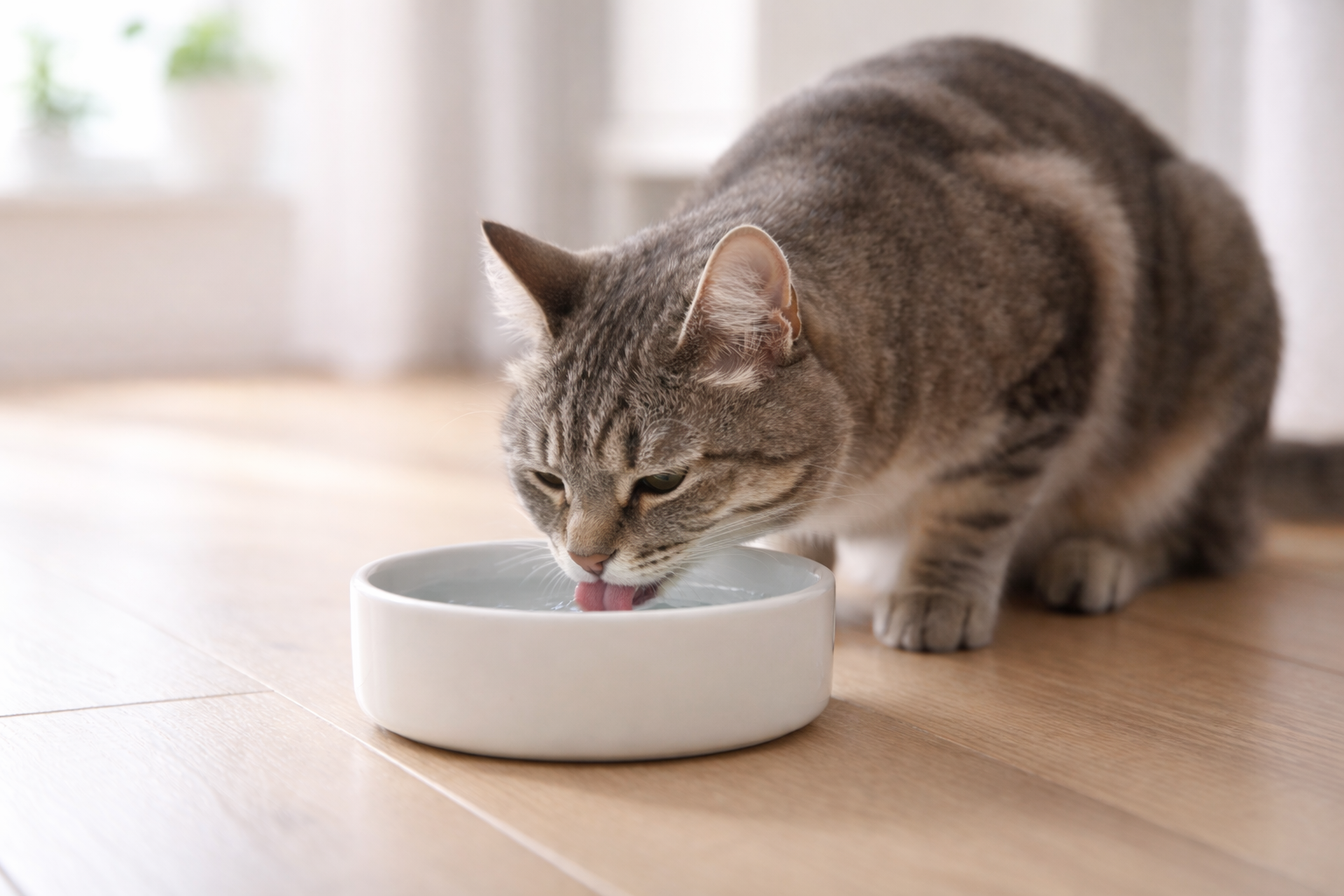
For many cat owners, checking the water bowl is part of the morning routine. You rinse it out, refill it, and move on without thinking much about it.
Then one day you notice the level looks different than you expect. Maybe it’s still mostly full when you go to refresh it. Or by midday it’s already much lower than usual. Small shifts in drinking habits are often harmless, but bigger changes can sometimes be an early sign that something is going on with your cat.
That’s where it helps to know what’s actually normal. How much water should a cat drink each day? We’ll walk through typical intake, what can affect it, and how to tell when a change in thirst might need closer attention.
How Much Water Should a Cat Drink Per Day?
A healthy adult cat generally needs about 3.5 to 4.5 ounces of water per 5 pounds of body weight per day. This includes both the water they drink and the moisture they get from food.
To make that easier to picture, a 10-pound cat typically needs around 7 to 9 ounces of total water daily. A larger 15-pound cat may require between 10 and 13 ounces. These are general averages rather than exact rules, and individual needs can vary slightly.
Because part of this total comes from food, bowl drinking can look very different from one cat to another. What matters most is consistency. If your cat’s drinking habits stay steady from day to day, their hydration is usually right where it should be.
What Influences a Cat’s Water Intake?
Water consumption is not identical for every cat. While the general daily guideline provides a helpful starting point, several everyday factors can influence how much a cat drinks without signaling a problem.
Diet is the biggest variable. Dry kibble contains very little moisture, which means cats must drink more from their bowl to stay properly hydrated. Wet food, on the other hand, can contain 70 percent or more water. Cats eating canned diets may appear to drink very little because much of their daily water intake is already built into their meals.
Weather and environmental temperature also play a role. Just like people, cats tend to drink more in warmer conditions. A slight increase during summer months, after time spent in a sunny window, or following active play is usually a normal response to mild fluid loss.
Activity level matters as well. A cat who runs, climbs, and engages in frequent bursts of energy will naturally lose more fluid than a sedentary cat who naps most of the day. Increased movement can lead to a healthy rise in thirst.
Finally, age can influence daily water needs. Kittens, adults, and senior cats process hydration differently as their bodies change over time. Mild differences are common, but noticeable or persistent increases in water intake — especially in older cats — should be monitored more closely.
Is My Cat Drinking Too Much Water?
Some increases in thirst are completely normal. A single day of extra drinking can be linked to warmer weather, increased activity, or a recent change in food. But when the change continues over days or weeks, it may signal excessive thirst, known medically as polydipsia, and is often paired with increased urination.
Some of the most common signs that a cat may be drinking too much water include:
- Emptying the water bowl much faster than usual
- More frequent trips to the litter box
- Larger or heavier urine clumps
- Noticeable weight loss alongside increased thirst
Several underlying health conditions can cause persistent increases in thirst. Chronic kidney disease and diabetes are among the most common, particularly in middle-aged and senior cats. hyperthyroidism, certain medications, and other metabolic changes can also affect how much a cat drinks.
If your cat’s drinking habits have clearly changed and remain elevated for more than a few days, it’s wise to schedule a veterinary visit. Bloodwork and urine testing are often needed to determine whether the increase is harmless or related to an underlying condition.
Is My Cat Not Drinking Enough?
Low water intake can be just as concerning as excessive drinking, especially because many cats naturally have a lower thirst drive than other animals. Cats evolved in dry environments and are designed to get much of their moisture from food, which means they may not always feel a strong urge to drink, even when their bodies need more fluids.
Because of this, it can sometimes be difficult to tell whether a cat is drinking enough. Small variations are normal, particularly for cats eating wet food, but consistently low intake can lead to subtle dehydration over time.
Early signs of dehydration may include reduced energy, dry or tacky gums, decreased appetite, or less frequent urination. One simple at-home check involves gently lifting the skin between your cat’s shoulder blades. If it doesn’t quickly return to its normal position, your cat may not be getting enough fluids.
If your cat seems reluctant to drink, adding moisture to meals or encouraging hydration through fountains and multiple bowl locations can help increase daily water intake.
How Much Water Should a Kitten Drink?
Kittens generally follow the same daily water guideline based on body weight, but their intake can look surprisingly small simply because they are so tiny. A 3-pound kitten, for example, only needs a few ounces of total water per day from both food and drinking.
Many kittens eat moist food during early development, which provides a large portion of their hydration. Because of this, it’s common for young kittens to visit the water bowl less often than adult cats.
As long as a kitten is playful, growing steadily, eating well, and urinating normally, a small but consistent level of water intake is usually perfectly appropriate.
How Much Water Should a Senior Cat Drink?
Senior cats often require a bit more attention when it comes to hydration. While some mild increase in drinking can occur with age, noticeable changes shouldn’t automatically be brushed off as a normal part of getting older.
As cats age, kidney function and metabolism can gradually shift. Early kidney disease and diabetes — both more common in older cats — often show up first as increased thirst and more frequent urination. Because these conditions develop slowly, even subtle changes in drinking habits can be meaningful.
If your senior cat begins drinking significantly more or less than usual, it’s a good idea to mention it during routine vet visits. Catching small hydration changes early can make a big difference in long-term health and comfort.
When Should You Be Concerned?
Most day-to-day changes in drinking habits are harmless, especially if your cat is otherwise acting normal. However, there are times when shifts in water intake can signal an underlying health issue that shouldn’t be ignored.
It’s a good idea to contact your veterinarian if your cat shows any of the following along with noticeable changes in thirst:
- Rapid or unexplained weight loss
- Persistent vomiting
- Extreme lethargy or weakness
- Complete refusal to drink
- Sudden, dramatic increase in water intake
Water balance is closely tied to how the kidneys and metabolism function. When drinking habits change significantly, it’s often one of the body’s earliest signals that something needs attention.
Trusting your instincts as a cat owner matters. If something about your cat’s drinking behavior feels off or out of character, a quick check with your veterinarian can provide clarity and peace of mind.
Is Your Cat’s Water Intake Normal?
Most cats develop a steady hydration pattern once their diet, routine, and environment stay consistent. The key is learning what’s normal for your individual cat.
Small day-to-day fluctuations are expected. But persistent increases, sudden drops, or changes paired with other symptoms are worth paying attention to.
Keeping an eye on the water bowl may seem simple, but it’s one of the easiest ways to catch early health changes. When you understand your cat’s normal routine, you’ll notice sooner if something truly isn’t right.
Debbie Reid is the founder and chief editor of CatPedia.net, with over 25 years of hands-on experience in feline care, rescue, and behavior research. Inspired by her rescue cats Snickers and Bigboy, she collaborates with animal welfare resources and consults veterinary literature to turn complex feline health, nutrition, and behavior topics into clear, actionable guides.