Few things make a cat parent panic faster than watching their cat breathe harder than normal. You may notice their sides moving fast, their chest rising and falling more than usual, or a breathing pattern that just does not look right.
When you notice that, it is hard not to worry. You may start wondering if your cat is just tired from playing, feeling stressed, or if something more serious could be going on.
Sometimes heavy breathing settles on its own, and other times it does not. Paying attention to when it happens and what your cat is doing can help you decide what to do next.
Is It Normal for Cats to Breathe Heavy?
Most of the time, cats breathe quietly and steadily when they are resting. You may not even notice their breathing unless you are watching closely.
There are a few situations where slightly heavier breathing can be normal, such as right after intense play, stress, or excitement. In those moments, breathing may speed up briefly and then return to normal within a few minutes once your cat settles down.
However, heavy breathing that continues while your cat is resting, sleeping, or doing very little is not considered normal. If your cat’s breathing looks labored, fast, or noisy when they should be calm, it deserves closer attention.
Why Is My Cat Breathing Heavy While Resting or Sleeping?
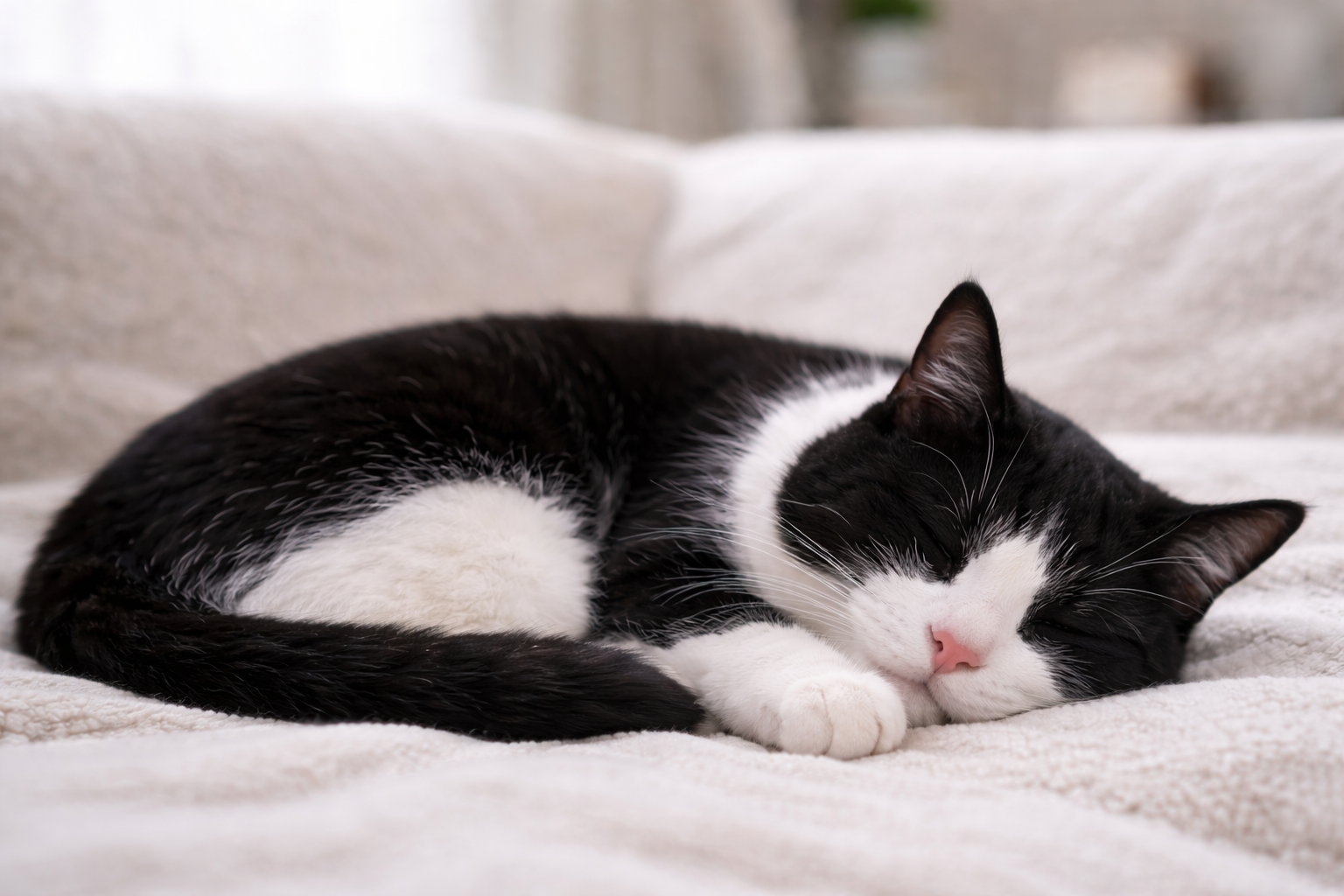
When your cat is resting or sleeping, their breathing should usually be slow and quiet. If you start to notice heavier or faster breathing during these calm moments, it can be a sign that something is off.
In some cases, breathing may look heavier because of how your cat is positioned or because they were recently active or stressed. If breathing settles after your cat shifts position or fully relaxes, it is usually less concerning.
If heavy breathing continues during rest or sleep, or does not improve after your cat wakes up, it is a strong sign that something may be wrong and should not be ignored.
Common Reasons a Cat May Be Breathing Heavy
There are several health issues that can affect how easily a cat can breathe. Some are mild and treatable, while others are more serious and require prompt care.
Respiratory infections can cause congestion and inflammation, making it harder for air to move freely through the nose and lungs. Asthma is another possible cause, where the airways tighten and make it harder to breathe, sometimes along with coughing or wheezing.
Heart disease can also lead to heavy breathing if fluid builds up around the lungs or the heart is not pumping efficiently. Conditions like hypertrophic cardiomyopathy (HCM), which is one of the most common heart problems in cats, can interfere with normal breathing.
Pain, stress, overheating, and even severe anemia can also cause a cat to breathe faster or harder than usual. This is why it is important to look at the full picture, not just the breathing by itself.
Cat Breathing Heavy After Playing: Is That Normal?
It is not unusual for a cat to breathe a bit faster after a burst of running or energetic play. Just like people, cats need a moment to catch their breath after activity.
In healthy cats, breathing should return to normal fairly quickly once playtime ends and your cat settles down. You may notice a few deep breaths, then a gradual return to quiet breathing.
If your cat continues breathing heavily long after play stops, seems weak, or refuses to lie down and relax, that is not typical and should be checked by your veterinarian.
When Heavy Breathing Is a Medical Emergency
Some breathing problems can become serious very quickly. Knowing the warning signs can help you act quickly if your cat needs urgent care.
Contact your veterinarian or an emergency clinic right away if you notice any of the following:
- Open-mouth breathing or panting
- Very fast or shallow breaths
- Lethargy or trouble standing
- Refusing food or water
- Blue or pale gums
- Breathing that looks strained or painful
Heavy breathing along with low energy or not eating can signal serious illness. Cats are very good at hiding pain, so visible breathing trouble should always be taken seriously.
Heavy Breathing in Older Cats
As cats age, their risk for certain health problems increases. Older cats are more likely to develop heart disease, chronic lung issues, and other conditions that can affect breathing.
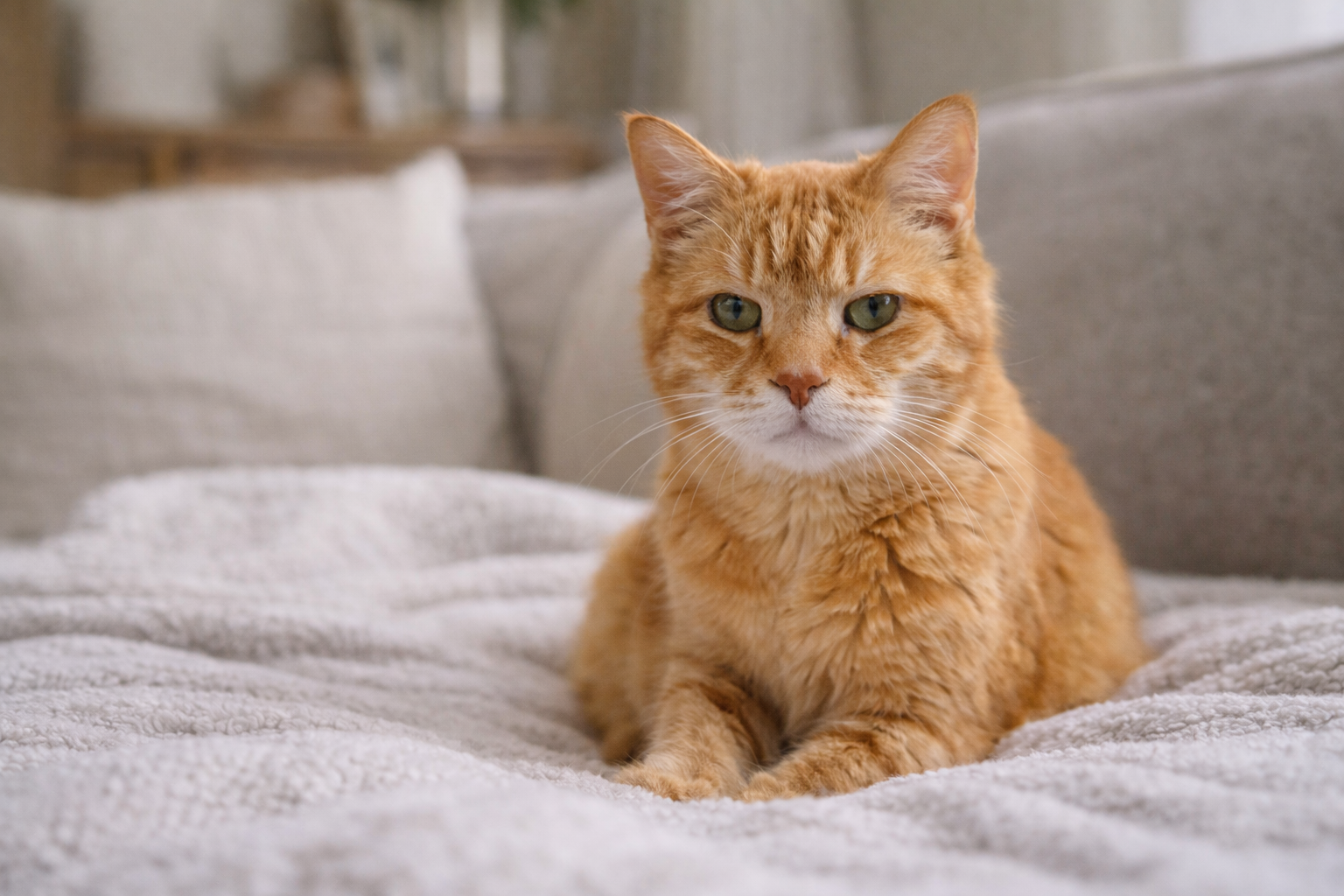
Arthritis and other painful conditions may also cause stress responses that change breathing patterns. Even if the breathing seems mild at first, repeated episodes in senior cats deserve medical evaluation.
If your older cat suddenly starts breathing heavier than usual, or if the pattern slowly worsens over time, scheduling a vet visit sooner rather than later is a good idea.
What You Can Do Right Now at Home
If your cat seems uncomfortable but stable, keeping them calm is one of the most helpful things you can do while you decide on next steps.
Move your cat to a quiet, cool room and limit handling. Stress and excitement can make breathing problems worse, so gentle observation is better than constant checking.
You can also watch how fast your cat is breathing while resting. Normal resting breathing is usually under about 30 breaths per minute for most cats. If the rate stays high or increases, that information can be helpful to share with your veterinarian.
Home care should never replace veterinary advice if breathing looks labored or your cat seems unwell.
When to Call the Vet About Heavy Breathing
You know your cat’s normal behavior better than anyone. If something feels off, it is always okay to call your veterinarian and ask what to do.
Breathing problems are not something to monitor for days without guidance. Even if symptoms seem mild, early evaluation can prevent more serious complications.
Prompt care often leads to better outcomes and less stress for both you and your cat in the long run.
Is My Cat’s Heavy Breathing Normal or a Red Flag?
Short-term heavy breathing after activity or stress may not be concerning if your cat quickly returns to normal and seems comfortable.
Breathing that stays heavy, happens at rest, or comes with other symptoms is not normal and deserves medical attention. Watching patterns and acting early helps protect your cat’s health and gives you peace of mind when something doesn’t seem right.