
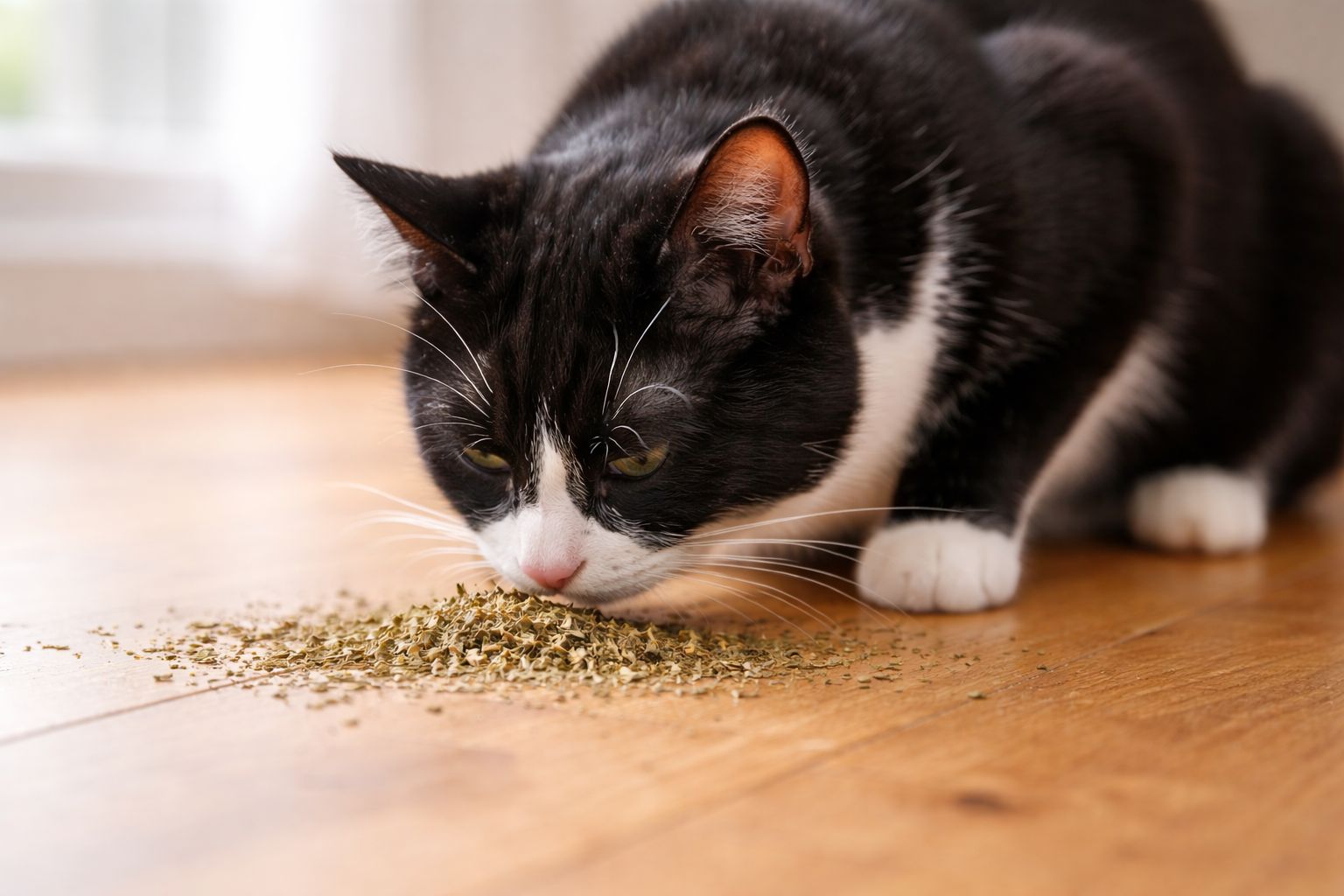
We all know cats love catnip. Some get a burst of energy and race around the house, while others become relaxed and just chill.
With Snickers, I only have to show her the container and she comes running, circling my legs and meowing impatiently until I give her some.
So what is it about catnip that cats love so much?
Why Do Cats Like Catnip?
Cats like catnip because of a natural chemical inside the plant called nepetalactone. It affects scent receptors in a cat’s nose and sends signals to the brain that can change mood and behavior.
When a cat smells catnip, those scent receptors send messages to parts of the brain linked to emotion and activity. That’s what creates the reaction many cat owners notice. Some cats get playful and energetic, while others become calm and relaxed.
For many cats, catnip works like a natural mood booster. It can make playtime more exciting, encourage movement, and help prevent boredom, especially for indoor cats. That’s why you might see rolling, zoomies, rubbing against furniture, or loud purring after exposure.
The response is triggered mostly by smell, not taste. Even cats that don’t eat catnip may still react strongly just by sniffing it.
What Does Catnip Actually Do to Cats?
Once catnip triggers that brain response, the effects usually show up quickly in a cat’s behavior. Most reactions fall into two main categories: energetic or relaxed.
Some cats race around the house with sudden bursts of energy, while others flop over and look completely content. Both reactions are normal and simply reflect how each individual cat responds to catnip.
When exposed to catnip, many cats roll, rub against the floor or furniture, zoom around, or become more vocal than usual. Some may drool slightly or rub their face and chin along nearby surfaces. These behaviors are harmless and are part of the natural response to catnip.
The initial reaction usually lasts between 5 and 15 minutes. After that, most cats lose interest and won’t respond again right away, even if more catnip is offered. They typically need a reset period of 30 minutes to a couple of hours before they can react again.
Does Catnip Get Cats High?
Catnip can create a temporary euphoric reaction in many cats, which is why people often describe it as making cats “high.” While the comparison is understandable, the reaction is completely natural and not harmful.
The effects are short-lived and usually wear off within minutes. Once the excitement fades, most cats return to normal and may even become calm or sleepy afterward. There is no evidence that catnip is addictive when used in typical amounts.
Because the reaction is tied to scent receptors, cats cannot overdose in the traditional sense. Even if they eat some catnip, their body processes it like any other herb. In very large amounts, it could cause mild stomach upset, but most cats naturally stop once they’ve had enough.
For most households, catnip is simply a safe way to encourage play, movement, and mental stimulation.
Why Do Some Cats Not Like Catnip?
Not every cat responds to catnip, and that’s completely normal. Sensitivity to catnip is genetic, which means some cats simply don’t have the ability to react to it.
It’s estimated that about 30 to 40 percent of cats don’t respond to catnip at all. If your cat ignores it completely, there’s nothing wrong with them. They just may not have inherited the sensitivity needed to experience the effect.
Age can also play a role. Very young kittens usually don’t respond to catnip yet, even if they carry the gene. Senior cats sometimes show less interest as well, although many continue to enjoy it well into old age.
If your cat doesn’t react to catnip, alternatives like silvervine or valerian root can sometimes produce a similar response and may be worth trying.
How Old Do Cats Have to Be for Catnip?
Most kittens begin responding to catnip between 3 and 6 months old. Before that age, many kittens simply ignore it because their scent receptors and brain response are not fully developed yet.
Some cats may not show interest until closer to 6–12 months old, while others respond strongly the first time they encounter it. Every cat develops at a slightly different pace.
If you offer catnip to a young kitten and they show no interest, that’s completely normal. Try again in a few months and you may see a very different reaction.
Is Catnip Safe for Cats?
Catnip is considered very safe for cats and has been used for generations as a natural enrichment tool. It is non-toxic, non-addictive, and commonly found in cat toys, sprays, and treats.
Even when eaten, catnip is generally harmless. Some cats enjoy chewing on fresh or dried leaves, while others prefer simply smelling and rolling in it. Most cats naturally regulate their own intake and stop when they’ve had enough.
If a cat consumes a large amount at once, it may cause mild stomach upset, but this is uncommon. Offering catnip in moderation a few times per week usually helps keep the reaction strong and enjoyable.
Because of its safety and ability to encourage play, many cat owners use catnip to reduce boredom, promote exercise, and make toys or scratching posts more appealing.
Can Cats Eat Catnip?
Yes, cats can safely eat catnip in small amounts. Some cats actually prefer eating it over rolling in it. Eating catnip often produces a more calming effect, while smelling it tends to trigger playful or energetic behavior.
With Snickers, eating catnip is by far her favorite way to enjoy it. The moment I sprinkle a little down, she goes straight for it and happily munches away before doing anything else.

Catnip can be offered in several forms, including dried loose catnip, fresh leaves, sprays, or catnip-filled toys. Most cats naturally decide how much they want and walk away once they’re satisfied, which helps prevent overeating.
As with any treat or supplement, moderation is important. Offering small amounts occasionally helps keep catnip exciting and effective. Giving too much too often may reduce your cat’s response over time or lead to mild stomach upset in sensitive cats.
For many households, catnip is simply a safe and enjoyable way to add enrichment, encourage play, and provide a little extra stimulation during the day.
How to Use Catnip for Play and Enrichment
Catnip can be a great way to encourage exercise and mental stimulation, especially for indoor cats. Sprinkling a small amount on a scratching post or cat tree can make those items more appealing and help reinforce healthy scratching habits.
You can also use catnip during play sessions to keep your cat active and engaged. Many cats become more energetic and curious after exposure, which can help reduce boredom and encourage movement throughout the day.
Fresh, high-quality catnip usually produces the strongest reaction, especially for cats that respond intensely to the scent.
Keeping catnip stored in an airtight container helps preserve its strength and scent so your cat continues to respond to it over time.
Catnip toys can also be a great option for independent play. They allow your cat to enjoy the scent and stimulation without needing loose catnip sprinkled around your home.
| Preview | Product | Price | |
|---|---|---|---|

|
Yeowww! Catnip Toy, Yellow Banana | $8.00 | View on Amazon |
Toys like this are perfect for batting, kicking, and carrying around the house. Many cats enjoy having a dedicated catnip toy they can return to whenever they feel playful.
Final Thoughts: Why Cats Love Catnip So Much
Cats love catnip because of the way it interacts with their senses and brain. For many cats, it creates a short burst of playful energy or a calm, relaxed mood that makes everyday life a little more interesting.
Not every cat will respond to catnip, and reactions can vary, but for those that do enjoy it, catnip is a safe and simple way to encourage play, movement, and mental stimulation.
Whether your cat gets the zoomies, melts into the floor, or comes running the moment you open the container like Snickers does, catnip remains one of the easiest ways to add enrichment and excitement to a cat’s day.