Cleaning the litter box is one of those parts of cat ownership nobody loves, but every cat parent has to deal with it. Even when you scoop daily, clumps can stick to the bottom of the box, odors can build up, and eventually the whole thing needs a good scrub.
That’s why kitty litter liners sound like such a great idea. In theory, you place a liner inside the litter box, add litter on top, and when it’s time for a full change, you simply lift the liner and throw everything away.
No scraping. No stuck-on litter. No deep cleaning.
At least, that’s the promise.
In reality, some cat owners love liners while others abandon them after a few frustrating days. Some cats tolerate them just fine, while others tear them to shreds or refuse to use the litter box altogether.
So are kitty litter liners actually worth using? Let’s look at how they work, why cats sometimes hate them, and when they might make sense.
What Are Kitty Litter Liners?
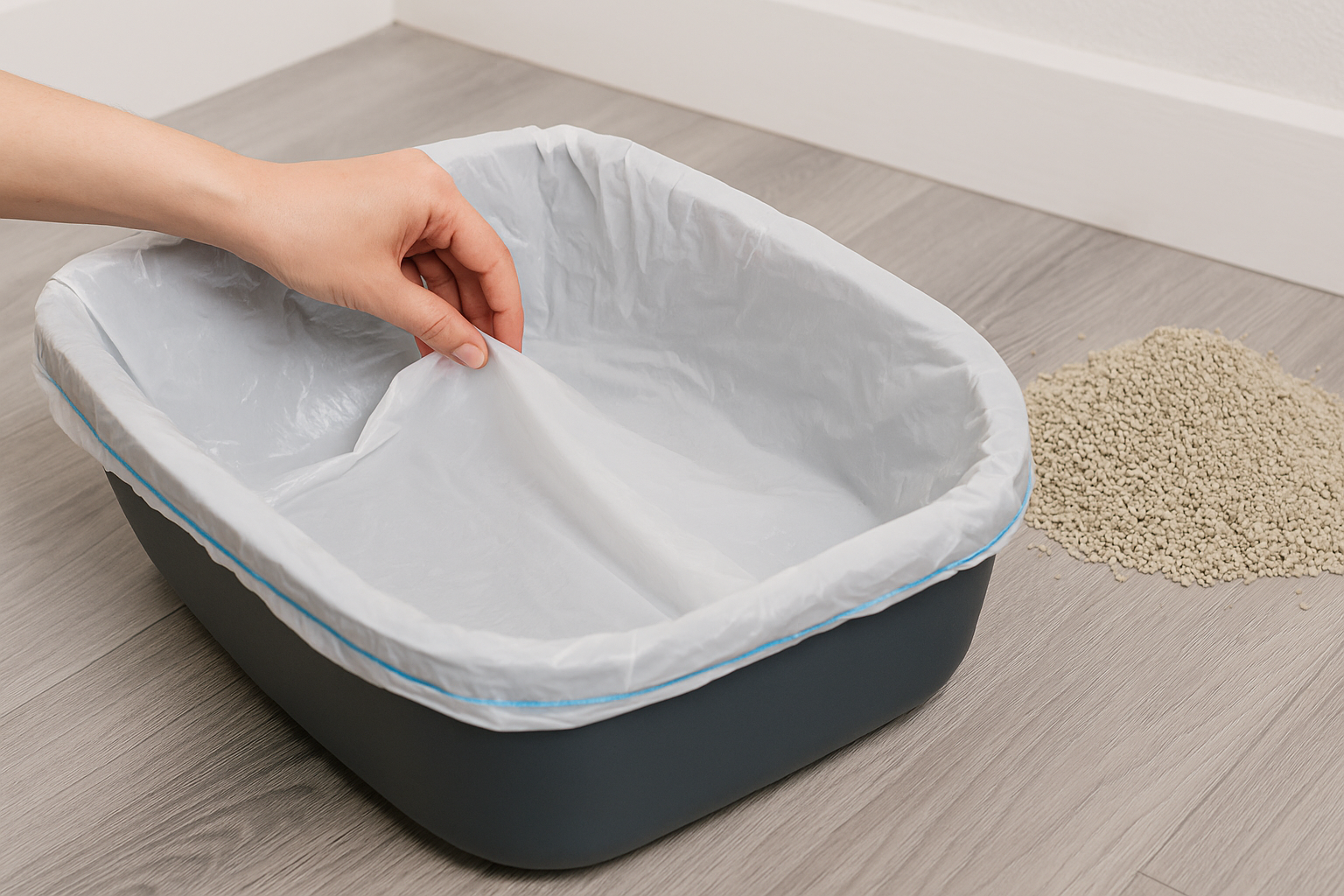
Litter box liners are large plastic sheets that sit inside a litter box before the litter is added. They act as a barrier between the litter and the bottom of the box.
When the litter becomes dirty, the idea is simple: gather the edges of the liner, tie it closed, and throw the entire contents away. Instead of scraping dried litter off the plastic box, you simply replace the liner.
Most liners are made from durable plastic and are sized to fit standard litter boxes. Some versions include drawstrings or elastic edges that stretch over the rim of the box to help keep the liner in place.
The goal is convenience. Instead of scrubbing the litter box during a full change, you lift the liner and start fresh.
Why Some Cat Owners Like Litter Liners
For humans, litter liners can make litter box maintenance feel easier and cleaner.
- Easier litter changes: lifting a liner can be quicker than scraping clumps stuck to the bottom of the box.
- Less residue buildup: liners help prevent wet litter from sticking directly to plastic.
- Cleaner boxes: the litter box itself stays cleaner underneath the liner.
- Less scrubbing: deep cleaning may take less effort.
If your cat digs gently and the liner stays intact, the system can work fairly well.
However, many cat owners quickly discover that liners come with a few unexpected downsides.
The Problems With Kitty Litter Liners
The biggest issue with litter liners is that cats interact with them in ways the packaging rarely mentions.
Cats naturally dig, scratch, and bury their waste. Those behaviors are completely normal, but they can be rough on thin plastic liners.
Even heavy-duty liners can eventually develop holes from repeated scratching. Once a tear appears, litter and urine can slip underneath the liner, creating the exact mess the liner was supposed to prevent.
Liners can also bunch up underneath the litter. As cats dig and move litter around, the plastic shifts and forms wrinkles. These folds can collect in corners or pile up in the middle of the box, creating uneven litter depth that makes scooping harder.
For some cats, the biggest issue isn’t tearing or bunching—it’s the way liners feel.
The plastic surface can move slightly under their paws, and the crinkling sound when claws touch the liner can feel unfamiliar. Cats rely heavily on routine and texture when using their litter box, and even small changes can make the box feel wrong to them.
When that happens, some cats hesitate to use the box or start eliminating elsewhere, which quickly turns into a much bigger problem than cleaning the litter box.
Why Cats React This Way
Cats didn’t evolve to use plastic-lined bathrooms.
In the wild, cats bury their waste in loose soil or sand. These natural materials stay stable under their paws and allow them to dig comfortably.
Litter liners change that experience. The plastic barrier can shift slightly when a cat digs, and the surface underneath the litter can feel less stable than bare litter alone.
Many cats adapt without any problems. Others are much more sensitive to changes in their environment and may react negatively to liners.
Because litter box habits are so important to a cat’s routine, even small discomforts can make a big difference.
A Better Alternative Many Cat Owners Prefer
If your goal is easier litter box cleaning, many cat owners eventually discover a simpler solution: switching to a stainless steel litter box.
Unlike plastic, stainless steel is non-porous. That means it doesn’t absorb odors, bacteria, or stains over time. Plastic litter boxes often develop scratches that trap odors, but stainless steel stays smooth and easy to clean.
Many owners find that stainless steel boxes rinse clean quickly with warm water and mild soap, which often eliminates the need for liners entirely.
They also tend to last much longer than plastic litter boxes, which can warp, scratch, or hold odors after years of use.
For households that want easier litter box maintenance without dealing with torn liners, stainless steel boxes are often a more reliable long-term solution.
| Preview | Product | Price | |
|---|---|---|---|

|
IKITCHEN Stainless Steel Cat Litter Box, Large Metal Litter Box for Cats, Never Absorbs Odors,Stain... | $36.99 | View on Amazon |
When Litter Liners Actually Make Sense
Despite their drawbacks, litter liners can still be useful in certain situations.
If your cat digs gently and doesn’t tear the plastic, liners can make full litter changes quicker and easier. Some households also prefer liners when they want to minimize contact with used litter during cleanup.
Liners can also help temporarily when someone else is caring for your cat. A pet sitter or family member may find it easier to lift and dispose of a liner rather than scrub a litter box.
In these cases, liners can provide convenience without causing problems for the cat.
If You Want to Use Litter Liners Anyway
If you decide to try liners, a few small adjustments can improve your chances of success.
- Choose thicker, heavy-duty liners that resist tearing.
- Look for liners with elastic edges that grip the litter box rim.
- Keep litter depth around 2–3 inches to protect the liner from claws.
- Trim your cat’s claws regularly if they dig aggressively.
Even with these steps, some cats will still shred liners quickly. Every cat’s digging style is different.
| Preview | Product | Price | |
|---|---|---|---|

|
Alfapet Cat Litter Box Liners Large 12 Count - Tear-Resistant Cat Litter Bags - Waterproof Kitty... | $15.99 | View on Amazon |
Kitty Litter Liner FAQs
Are kitty litter liners necessary?
No. Many cat owners never use liners at all. Regular scooping and occasional litter box washing are usually enough to keep things clean.
Do cats like litter box liners?
Some cats tolerate liners, while others dislike the texture or sound of plastic. If your cat avoids the litter box after adding a liner, it’s best to remove it.
How often should litter liners be changed?
Replace litter liners whenever you do a full litter change, or sooner if the liner tears or bunches up.
Can I use trash bags as litter box liners?
Trash bags can work temporarily, but they often tear more easily and may not fit the litter box properly.
Final Thoughts
Kitty litter liners can make litter changes easier for some cat owners, but they aren’t essential. Many cats tear them quickly, bunch them up, or dislike the plastic surface under their paws.
For many households, a sturdy litter box and regular cleaning routine work just as well without the extra plastic.
If your cat tolerates liners, they can still be a convenient option. Just pay attention to your cat’s behavior—because when it comes to litter boxes, your cat always gets the final vote.