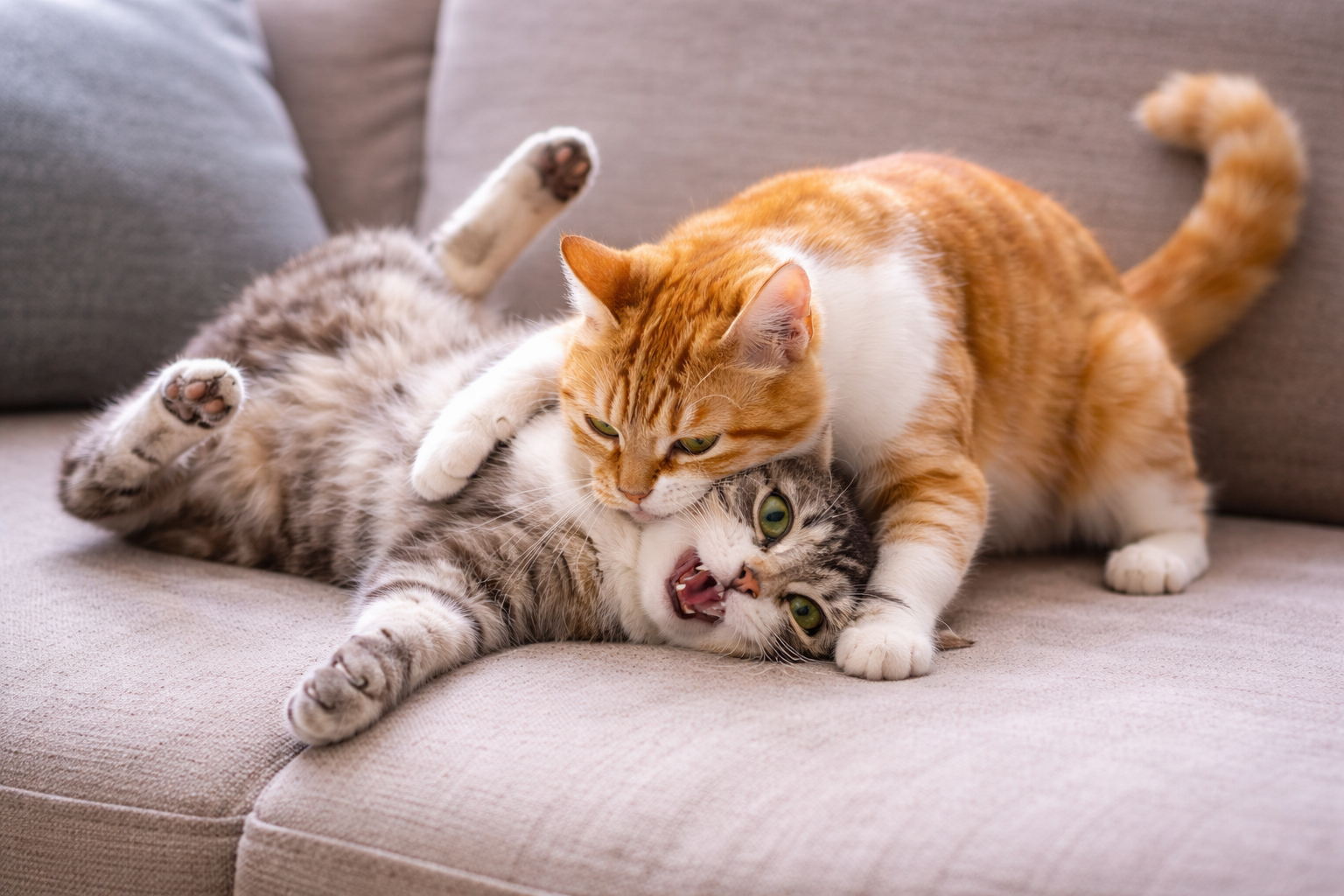
Cats can look surprisingly intense when they play. One minute they are chasing each other down the hallway, and the next they are tumbling, wrestling, and smacking at each other with their paws.
That can be stressful to watch, especially when you are not sure if it is normal roughhousing or something more serious. Some play between cats can look dramatic, but real fighting usually has a very different feel once you know what to look for.
If you are wondering how to tell if cats are playing or fighting, their body language, sounds, and overall behavior can make the answer much clearer than you might expect.
Why Cats Play Fight in the First Place
Play fighting is a normal part of cat behavior. It helps cats practice hunting skills, burn off energy, and interact with each other in a way that feels natural. Kittens do it all the time, but many adult cats do too, especially if they are active, playful, or closely bonded.
When cats play, they are acting out the same stalking, chasing, pouncing, and grabbing behaviors they would use in the wild. This is why it can look so intense. What looks like a fight to us is often just practice and play. In homes with more than one cat, it can also help them build confidence and learn each other’s boundaries.
If your cat has a lot of energy, you may notice this kind of rough play happening more often when they are bored or under-stimulated. Giving cats healthy outlets for that energy can make a big difference.
Signs Your Cats Are Playing
Normal play fighting usually has a loose, bouncy feel to it. Even when it looks dramatic, both cats stay engaged and neither one seems truly panicked or desperate to get away. If you are trying to figure out whether your cats are playing or fighting, this is what healthy play usually looks like.
- Their bodies look relaxed instead of stiff or frozen.
- They take turns chasing, pouncing, or pinning each other.
- There are pauses or resets where they stop briefly and then start again.
- Neither cat is trying to hide or escape for good.
- No one is getting injured and you do not see fur flying.
One of the biggest clues is balance. In healthy play, both cats usually have a chance to chase, wrestle, and disengage. It may not look perfectly even every second, but over time it should not feel one-sided. This kind of back-and-forth is a strong sign your cats are just play fighting, not actually fighting.
Signs Your Cats Are Actually Fighting
Real fighting feels more serious because it is. Instead of looking playful and springy, the cats often look tense, defensive, and fully worked up. If you are trying to figure out whether your cats are playing or fighting, this kind of behavior is a clear warning sign.
- Loud hissing, growling, yowling, or screaming
- Ears pinned flat back
- Puffed-up fur on the tail or body
- One cat trying hard to run away or hide
- Swatting with full force instead of playful taps
- Clumps of fur or visible scratches
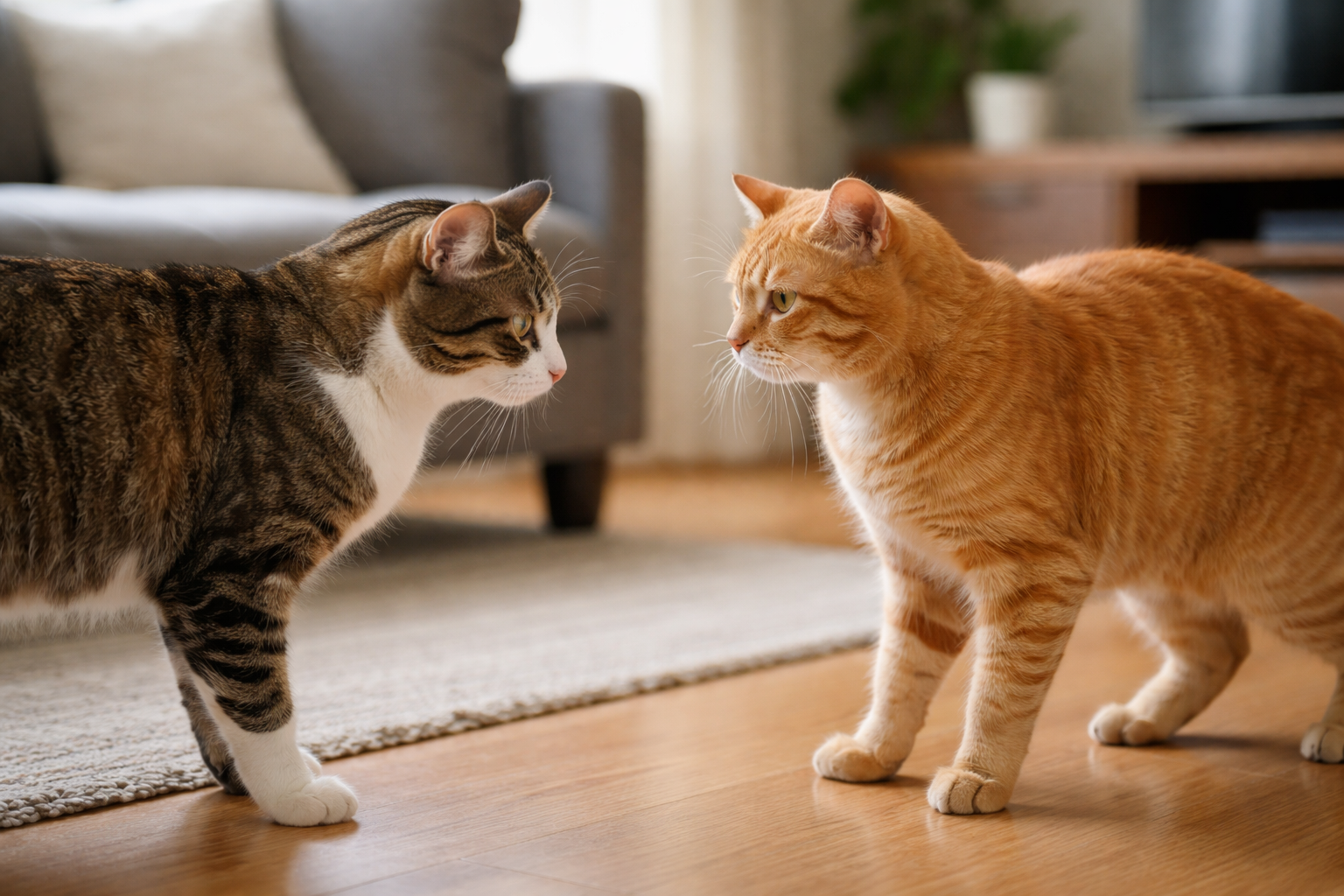
If one cat corners the other and the other cat looks trapped, that is a major red flag. Play usually has give-and-take, but a real fight is often one-sided and intense. When one cat is trying to escape and cannot, it is time to step in.
When You Should Break It Up
You do not need to interrupt every wrestling match. A lot of normal cat play looks rougher than people expect. But there are times when stepping in is the right move.
You should break it up if one cat is screaming, trying to get away, hiding afterward, or coming away with scratches or missing fur. You should also step in if the energy suddenly shifts from playful to tense and explosive.
When one cat looks scared or is trying to escape, it is time to step in. Try to trust the overall mood of the interaction. If it looks intense or one cat seems distressed, it is better to interrupt early than wait for it to get worse.
How to Safely Stop Cats From Fighting
Never try to break up a cat fight with your hands. Even sweet cats can bite or scratch badly when they are scared or in a panic.
Instead, make a sudden noise from a safe distance, such as clapping once, tapping a nearby surface, or dropping something soft but noticeable. You can also place a barrier like a pillow, flattened box, or laundry basket between them to break eye contact and create space.
Once they separate, let them cool off in different rooms. Do not force them back together right away. Giving them time to calm down can prevent the tension from starting back up again.
Why Cats That Used to Get Along May Start Fighting
When cats that once got along suddenly start fighting, it usually means something has changed. Cats are very sensitive to their environment, and even small disruptions can create tension between them.
Most sudden aggression between cats comes down to stress, fear, or discomfort. A new pet, a move, unfamiliar smells, or even seeing another cat outside can trigger defensive or redirected behavior. In some cases, one cat may start guarding food, space, or attention, which can quickly lead to conflict.
Health issues are another common cause that is easy to overlook. A cat that is in pain or not feeling well may become irritable or less tolerant, even toward a cat they normally get along with. If the behavior feels sudden or out of character, it is worth having your cat checked by a vet.
The key is to look for what changed. Even something that seems minor to you can feel like a big shift to your cats, and that change is often what starts the tension.
How to Prevent Fighting Between Cats
The best way to prevent fighting is to reduce competition between your cats. Cats usually do better when they have enough space, enough resources, and enough ways to avoid each other when they want a break.
- Provide more than one litter box in separate areas.
- Set up multiple feeding and water stations.
- Give them cat trees, shelves, or window perches for vertical space.
- Play with them daily to burn off extra energy.
- Make introductions slow if you are bringing home a new cat.
Some cats also need more mental stimulation than people realize. When they do not have enough to do, that energy can spill over into chasing and pestering the other cat in the house.

When to Be Concerned About Aggression
Occasional spats can happen, even in homes where cats usually get along. But frequent, intense, or escalating aggression is something to pay attention to. If one cat is constantly stalking or bullying the other, it is likely more than simple play.
If the behavior is happening often or getting worse, it is time to take it seriously. Watch for signs like hiding, loss of appetite, avoiding certain rooms, litter box problems, or changes in sleep and grooming. These can all point to ongoing stress between your cats, and the longer it goes on, the harder it can be to fix.
If the aggression becomes a pattern, your vet can help rule out pain or illness. A certified cat behaviorist may also be helpful if the tension does not improve.
Frequently Asked Questions
Is it normal for cats to play fight every day?
Yes, for many cats it is completely normal. Kittens and younger cats especially may play fight daily as part of their exercise and social behavior. The key is that both cats should stay engaged willingly and neither one should look scared.
Do cats hiss when they are playing?
Sometimes a cat may make a quick hiss or protest sound during rough play. However, constant hissing, growling, or screaming is more likely a sign your cats are fighting, not playing. Always look at the full interaction, not just one sound.
Should I let my cats fight it out?
No. If your cats are truly fighting, letting it continue can lead to injuries and make their relationship worse over time. It is better to interrupt safely, separate them, and figure out what triggered the behavior.
How do I know if my cats are playing or fighting?
Watch their body language and behavior. Cats that are playing usually take turns, stay relaxed, and keep coming back for more. Cats that are fighting often look tense, make loud noises, and try to escape or avoid each other.
Can cats that fight learn to get along again?
Sometimes, yes. It depends on the cause, how long the problem has been going on, and how the reintroduction is handled. Many cats improve with better resource setup, slower introductions, and help from a vet or behavior expert if needed.
Are Your Cats Playing or Fighting? Here’s What Matters Most
A lot of cat play looks rougher than people expect, so seeing wrestling and chasing does not automatically mean something is wrong. In many cases, it is just cats being cats.
The key is to watch body language and balance. Relaxed posture, turn-taking, and short pauses usually mean play. Stiff bodies, loud sounds, fear, and one-sided behavior usually signal a real problem.
Once you know what signs to look for, it becomes much easier to tell whether your cats are playing or fighting and when it is time to step in with confidence.