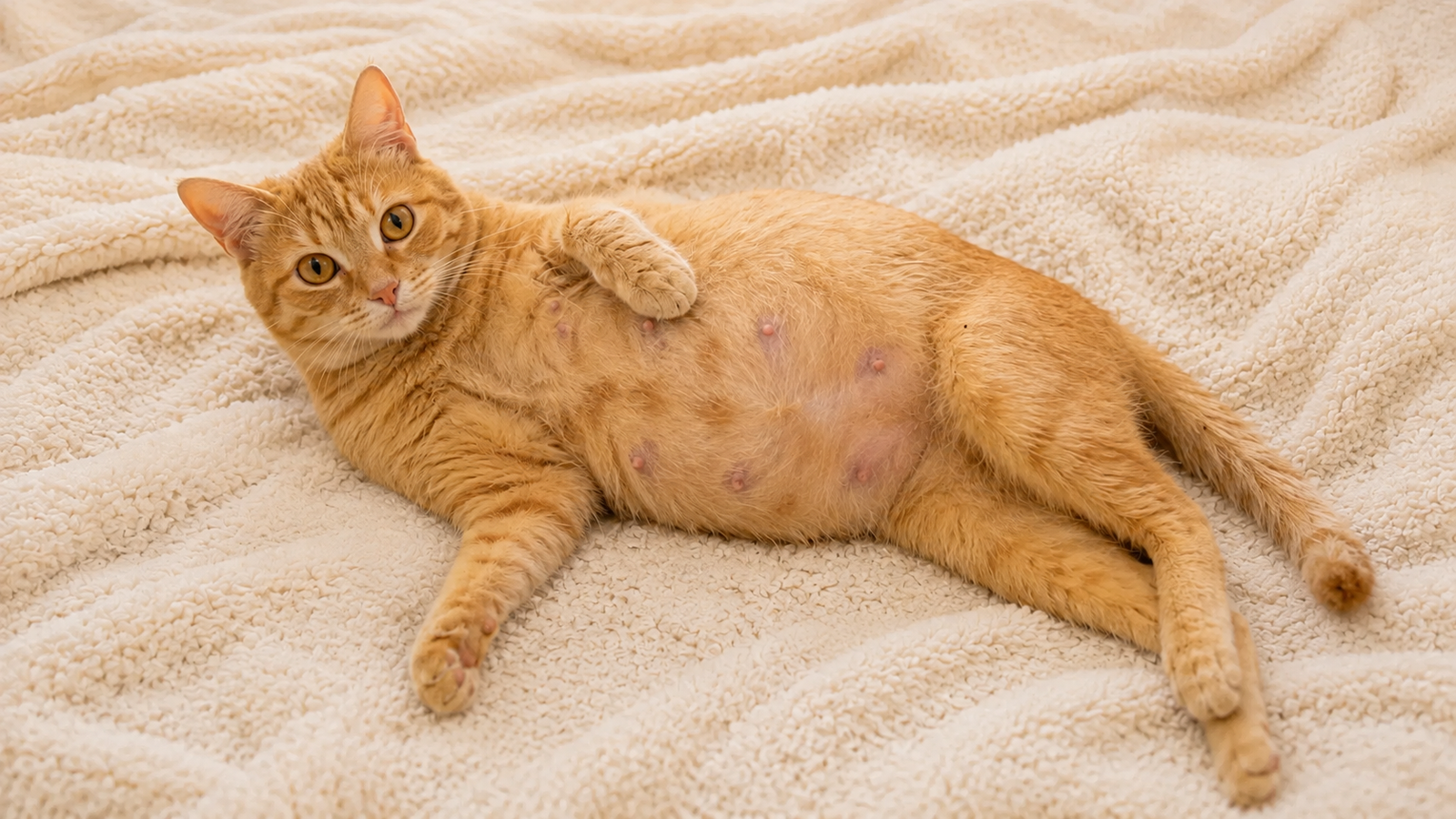
Telling whether a cat is pregnant isn’t always straightforward. Early signs can be subtle, and some of them look a lot like normal heat behavior or a mild illness. The clearer physical changes usually don’t show up until she’s already a few weeks in.
Here are eight signs to watch for, listed in the order they tend to appear.
8 Signs Your Cat Is Pregnant
1. Her Heat Cycle Stops
Timing: week 2–3 onward
When an unspayed cat is in heat, the behaviors are hard to miss: loud yowling (especially at night), restlessness, rolling on the floor, rubbing against furniture, and the flattened-front, raised-rear mating posture.
Unspayed cats cycle every 2 to 3 weeks during breeding season, which in most of the US runs roughly February through October. If your cat has been reliably going into heat and those behaviors suddenly stop and don’t return for more than 3 weeks, pregnancy is one of the first things to suspect.
This sign is most reliable in cats who were previously cycling on a predictable rhythm. Cats with irregular cycles are harder to read this way, and cats in the natural winter anestrus period (roughly November through January in most of the US) may not cycle at all during those months regardless of pregnancy status.
2. Nipple Pinking and Enlargement
Timing: around week 3
The nipples become larger, more prominent, and take on a distinctly pinker or reddish color. Vets call this “pinking up,” and it’s the most pregnancy-specific early physical sign because it doesn’t happen during heat.
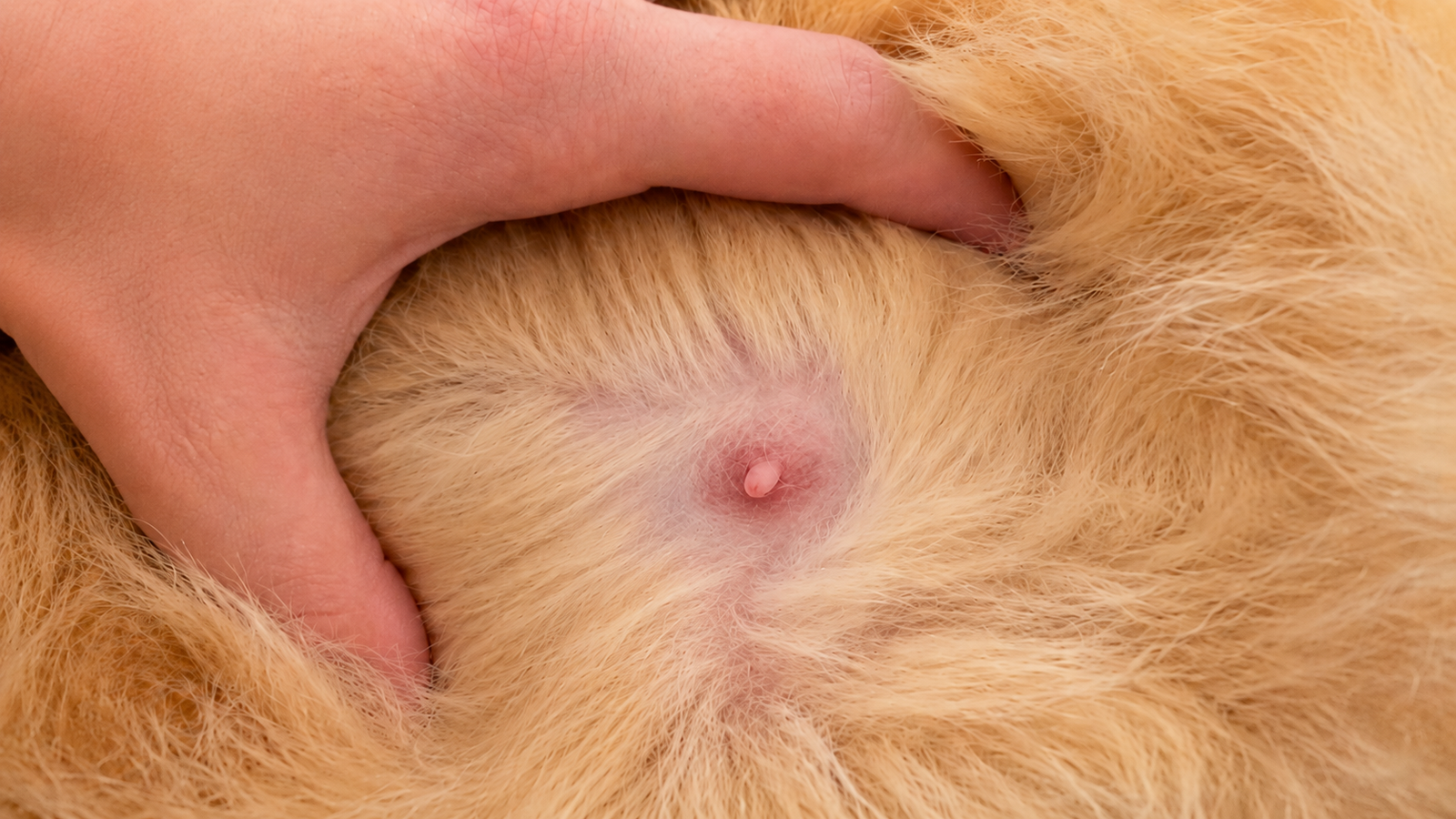
In a cat who’s pregnant for the first time, the change is usually obvious against nipples that were previously small and pale. In a cat who has had previous litters, the nipples may already be more prominent, so the change can be subtler. Look for deeper color and slight enlargement rather than a dramatic change.
If you’re seeing pinking along with a halted heat cycle, book a vet visit to confirm.
3. Mild Morning Sickness
Timing: weeks 3–4
Some cats experience mild nausea and occasional vomiting in early pregnancy from hormonal changes, similar to first-trimester nausea in humans. It should be occasional and brief. Think hairball frequency, not daily.
What isn’t morning sickness: vomiting several times a day, vomiting combined with diarrhea, refusing food entirely, or becoming lethargic. Those are signs of illness, not pregnancy, and are reasons to call your vet even if she might also be pregnant.
Not every pregnant cat gets morning sickness. Its absence isn’t evidence against pregnancy, and its presence isn’t proof of it. Plenty of other things make cats vomit occasionally. Treat it as supporting evidence when paired with nipple pinking or a halted heat cycle, not a standalone sign.
4. Increased Appetite
Timing: from week 3–4 onward, accelerating through late pregnancy
Her appetite usually starts to increase around weeks 3 to 4. Food intake rises gradually through gestation, reaching roughly 25% above her normal amount by mid-pregnancy and up to 50% above by the final weeks. The largest calorie jump comes after birth during lactation, when demand can double.
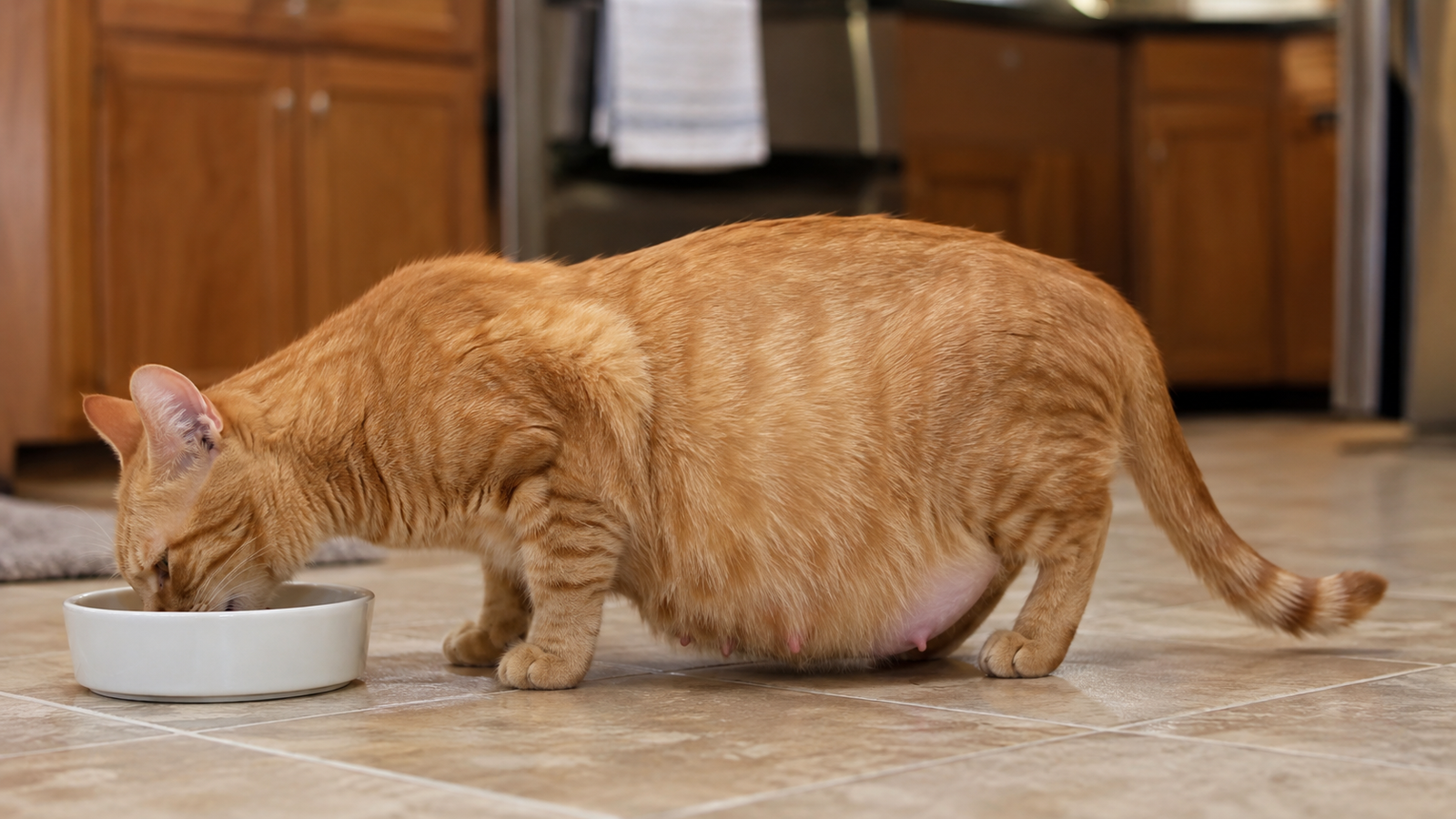
In the final weeks, the growing kittens compress her stomach and she’ll usually shift from one or two large meals to 4 to 6 smaller ones spread across the day and night. Free-feeding often works better than scheduled meals in late pregnancy for this reason. If she seems to be picking at food and walking away, it’s usually about stomach space, not appetite loss.
5. Weight Gain and a Rounder Belly
Timing: belly rounds visibly by around week 5; weight builds gradually throughout
Total pregnancy weight gain is typically around 2 to 4 pounds, though larger litters may mean more. It builds gradually. A sudden jump suggests fluid retention or illness rather than pregnancy and should be checked by your vet.
The abdomen begins to round and drop lower by around week 5. Viewed from above, a pregnant cat takes on a distinct pear shape: narrower through the shoulders and chest, wider and lower through the abdomen.
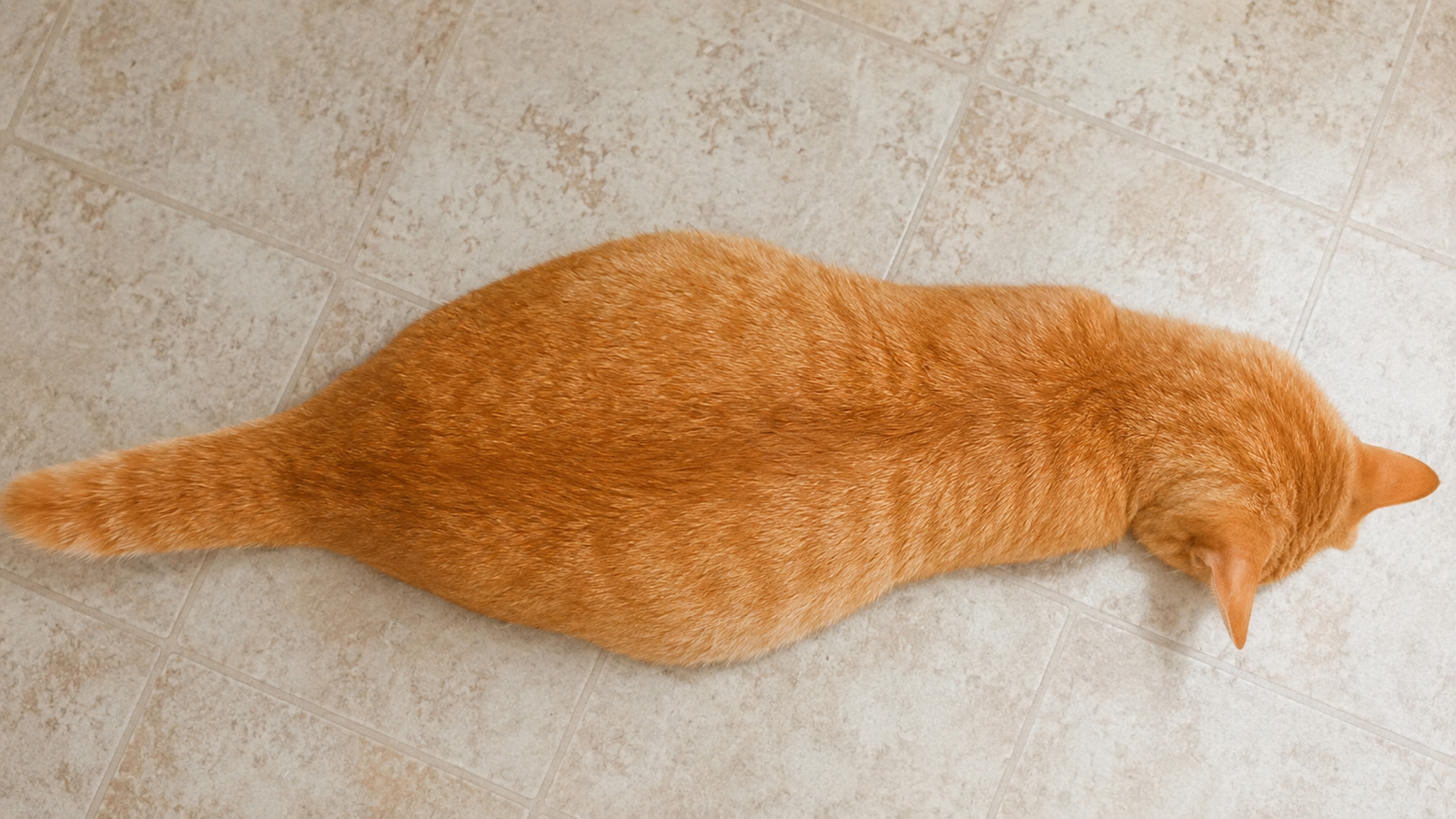
How to tell pregnancy weight from ordinary weight gain
Pregnancy changes are most obvious in the abdomen. An overweight cat gains more evenly, including the neck, chest, shoulders, and legs. If you’re not sure which you’re seeing, run your hand over her shoulder blades and along her spine. A pregnant cat will often still feel lean in those areas, while an overweight cat usually has extra padding there too.
If your cat was already overweight or has a long coat, these differences can be harder to spot. In that case, a vet exam is the best way to confirm pregnancy.
6. Behavioral Changes
Timing: variable, can appear as early as week 2
Some cats become noticeably clingier during pregnancy, seeking out physical contact, following you room to room, and asking for more attention than usual. Others become more withdrawn, choosing quiet spaces and interacting less than they normally would. Both are normal.
What matters is a change from her usual pattern, not a specific behavior. Cats in heat can also become more affectionate and vocal, and everyday changes like a new pet, moved furniture, or a different schedule can temporarily affect behavior too. Treat it as supporting evidence when paired with physical signs like nipple pinking or a rounded belly, not as a sign of pregnancy on its own.
7. Sleeping More
Timing: throughout, more pronounced from week 5 onward
Pregnancy takes a lot of energy, so she’ll often spend more time sleeping as the weeks go on.
Healthy cats already sleep 12 to 16 hours a day, so what you’re watching for is a noticeable change from her usual pattern, not simply a cat who sleeps a lot.
8. Nesting
Timing: final 1–2 weeks before birth
In the last weeks before labor, cats instinctively seek out quiet, enclosed, dark spaces and may drag soft materials (blankets, towels, laundry) into a chosen spot. Common choices include closet shelves, laundry baskets, cardboard boxes, the back of a wardrobe, and under beds. A cat who suddenly fixates on getting into one particular room may already be scouting for a nesting spot.
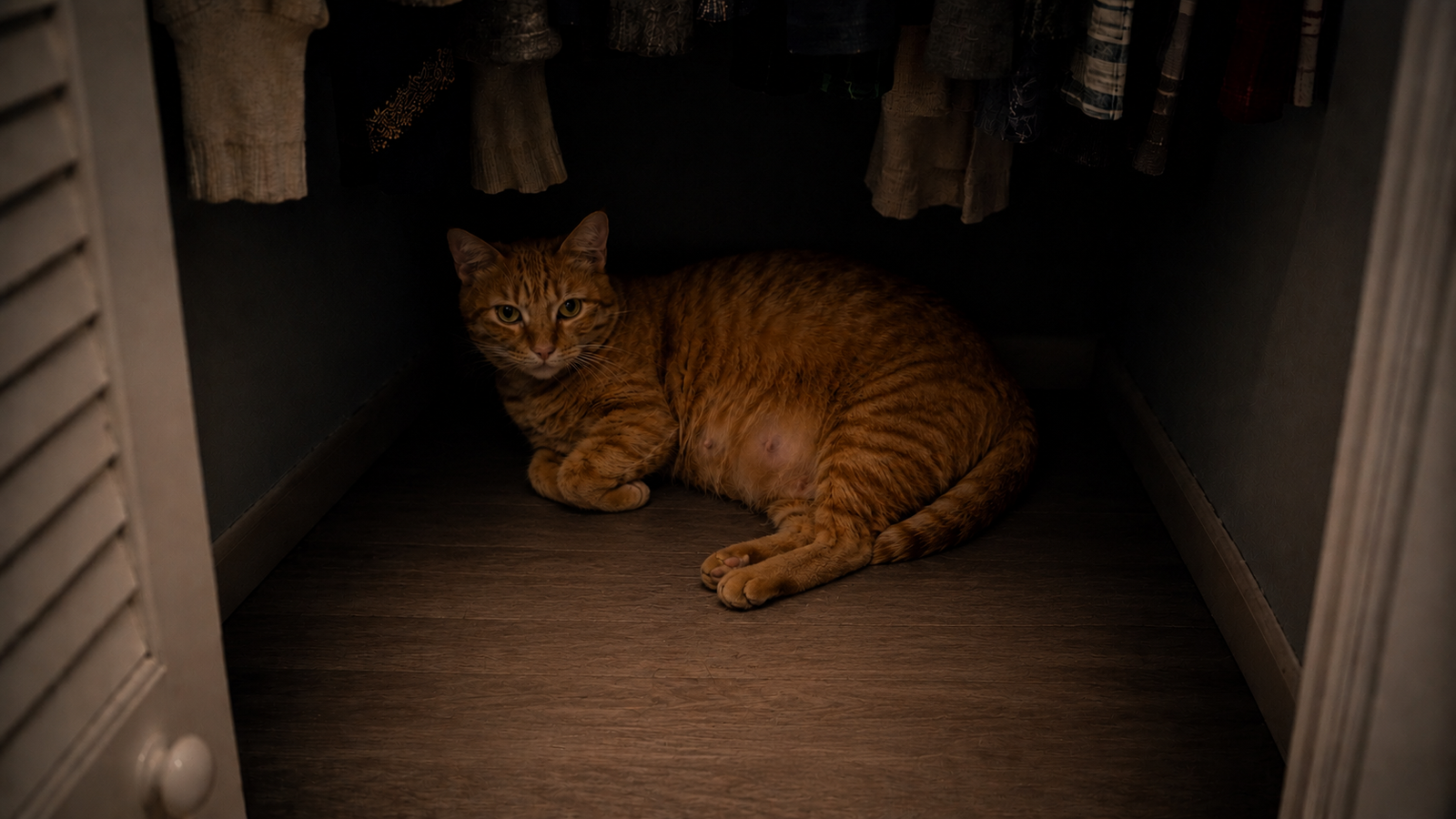
Cats rarely choose the nesting spot the owner would prefer. A carefully prepared birthing box may be ignored in favor of a closet shelf or the middle of an unmade bed. Offer the option, but don’t be surprised if she chooses somewhere else. Wherever she settles, the spot should be quiet, warm, and away from other pets and foot traffic.
How Vets Confirm a Cat Is Pregnant
Home observation points you toward pregnancy. A vet visit confirms it. The four methods below are listed in the order a vet is likely to use them.
Ultrasound
An ultrasound is the earliest confirmation method, giving a clear yes or no from around day 20. Fetal heartbeats become visible from around day 22 to 25, which lets the vet confirm the kittens are viable rather than just present.
It can also help distinguish pregnancy from pyometra, a potentially life-threatening uterine infection that can cause a swollen abdomen along with changes in appetite and behavior.
If you’re unsure whether your cat is pregnant, don’t know the mating date, or the signs don’t quite fit pregnancy, an ultrasound is the right first step. It’s painless, doesn’t require sedation for most cats, and the vet can usually give you an answer during the visit.
Palpation
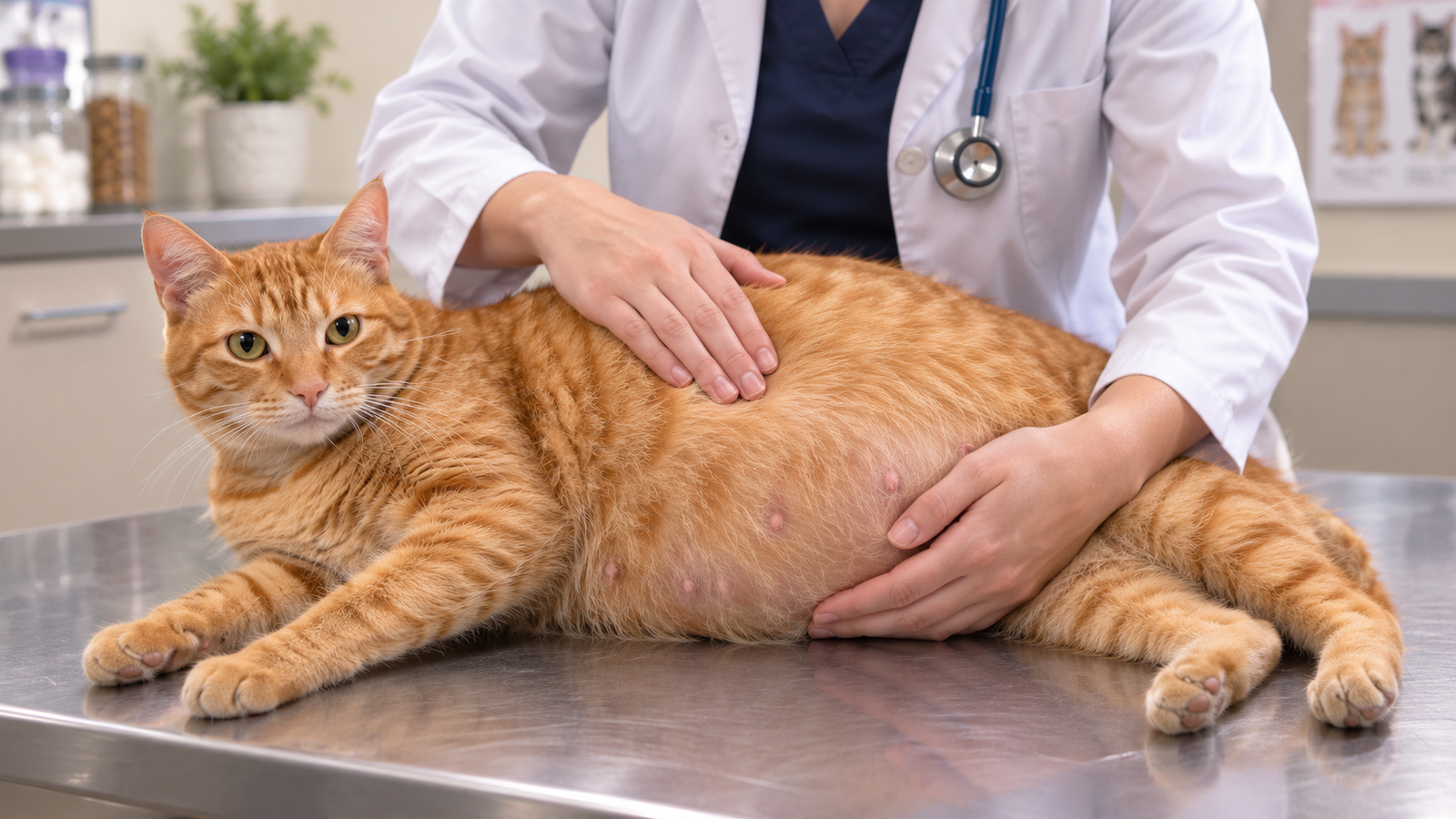
An experienced vet can feel small swellings along the uterine horns from around day 21 to 30. They grow quickly during this window and become harder to distinguish later in pregnancy, which is why palpation works best early on.
Never attempt palpation at home. Pressure on the abdomen can injure developing kittens or cause complications. The technique requires trained hands to distinguish pregnancy-related swellings from stool, gas, and other abdominal contents without applying too much pressure.
Relaxin Blood Test
Relaxin is a hormone produced by the placenta during pregnancy. It doesn’t appear in a non-pregnant cat’s bloodstream at all, which is why a positive result is definitive.
The test is reliable from around day 25. A small blood sample is drawn in the clinic and either read there with an in-house test kit or sent to a lab, depending on your vet’s setup. Results are usually available same-day or within 24 hours.
Relaxin is most useful when an ultrasound isn’t available at your clinic, or when you want a straightforward yes/no without imaging. It can’t check fetal viability or identify other causes of her symptoms, so ultrasound gives you more information when both are available.
X-ray
Fetal skeletons calcify from around day 42 to 45, which is when they become visible on an x-ray. From that point until birth, an x-ray can count skulls and spines and give a reliable estimate of litter size, usually within one kitten of the actual number. Radiation exposure at this stage is minimal and considered safe.
An x-ray isn’t typically used for initial confirmation. By day 42, other methods have usually answered that question. Its main value at this stage is estimating litter size. Knowing how many kittens to expect matters once labor starts, so you know whether she’s finished delivering or still has more to come.
What to Do If Your Cat Is Pregnant
Most healthy pregnant cats handle pregnancy on their own with minimal intervention. Your job is to feed her appropriately, keep her safe, and avoid anything that could harm the kittens.
- Book a vet visit. The vet will confirm pregnancy, assess her body condition, and advise on which flea and worm treatments are safe during pregnancy. This is also the appointment where you’ll discuss any medications she’s currently on. Most vaccines aren’t safe to give during pregnancy, so don’t administer anything without vet approval.
- Transition to kitten food gradually. Kitten food is higher in protein, calories, DHA, and taurine, all of which she and the developing kittens need. Transition her over the course of about a week by mixing increasing amounts of the new food into the old to reduce the chance of digestive upset.
- Increase food gradually. Aim for about 25% more than her normal intake by mid-pregnancy, up to 50% more by the final weeks. Adjust based on body condition. You want steady weight gain, not sudden jumps or noticeable thinning. If you can’t tell whether she’s gaining appropriately, weigh her weekly on a regular kitchen or pet scale and track the trend.
- Move to 4 to 6 small meals in late pregnancy. The kittens compress her stomach and large meals become uncomfortable. Free-feeding is often easier than trying to schedule six meals a day, provided her food doesn’t spoil in the bowl.
- Set up a quiet nesting area. A cardboard box lined with soft blankets in a dark, quiet corner works. Set it up early so she has time to get used to it. She may still choose a closet shelf or the back of a laundry basket instead, and that’s fine as long as the spot she picks is safe and accessible for you to check on later.
- Keep her indoors in the final weeks. This reduces the chance that she gives birth somewhere you can’t reach her or that the kittens are exposed to weather, predators, or vehicles.
- Don’t give any medications, dewormers, or flea treatments without vet approval. Several common products (including some over-the-counter flea treatments) are unsafe during pregnancy. When in doubt, ask before applying anything.
Frequently Asked Questions
How long is a cat pregnant?
Cat pregnancy lasts around 63 days, or roughly 9 weeks. The normal range is 61 to 72 days. Anything within that window is considered normal; anything past day 72 without labor signs warrants a vet call.
What are the earliest signs a cat is pregnant?
A halted heat cycle and nipple pinking around week 3. Pinking is the more reliable of the two because it doesn’t happen during heat.
How can I tell if my cat is pregnant or just overweight?
Pregnancy usually changes the shape of the abdomen, while ordinary weight gain is more evenly distributed across the body. Pinker, more prominent nipples also point toward pregnancy. If she’s longhaired, already overweight, or the signs aren’t clear, a vet exam is the most reliable way to tell.
How can I tell how far along my cat is?
Nipple pinking suggests around week 3. A visibly rounded, pear-shaped belly suggests week 5 or later. Nesting behavior suggests the final 1 to 2 weeks. For a precise estimate, a vet can date the pregnancy with an ultrasound.
At what age can a cat get pregnant?
Cats can get pregnant as young as 4 months, though many don’t have their first heat until 5 or 6 months. Vets recommend spaying by 5 months to get ahead of the first heat cycle in most cats. If your kitten lives with an intact male or shows signs of heat earlier than expected, ask your vet whether she should be spayed sooner. Kittens from the same litter will mate once they reach sexual maturity if they aren’t separated or fixed in time.
How many kittens do cats usually have?
Most litters are 4 to 6 kittens. First litters are often smaller, typically 2 to 4 kittens, while later litters can be larger. Breed also influences litter size. Siamese and Oriental breeds tend toward larger litters, and Persians and other longhaired breeds toward smaller ones.
Debbie Reid is the founder and chief editor of CatPedia.net, with over 25 years of hands-on experience in feline care, rescue, and behavior research. Inspired by her rescue cats Snickers and Bigboy, she collaborates with animal welfare resources and consults veterinary literature to turn complex feline health, nutrition, and behavior topics into clear, actionable guides.