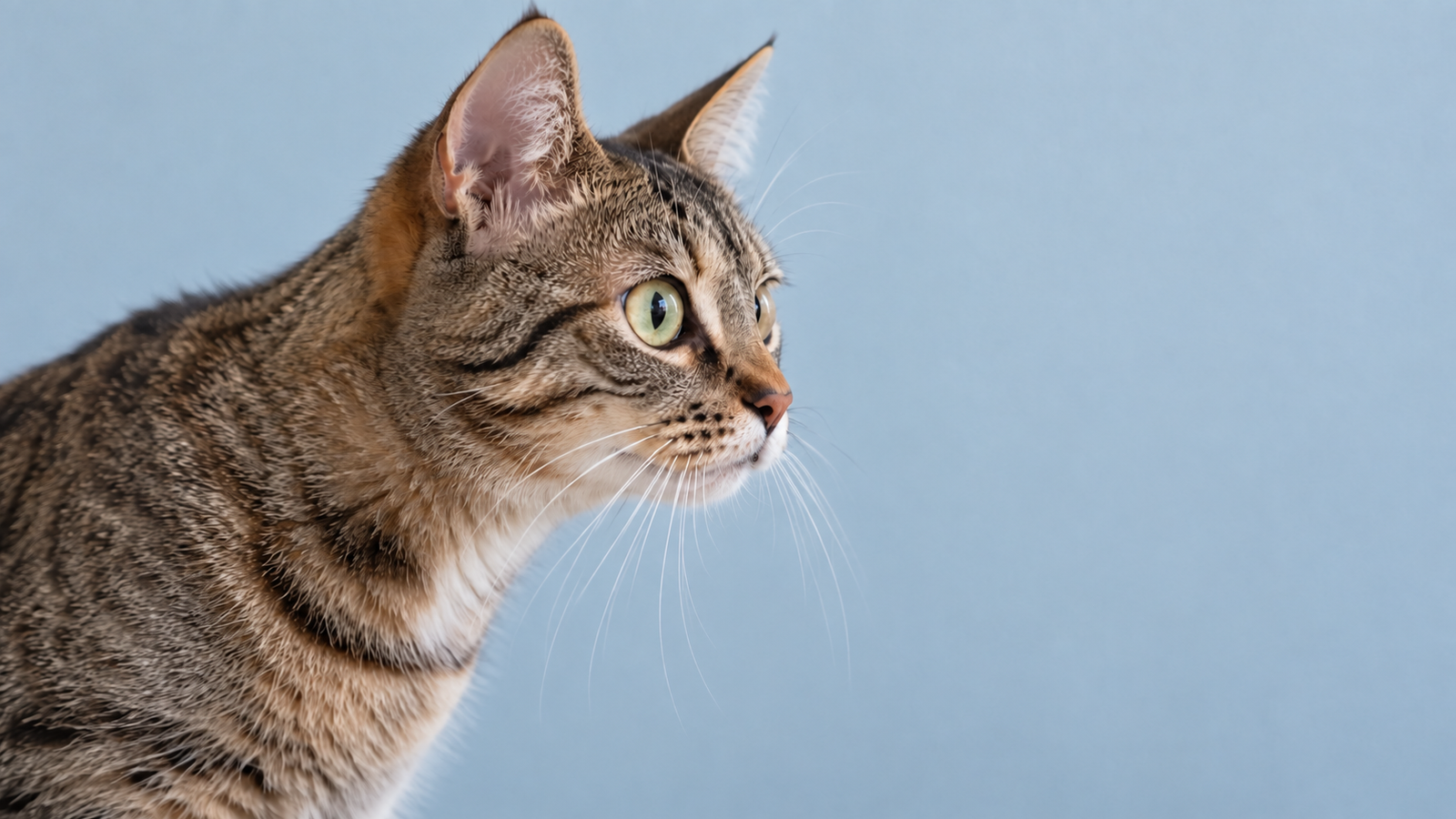
Catching your cat staring at a blank wall can be a little creepy. Is there a ghost in the room? Have they spotted something you can’t see? Do they know something you don’t?
Well, good news — no exorcist required. There are several reasons a cat may stare at a wall, and most are far less spooky than they seem.
Why Does My Cat Stare at the Wall?
Cats experience your home very differently than you do. What looks like an empty wall to you may be full of faint sounds, small movements, and interesting smells.
If your cat is alert and responds when you speak or move, they’re almost certainly investigating one of the following.
They Hear Something Inside the Wall
A cat’s hearing reaches much higher frequencies than ours. Humans can hear sounds up to about 20,000 hertz, while cats can hear frequencies near 64,000 hertz.
That lets your cat hear the faint squeaks and scratches of mice and insects. They may also hear water moving through a pipe, wood shifting, or an appliance humming in another room.
Wall-staring is often worse at night. Once the television, dishwasher, and conversations stop, faint sounds inside the wall are easier to pick up, and mice and many insects are more active after dark.
They Spotted a Tiny Movement
Cats pick up motion better than we do, even in dim light. A speck of dust drifting past a lamp, a tiny spider, a shifting shadow, or sunlight reflected from a phone screen can all catch their eye. The movement may be too small for you to see.
This is why a cat may stare at a wall for several minutes and then suddenly pounce.
They Smell Something You Can’t
A cat’s nose is much more sensitive than yours. Odors can seep through vents, gaps around outlets, and small cracks near the floor.
Your cat may smell another animal, food, damp wood, or a cleaning product on the other side of the wall.
They’re Waiting for Something to Move Again
Cats have patience when prey might be involved. A mouse can scratch once and stay quiet for several minutes. Your cat may keep watching because they expect the sound to return.
A cat may also remember seeing a bug in that spot before. A wall that produced a bug once will keep drawing their attention for weeks.
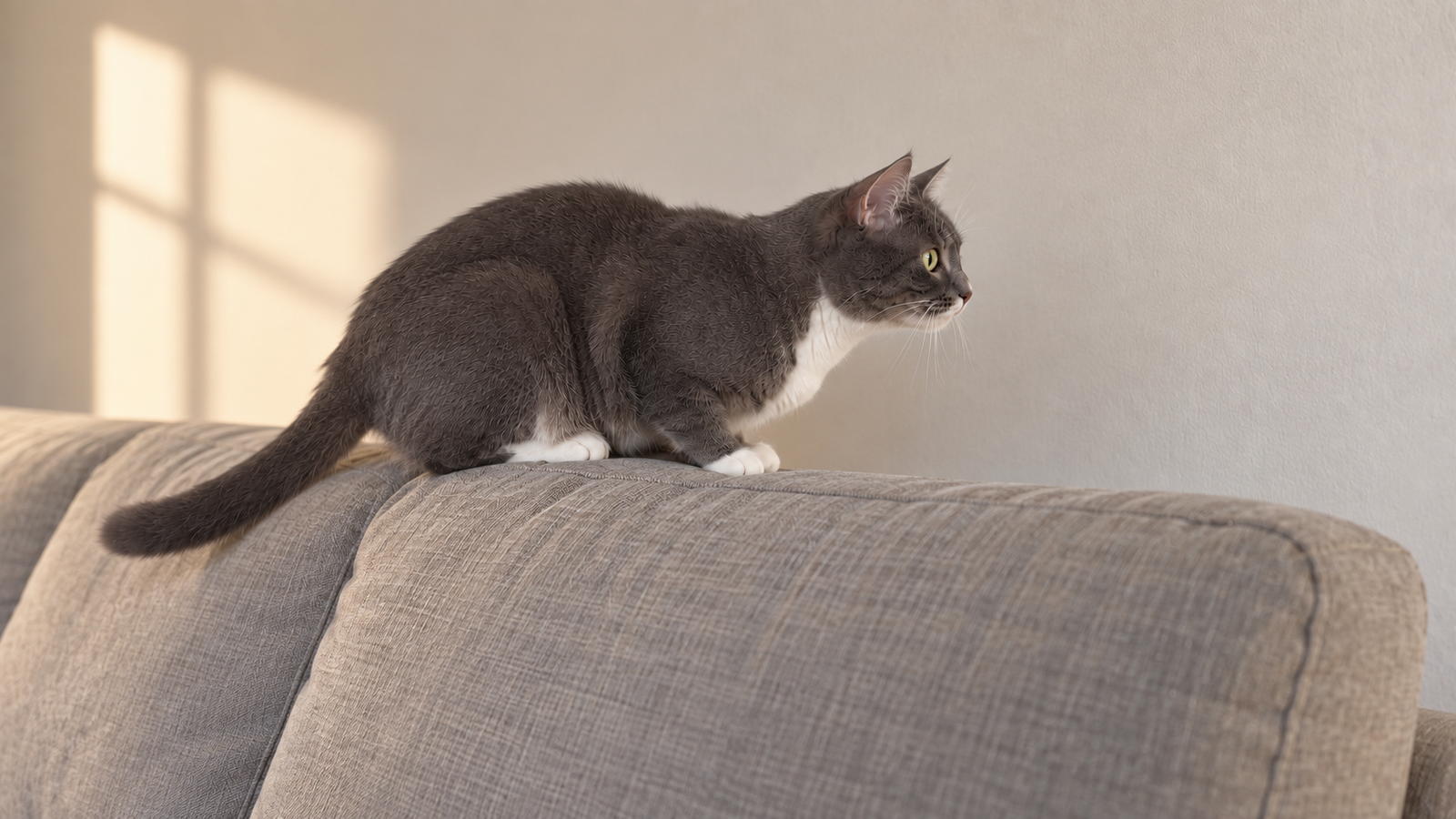
When Does Staring at the Wall Signal a Health Problem?
A cat tracking a sound or movement usually reacts when you call or approach. Wall staring is more concerning when your cat seems lost, frozen, or unaware of what’s happening around them. This can point to cognitive decline in older cats, vision loss, or a seizure.
See a vet if the staring is new and comes with any of these signs:
- No response to their name, being touched, food, or a favorite toy during the episode.
- Confusion or disorientation after the staring stops.
- Walking in circles or becoming trapped in corners.
- Twitching in the face, whiskers, or one side of the body.
- Lip licking, drooling, or snapping at things that aren’t there.
- Bumping into furniture or having trouble finding food and water.
- Pupils that stay large, even in a bright room.
Cognitive Dysfunction in Senior Cats
Older cats can develop cognitive dysfunction, a decline in brain function similar to dementia. Staring blankly at walls can be one sign.
You may also notice your cat getting lost in familiar rooms, sleeping at odd times, crying at night, or missing the litter box. If the staring is new and you see other changes like these, see a vet.
Vision Loss
A cat with poor vision may face a wall because they can’t tell what’s around them. You may also notice cautious walking, missed jumps, or bumping into objects.
Call your vet quickly if your cat suddenly seems unable to see, or if their pupils stay wide in bright light or look different sizes from each other. Sudden blindness in older cats is often caused by high blood pressure damaging the retina, and it needs urgent treatment.
A Focal Seizure
A focal seizure affects only part of the brain, so the signs can be subtle. A cat may stare blankly, twitch on one side, lick their lips, or bite at invisible objects, and seem dazed for a few seconds to a few minutes afterward.
If your cat’s wall-staring comes with any of those signs, treat it as a possible seizure and call your vet.
Frequently Asked Questions
Why Does My Cat Stare at the Wall and Meow?
Your cat may feel excited or frustrated because they can hear something but can’t reach it. Some cats also meow to get their owner’s attention when they find something interesting.
Can Cats See Ghosts When They Stare at Walls?
No scientific evidence suggests cats can see ghosts. Their sharp hearing, strong sense of smell, and ability to spot tiny movements offer a simpler answer.
Admittedly, that explanation feels less convincing when your cat follows something invisible across the ceiling at 2 a.m.
Should I Stop My Cat From Staring at the Wall?
No, not if your cat is alert and acting normally. Watching the wall may be a form of hunting and mental exercise. Step in only if your cat becomes distressed, attacks an outlet, or stays fixed on the wall while ignoring everything around them.
Debbie Reid is the founder and chief editor of CatPedia.net, with over 25 years of hands-on experience in feline care, rescue, and behavior research. Inspired by her rescue cats Snickers and Bigboy, she collaborates with animal welfare resources and consults veterinary literature to turn complex feline health, nutrition, and behavior topics into clear, actionable guides.