
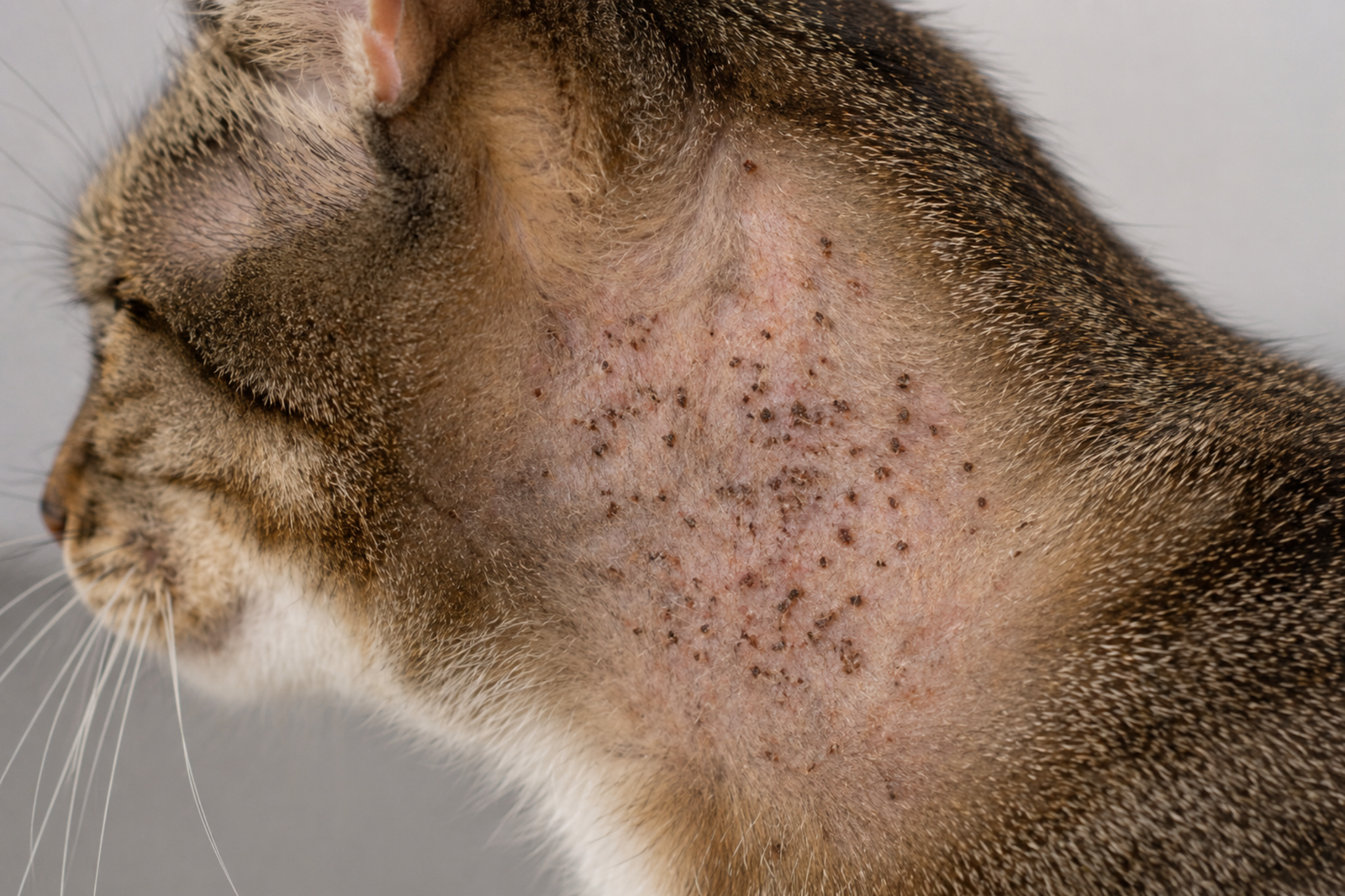
Miliary dermatitis in cats isn’t a specific disease. It’s the term vets use when a cat’s skin breaks out in small, crusty bumps or scabs, usually along the back, neck, or base of the tail. The name comes from the Latin word for millet seed, describing the size and feel of the bumps.
It’s pretty common, and it usually means something is irritating your cat. Fleas are the most frequent cause, but food allergies, environmental triggers, and skin infections can all produce the same reaction. The bumps are just the visible sign that something else is going on.
Most cases clear up once you find the cause and treat it directly. Here’s what to look for and what typically causes it.
What Causes Miliary Dermatitis in Cats?
Flea allergy dermatitis is by far the most common culprit. Even one or two flea bites can trigger an intense reaction in a sensitive cat. The bumps often show up around the neck and base of the tail, where fleas tend to feed. You don’t have to see fleas for this to be the cause.
Food allergies or sensitivities are another common cause. Proteins like chicken, fish, beef, or dairy are typical triggers. These can develop over time, even if your cat has been eating the same food for years.
Other causes include:
- Environmental allergies such as dust mites, pollen, or mold
- Mites, including Cheyletiella or ear mites
- Ringworm, which is a fungal infection despite the name
- Bacterial skin infections
- Hormonal imbalances
- Stress or anxiety in some cases
Because there are so many possible triggers, figuring out the cause is the most important step.
What Does Miliary Dermatitis Look and Feel Like?
Miliary dermatitis is often noticed by feel before anything is obvious to the eye. The skin can feel rough, with small raised bumps that have a crusty texture, especially along the spine and neck. When you part the fur, you’ll usually see tiny scabs, sometimes with mild redness around them.
Many cats will also scratch more than usual, groom excessively, or develop areas of thinning fur around the irritated spots. Some may twitch their skin when touched, which is a reflex response to the irritation.
If it progresses, the skin can become inflamed or raw from repeated scratching. At that point, it’s important to have your cat seen to avoid secondary infections.
Is Miliary Dermatitis Dangerous or Contagious?
Miliary dermatitis itself isn’t life-threatening. In most cases, it clears up once the underlying cause is treated. The concern is what happens if it’s ignored. Ongoing scratching can damage the skin and lead to infections.
It also isn’t contagious. You can’t catch miliary dermatitis from your cat. However, some underlying causes, like fleas or ringworm, can affect humans and other pets in the home.
If symptoms aren’t improving or seem to be getting worse, it’s worth having your cat checked to avoid complications.
How to Treat Miliary Dermatitis in Cats
The first step is figuring out what’s causing the reaction. Your vet will do a thorough exam and may run tests like skin scrapes, cytology, or a fungal culture to get there. In some cases it’s a process of elimination, ruling out one cause at a time, so it can take patience. But identifying the trigger is what makes treatment work.
Once the cause is confirmed, treatment is usually straightforward and focused on that specific trigger.
For flea allergy dermatitis: Consistent, year-round flea prevention is essential. This means treating your cat with a vet-recommended product and addressing your home, including bedding, furniture, and carpets. Your vet may also prescribe medication to calm the skin while it heals.
For food allergies: A novel protein or hydrolyzed protein elimination diet is typically recommended for at least 8 weeks. During this time, your cat eats only the prescribed diet so you can see if food is the trigger. If the skin improves, you’ve found the cause.
For environmental allergies: Management can include frequent cleaning, reducing dust and allergens, and in some cases allergy testing. Medications like antihistamines or corticosteroids may be used short-term to reduce inflammation.
For infections and mites: Your vet will prescribe antifungal medications, antibiotics, or antiparasitic treatments depending on what’s found.
In many cases your vet will also recommend something to give your cat immediate relief while the underlying cause is being treated, such as a medicated shampoo or short-term medication.

Breezytail PetO’Cera All-in-One Cat Shampoo and Conditioner can help calm the skin while you work on the underlying cause. It’s designed for sensitive skin and won’t strip the coat or make irritation worse.
What You Can Do at Home
There’s no at-home fix for miliary dermatitis since the cause needs to be identified first. But once you know what you’re dealing with, there are things you can do to support your cat while it clears up.
Keeping your cat’s environment clean, staying consistent with flea prevention, and feeding a balanced diet all help support skin health. If your vet has prescribed a medicated shampoo or topical treatment, using it as directed makes a noticeable difference in how quickly the skin improves.
Don’t try to pick or remove the scabs. It can make things worse and increase the risk of infection. Let the skin heal as the underlying cause is treated.
One more thing worth knowing: cats with allergies may need ongoing management rather than a one-time fix. If your cat’s miliary dermatitis is allergy-related, your vet will talk you through what long-term care looks like so you can stay ahead of it.
Miliary Dermatitis in Cats FAQs
Is miliary dermatitis painful for cats?
It’s not usually painful, but the itching and irritation can make cats very uncomfortable. If the skin becomes inflamed or infected, it can turn painful.
How long does miliary dermatitis take to heal?
Healing time depends on what’s causing it. Once the underlying issue is treated, most cats start improving within a few days to a couple of weeks.
Can miliary dermatitis go away on its own?
It usually won’t fully clear up without treating the cause. Symptoms may improve for a while, but they often come back if the trigger isn’t addressed.
What This Means for Your Cat
Miliary dermatitis isn’t the problem itself, it’s a sign of one. The good news is that once the underlying cause is identified, most cats respond well to treatment and the skin usually clears up fairly quickly.
If you’re noticing crusty bumps or your cat seems itchier than usual, it’s worth a conversation with your vet. A little detective work now can save your cat a lot of discomfort, and get them back to more important things, like biscuit duty.
Debbie Reid is the founder and chief editor of CatPedia.net, with over 25 years of hands-on experience in feline care, rescue, and behavior research. Inspired by her rescue cats Snickers and Bigboy, she collaborates with animal welfare resources and consults veterinary literature to turn complex feline health, nutrition, and behavior topics into clear, actionable guides.