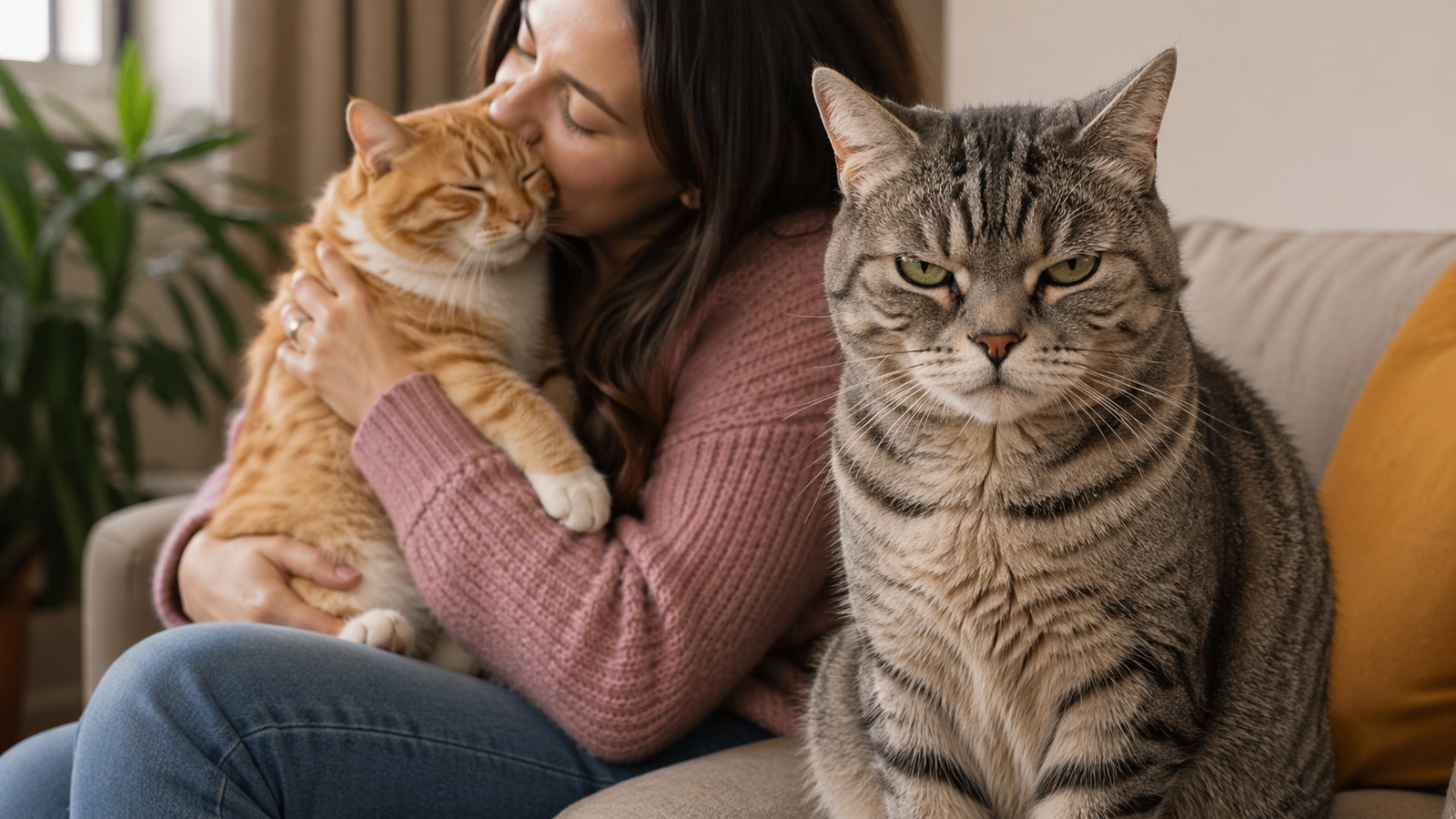
Cats don’t experience jealousy the way people do. They’re not comparing themselves to another pet or feeling like someone is taking their place.
What they do have is a strong attachment to the things that feel safe and familiar, like your attention, their space, and their routine. When any of that shifts, they react, and that reaction can look a lot like jealousy.
Signs That Look Like Jealousy
Some cats become pushy and intrusive. Your cat might shove themselves between you and another pet, sit directly on your laptop while you’re working, or swat at your partner when they try to sit next to you. It’s active and obvious.
Other cats go clingy instead. They follow you room to room, won’t settle unless they’re touching you, or seem anxious the moment you shift your attention elsewhere. This looks different from the pushy behavior, but it comes from the same place.
Then there’s the acting out. Knocking things off counters on purpose, nipping during petting when they never did before, or sudden aggression toward other pets. They’re your cat’s way of saying something feels off.
Why Your Cat Acts This Way
Cats are creatures of habit. They rely heavily on routine. When something disrupts that routine, especially something that changes how much attention they get or where they rank in the household, they feel it.
A new pet is one of the biggest triggers. Another animal means competition for food, space, your lap, and your focus. Even if you’re trying to split your attention evenly, your cat notices the shift.
A new person in the house can have the same effect. A partner moving in, a baby arriving, or even a guest staying for a week changes where your time goes.
Not having enough resources is a quieter trigger but still matters. If there aren’t enough litter boxes, food bowls, or comfortable spots to claim, your cat may start guarding what they have. That can look like jealousy, but it’s really about scarcity.
What’s Really Going On
Most of the time, what you’re seeing comes down to stress or insecurity. Your cat isn’t being petty. They’re responding to something that feels uncertain or unstable to them.
Sometimes it’s just instinct. Cats are territorial. When something in their space changes, they protect what feels familiar. That might mean sitting on you more, blocking another pet from getting close, or claiming spots they never cared about before.
How to Help Your Cat Feel More Secure
Keep their routine as steady as possible. When you bring home a new pet or person, try to keep everything else predictable. Feed at the same times, keep their litter box in the same spot, stick to your usual schedule with them as much as you can.
Make sure they have their own space. A perch by the window, a quiet corner with a bed, or a shelf they can retreat to when things feel crowded. Somewhere they don’t have to compete with the new addition.
Give them one-on-one time regularly. Even just ten minutes a day where it’s just you and them. When your cat knows they still get your full attention, they’re less likely to compete for it by swatting at the dog or sitting on your keyboard.
Don’t punish the behavior. Scolding or pushing your cat away when they’re acting territorial or clingy tends to make things worse. They’re already stressed about the change. Adding more tension just reinforces the problem.
Your Cat Just Needs to Know They’re Still Safe
Your cat isn’t trying to make your life harder. They’re telling you, in the only way they know how, that something has shifted and they’re not sure where they fit anymore. Meeting that with patience instead of frustration usually gets you both to the other side faster.
Cats don’t hold grudges, and they adapt more than people give them credit for. Give yours a little extra reassurance, keep their world predictable, and they’ll come around.
Debbie Reid is the founder and chief editor of CatPedia.net, with over 25 years of hands-on experience in feline care, rescue, and behavior research. Inspired by her rescue cats Snickers and Bigboy, she collaborates with animal welfare resources and consults veterinary literature to turn complex feline health, nutrition, and behavior topics into clear, actionable guides.