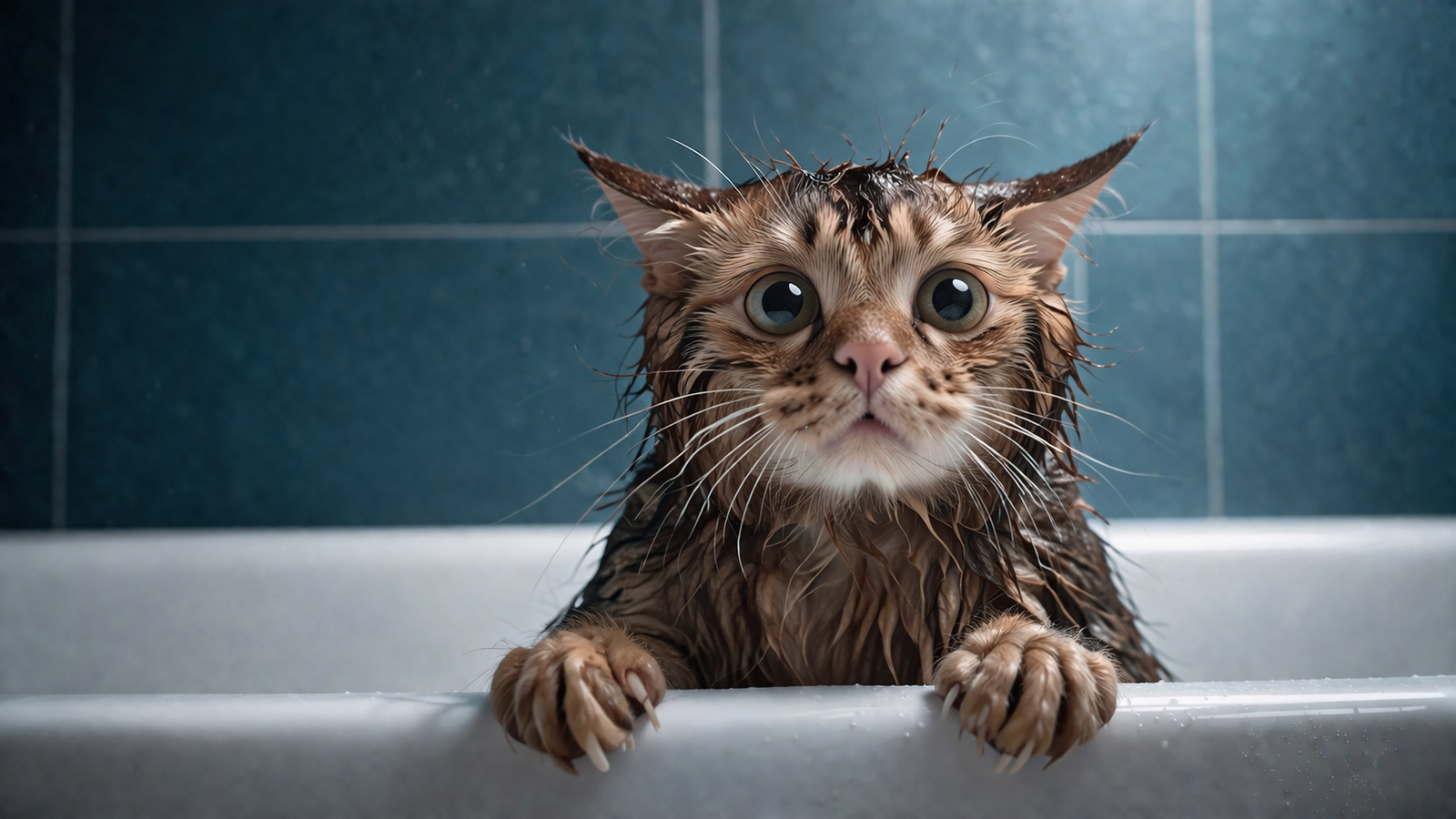
If you’ve ever tried to bathe your cat, you probably already know how this goes. The second water is involved, they twist, scramble, and act like you’ve completely betrayed them.
But at the same time, it can feel confusing when a cat will happily paw at a dripping faucet, then panic the second they get wet. So what’s really going on here?
Let’s break down why cats hate water, whether they’re actually scared of it, and why some cats seem totally fine around it.
Why Do Cats Hate Water?
Most cats don’t actually “hate” water—they dislike how it feels and what it does to their body.
For a cat, getting wet can feel uncomfortable, unfamiliar, and a little out of control. It’s not attitude or stubbornness—it’s instinct.
Once you understand what water does from your cat’s perspective, their reaction starts to make a lot more sense. Here are the main reasons most cats avoid it:
They Didn’t Evolve Around Water
Domestic cats come from ancestors that lived in dry, desert-like environments. Large bodies of water weren’t part of their daily life, so they never needed to learn how to swim or get comfortable being wet.
Because of that, water still feels unfamiliar to many cats—even if they’ve lived their whole life indoors. And for an animal that relies on routine and predictability, unfamiliar situations can feel unsafe, which is why your cat’s first instinct is usually to avoid it.
Wet Fur Feels Heavy and Uncomfortable
A cat’s coat isn’t designed to dry quickly. When it gets soaked, it can feel heavy and clingy, almost like wearing a wet blanket.
This extra weight makes it harder for them to move normally, which can leave them feeling off balance and vulnerable. Even after the water is gone, it can take time for their coat to fully dry, keeping that uncomfortable feeling around longer than they’d like—and making them want to avoid it altogether next time.
It Takes Away Their Sense of Control
Cats like to feel in control of their surroundings. Being placed in water—especially a bath—can feel unpredictable and overwhelming.
If they can’t easily escape, their instinct may kick into survival mode. That’s why even a calm cat can suddenly panic when they feel trapped or unsure of what’s happening.
Strong Smells Can Be Overwhelming
Cats have a powerful sense of smell. Tap water, pool water, and even shampoos can have scents that feel strong or unpleasant to them.
On top of that, water washes away their natural scent, which helps them feel familiar and comfortable in their environment. This is one reason many cats groom themselves right after getting wet—they’re trying to get back to what feels normal.
Past Experiences Can Stick
If a cat has had a bad experience with water—like slipping into a tub or being forced into a bath—they’re likely to remember it.
Cats are quick learners, especially when something feels stressful. Even one negative experience can shape how they react in the future, making them more cautious or resistant the next time water is involved.
Is It Fear, Dislike, or Something Else?
What looks like fear is usually your cat reacting to discomfort and a lack of control.
When a cat suddenly twists, tries to escape, or panics during a bath, they’re not being dramatic—they’re reacting to a situation that feels unfamiliar and hard to control.
You might notice this difference in real life. One cat may cautiously tap water with their paw, while another runs the second they hear a faucet turn on.
Some cats are simply more sensitive than others. A confident, curious cat might tolerate water or even play with it, while a more cautious cat will avoid it completely.
So while fear can be part of the reaction, it’s usually not the full story. For most cats, it’s a mix of instinct, discomfort, and personality.
Why Some Cats Actually Like Water
Even though most cats avoid getting wet, there are always a few that don’t seem to mind it at all.
Certain breeds, like Bengals and Turkish Vans, are known for being more comfortable around water. Some even enjoy playing in it or dipping their paws in a sink or bowl.
But it’s not just about breed. Personality plays a big role too. Curious, playful cats are more likely to explore water, especially if they’ve been exposed to it gently from a young age.
That said, enjoying a little water play is very different from being okay with a full bath. Most cats—even the curious ones—still prefer to stay mostly dry.
Why Cats Play With Water But Hate Baths
This is one of the most confusing parts for cat owners.
You might see your cat happily splash water out of their bowl or paw at droplets from a faucet—then panic the second bath time starts.
The difference comes down to control.
When your cat is playing with water, they’re choosing to interact with it. They can walk away at any time, and the experience feels safe and predictable.
During a bath, that control disappears. The water is everywhere, they can’t escape easily, and everything feels unfamiliar—which is what triggers that sudden, strong reaction.
Can Cats Get Used to Water?
Some cats can learn to tolerate water, especially if they’re introduced to it slowly and gently.
If a cat has positive, low-stress experiences with water early on—like exploring a shallow sink or being rewarded for staying calm—they may become more comfortable over time.
But it’s important to be realistic. Most cats will never love baths, and that’s okay.
In most cases, a cat avoiding water isn’t something to worry about. It’s a normal instinct, not a behavioral problem.
If your cat suddenly becomes fearful around water when they weren’t before, or seems more stressed in general, it may be worth paying attention to what else has changed in their environment.
Final Thoughts
Cats don’t hate water just to be difficult. Their reaction comes from instinct, comfort, and a strong need to feel in control of their surroundings.
While some cats are more curious than others, most prefer to stay dry—and that’s completely normal.
Once you understand what water feels like from your cat’s perspective, their behavior starts to make a lot more sense. Instead of wondering why they panic, you can recognize it as a mix of instinct, sensitivity, and personality—and respond in a way that feels right for your cat.
Debbie Reid is the founder and chief editor of CatPedia.net, with over 25 years of hands-on experience in feline care, rescue, and behavior research. Inspired by her rescue cats Snickers and Bigboy, she collaborates with animal welfare resources and consults veterinary literature to turn complex feline health, nutrition, and behavior topics into clear, actionable guides.