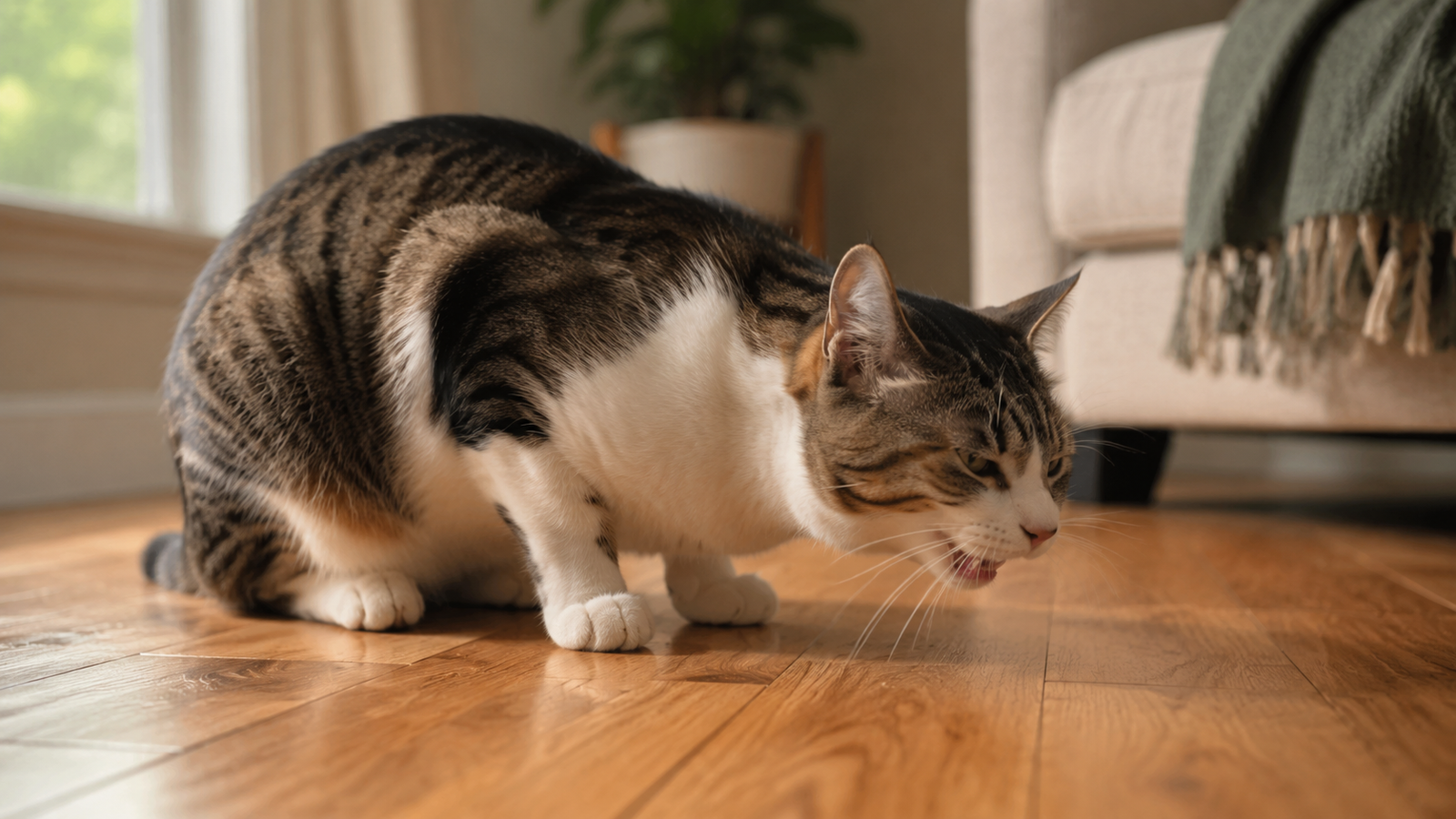
If your cat is throwing up white foam, it usually means there wasn’t much food in their stomach when they vomited. With little or no food to bring up, what comes out is mostly stomach acid and mucus, and the retching whips air into the mucus, turning it into white foam. If bile is mixed in, the foam may look yellow instead, and if there’s more liquid and less mucus, it may look mostly clear.
Why Is My Cat Throwing Up White Foam?
An empty stomach explains what came up, but not what triggered the vomiting in the first place. These are the most common causes.
Going Too Long Between Meals
This is the most common trigger, especially when it happens first thing in the morning. Cats fed once or twice a day can go long enough between meals that stomach acid builds up with no food to buffer it, irritating the stomach and triggering vomiting. It’s often called a “hunger puke.”
A Hairball Working Its Way Up
Hairballs do not always come up on the first retch. A cat may gag or vomit several times before the hairball itself appears, so the first thing you find may be foam or mucus.
Stomach Irritation
Grass, spoiled food, an unfamiliar treat, or a sudden food change can irritate the stomach and trigger vomiting.
Parasites or Chronic Digestive Problems
Intestinal parasites, food intolerance, inflammatory bowel disease, and pancreatitis can all cause recurring vomiting. Parasites are more likely in kittens and outdoor cats, while food intolerance and inflammatory bowel disease tend to cause an on-and-off pattern over weeks or months.
An Underlying Illness
Kidney disease, hyperthyroidism, diabetes, and liver disease can also cause repeated vomiting. Consider these in older cats, or when the vomiting comes with weight loss, appetite changes, increased thirst, or other new symptoms.
If your cat is bringing up food, blood, or vomit that isn’t foam, see our full guide to why cats throw up for the broader causes of vomiting.
When White Foam Vomit Is a Reason to Worry
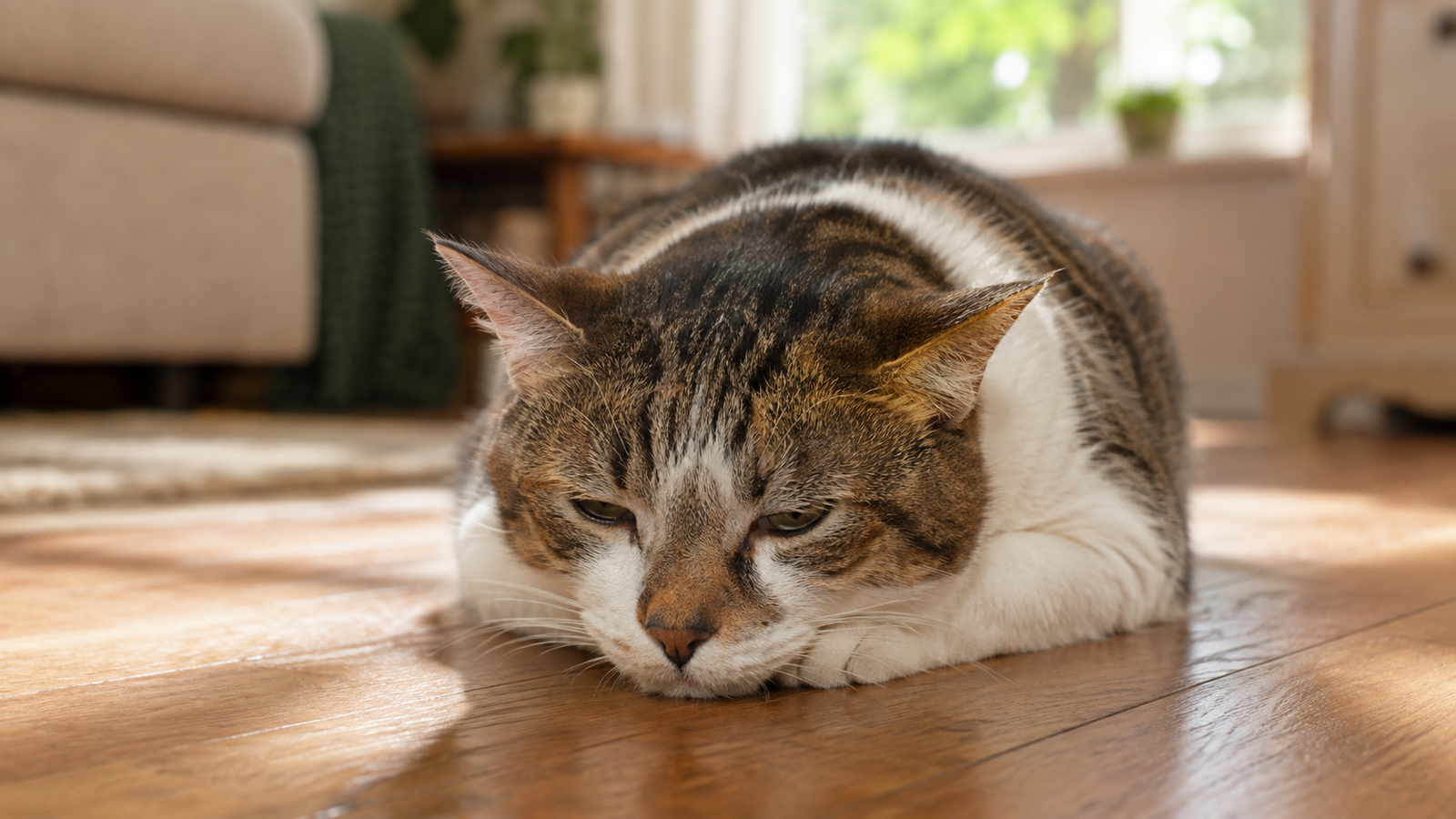
A single episode of white foam in a cat that is eating, drinking, and acting normally is usually not an emergency.
Call your vet within a day if:
- Your cat vomits three or more times in 24 hours
- Your cat stops eating or becomes lethargic
- Diarrhea starts along with the vomiting
- Your cat is drinking or urinating noticeably more than usual
- The vomiting is new or keeps recurring in an older cat
Treat it as an emergency if:
- Your cat cannot keep water down
- There is blood or dark, coffee-ground material in the vomit
- Your cat becomes very weak or collapses
- The belly looks swollen or seems painful
- Your cat keeps retching without bringing anything up
- You suspect toxin exposure
- You can see string or thread in your cat’s mouth or under the tongue. Do not pull it.
How to Stop the Morning Hunger Puke
If the hunger-puke pattern fits and your vet has ruled out an underlying problem, try shortening the gaps between meals.
- Split the daily food into three or four smaller meals.
- Offer a small meal before bed if the vomiting usually happens first thing in the morning.
- Use a timed feeder for an early-morning meal if the overnight gap is the problem.

What About a Cat Foaming at the Mouth?
Foaming at the mouth is different from vomiting white foam. There is no retching, and the foam is saliva rather than stomach contents.
Sometimes the cause is as simple as a bad taste. Bitter medications and licking a cat-safe topical flea treatment can cause sudden drooling and foam that clears once the taste is gone.
Nausea, mouth or dental pain, toxin exposure, and seizures can also cause foaming.
Call your vet if there is no obvious explanation, if the foaming keeps happening, or if your cat seems unwell. Treat it as an emergency if you suspect toxin exposure, if your cat has come into contact with a dog flea product, or if seizure activity is prolonged or happens back to back.
Debbie Reid is the founder and chief editor of CatPedia.net, with over 25 years of hands-on experience in feline care, rescue, and behavior research. Inspired by her rescue cats Snickers and Bigboy, she collaborates with animal welfare resources and consults veterinary literature to turn complex feline health, nutrition, and behavior topics into clear, actionable guides.