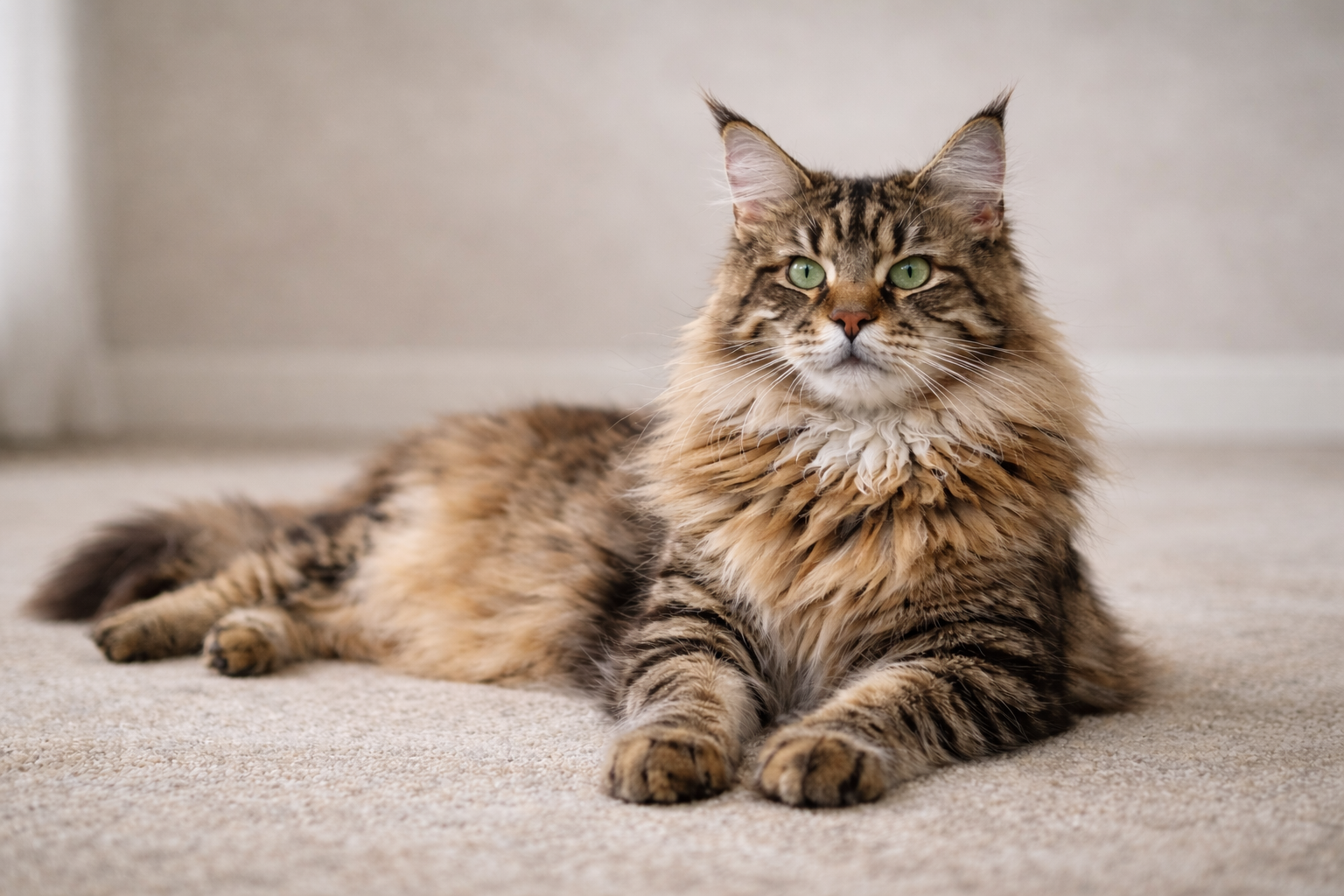
Maine Coon cats are one of the most popular and recognizable cat breeds in the world. Their large size, friendly personality, and striking looks make them a favorite for many cat lovers.
Unfortunately, Maine Coon cats are not hypoallergenic. They produce the same allergy-triggering proteins as other cat breeds, which can cause symptoms for people with cat allergies.
That said, this does not automatically mean a Maine Coon is a bad choice for everyone with allergies. Some allergy sufferers find they tolerate certain Maine Coons better than expected, while others react quickly. How your body responds depends on your sensitivity level and the individual cat.
What Does Hypoallergenic Mean for Cats?
The word hypoallergenic means something is less likely to cause an allergic reaction. When it comes to cats, this does not mean allergy-free.
Most cat allergies are caused by a protein called Fel d 1. This protein is found in a cat’s saliva, skin, and urine and spreads through the home as cats groom themselves.
Because all cats produce this protein, there is no such thing as a completely hypoallergenic cat. Some cats simply trigger fewer symptoms than others.
Why Maine Coon Cats Are Not Hypoallergenic
Maine Coon cats are not considered hypoallergenic because they shed a large amount of thick fur.
Like all cats, Maine Coons produce the allergy-triggering protein Fel d 1, which sticks to dander and loose hair. Because Maine Coons have large bodies and very dense coats, more allergen-carrying hair can end up around the home.
This does not mean Maine Coons produce stronger allergens than other cats. It simply means that more fur and dander in the home can increase allergy symptoms for some people.
Why Do Maine Coons Trigger Allergies?
For many allergy sufferers, symptoms are not caused by a single moment with a cat. Instead, they tend to build up gradually as allergens collect in the home over time.
Because Maine Coons shed throughout the year, allergens can slowly build up on furniture, clothing, and bedding. As allergens spread, symptoms may become more noticeable during daily routines like sleeping, relaxing on the couch, or cleaning the litter box.
Seasonal shedding, poor ventilation, and close contact can all increase exposure — which is why some people feel fine at first and then notice symptoms weeks later.
Do Maine Coons Cause More Allergies Than Other Cats?
Maine Coons are not automatically worse for allergies than every other cat breed.
All cats produce Fel d 1, and allergy reactions can vary widely from one cat to another, even within the same breed. Some people react strongly to one cat and barely notice symptoms around another.
Because of this, spending time with the specific cat you plan to adopt is often more helpful than relying on breed alone, especially if your allergies are mild.
Common Signs of Cat Allergies
Allergy symptoms can appear quickly or build up over time. They often resemble seasonal allergies.
Common signs include:
- Sneezing or nasal congestion
- Itchy or watery eyes
- Coughing or wheezing
- Skin irritation after contact
- Tightness in the chest
If you have asthma, cat allergens can trigger more serious breathing symptoms and should always be taken seriously.
Ways to Reduce Allergies With a Maine Coon
Even though Maine Coons are not hypoallergenic, many people successfully live with them by managing allergens at home.
The goal is not to eliminate allergens completely, but to reduce how much builds up in your living space. Regular brushing helps remove loose fur and dander before it spreads, and washing your hands after petting can limit how much allergen transfers to your face and clothing.
Keeping bedrooms cat-free gives your body a break from constant exposure, while frequent vacuuming and dusting help remove allergens that settle into carpets, furniture, and bedding. Improving airflow with a HEPA air purifier can also reduce the amount of airborne dander you breathe in throughout the day.
For people with mild allergies, these small, consistent habits can make symptoms much easier to manage over time.

Should You Get a Maine Coon If You Have Allergies?
If your allergies are severe, a Maine Coon may not be the best choice. Their size and coat can make allergen control more difficult.
If your symptoms are mild, careful planning, regular grooming, and a clean home environment may allow you to live comfortably with one.
Before adopting, spending extended time with the cat and speaking with your doctor can help you decide what feels right for you.
Is a Maine Coon the Right Fit for You?
Maine Coon cats are not hypoallergenic, but they are loving, intelligent, and deeply bonded companions.
Understanding how cat allergies work and how Maine Coons compare to other breeds allows you to weigh the risks honestly.
With the right expectations and preparation, many allergy sufferers are able to enjoy life with a Maine Coon while keeping symptoms manageable.