
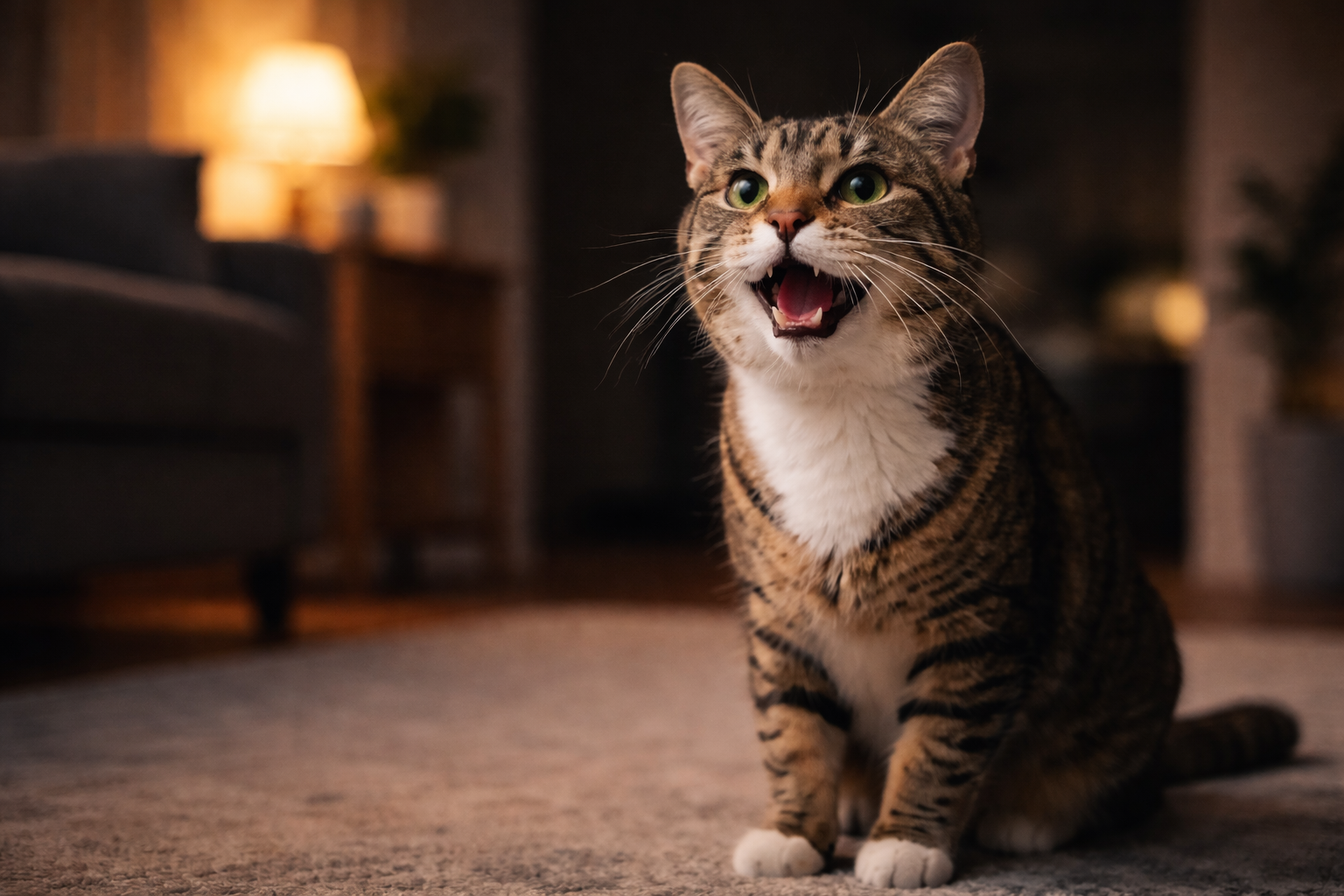
It’s not unusual for cats to become more vocal at night. Many cat owners find themselves being woken up by repeated meowing once the house goes quiet and everyone is trying to sleep.
While occasional nighttime vocalizing is normal, frequent or sudden meowing can leave you wondering what is causing it. In many cases, there is a clear reason behind the behavior.
We’ll walk through why cats meow at night, what the different causes can mean, when it may signal a health concern, and how to help your cat settle so everyone can get a better night’s sleep.
Why Cats Meow at Night
To understand why cats meow at night, it helps to look at their natural activity patterns. Cats are naturally more active in the evening and early morning hours, and while people are settling in for the night, many cats are just starting to feel alert and ready to move around once the house becomes quiet.
This pattern is rooted in their hunting instincts. In natural settings, prey is more active during low-light hours, and cats remain biologically tuned to those same periods of alertness. Even indoor cats still follow this internal rhythm, which often leaves them awake, aware, and sometimes vocal while the rest of the household is trying to sleep.
When a cat starts meowing at night, it is usually their way of trying to get attention, express a need, or respond to something in their environment. Identifying what is driving the behavior makes it much easier to manage and helps create a calmer nighttime routine for both you and your cat.
The Most Common Reasons Cats Meow at Night
Nighttime vocalizing usually comes down to a few common causes. Once you know what to look for, it becomes much easier to understand what your cat may be trying to communicate.
Boredom and Pent-Up Energy
Many indoor cats spend much of the day sleeping while their owners are busy. By evening, they often have plenty of stored energy and very little to do with it.
If a cat has not had enough physical or mental stimulation during the day, nighttime can become their most active period. Cats are naturally wired to be alert during low-light hours, so unused energy often leads to wandering, jumping, and vocalizing as they try to release that energy or get attention.
An evening play session that mimics hunting can make a noticeable difference. When cats have a chance to run, chase, and use their energy before bedtime, they are far more likely to settle down overnight.
Hunger or Feeding Routines
Hunger and feeding routines are among the most common reasons cats meow at night. Cats that are used to early breakfasts often begin calling for food well before their owners wake up.
Even when a cat is not truly hungry, they may still vocalize out of habit. Cats are strongly routine-driven, so if meowing has ever resulted in being fed, the behavior can quickly become part of their daily schedule.
In some cases, a cat may also vocalize if food or water bowls are empty overnight, especially in homes where they are used to having constant access. Making sure your cat has enough to eat during the day and access to fresh water overnight can help reduce early-morning wake-ups.
Wanting Access to the Bedroom
At night, many people close their bedroom doors. For cats that are used to sleeping nearby or moving freely through the house, that sudden change can lead to persistent meowing outside the door.
Cats are creatures of habit and tend to follow familiar nighttime routines. If they are used to curling up on the bed, checking in on you, or simply having access to every room, being shut out can feel unusual and frustrating. Meowing often becomes their way of trying to regain that access.
When this pattern repeats night after night, it can quickly turn into a learned behavior. Keeping nighttime routines consistent, or gradually adjusting them, can help reduce door-related vocalizing.
Stress or Changes in Routine
Cats thrive on routine, so even small changes at home can lead to nighttime meowing. Moving to a new house, bringing home another pet, having guests stay over, or even a shift in your daily schedule can make some cats feel unsettled.
When a cat feels stressed or unsure, they may become more vocal once the house goes quiet. Nighttime can heighten that anxiety, especially if their usual environment or routine no longer feels predictable. Some cats may also react to activity outside, such as stray cats or wildlife near windows, which can keep them alert and vocal after dark.
Stress-related vocalizing is often accompanied by other behavior changes, including hiding, restlessness, or shifts in litter box habits. Noticing these patterns can help you identify when stress may be the underlying cause.
Cats in Heat or Mating Behavior
Unspayed female cats can become especially vocal when they are in heat. The meowing is often loud, drawn-out, and repetitive as they instinctively try to attract a mate, and it can happen throughout the night.
Male cats may also become restless or vocal if they sense a female in heat nearby. This type of meowing usually sounds more intense than normal and often follows a noticeable cycle.
In most cases, spaying or neutering resolves mating-related vocalizing and also provides important long-term health benefits.
Why Older Cats Meow More at Night
Older cats often experience changes that can affect their nighttime behavior. Hearing loss, vision changes, and age-related cognitive decline can all lead to increased vocalizing after dark.
Some senior cats become disoriented in low light and may meow because they feel confused or unsure of their surroundings. Others wake more frequently as their sleep patterns shift with age and may call out simply because they are awake and looking for reassurance.
Keeping pathways clear, maintaining a consistent routine, and adding soft lighting in key areas can help older cats feel more comfortable moving around at night and may reduce nighttime vocalizing.
When Nighttime Meowing Can Signal a Health Problem
Most nighttime meowing is related to behavior or routine, but sudden or intense vocalizing can sometimes signal an underlying health issue. Because cats are skilled at hiding discomfort, changes in sound or behavior may be one of the first noticeable signs that something is wrong.
Conditions such as hyperthyroidism, kidney disease, arthritis pain, high blood pressure, and urinary problems can all lead to increased vocalization. Senior cats are more prone to these issues, but they can occur at any age.
If nighttime meowing begins suddenly, becomes unusually loud, or appears alongside changes in appetite, weight, litter box habits, or energy level, a medical cause becomes more likely. When a cat’s behavior shifts without an obvious reason, it’s always worth checking in with your veterinarian.
When to Worry About Night Meowing
Occasional nighttime meowing is usually nothing to worry about. However, it may be time to contact your veterinarian if the vocalizing appears alongside any of the following changes:
- Sudden onset: A normally quiet cat begins meowing loudly or constantly.
- Changes in appetite or thirst: Eating or drinking habits shift noticeably.
- Litter box changes: Straining, frequent trips, or accidents outside the box.
- Lethargy or hiding: Reduced activity or unusual withdrawal.
- Distressed vocal sounds: Meowing that sounds like pain, confusion, or panic.
When nighttime vocalizing is paired with other behavior changes, it’s best not to wait it out. A quick veterinary check can help rule out common medical causes and provide peace of mind.
How to Stop a Cat From Meowing at Night
Once medical concerns have been ruled out, most nighttime meowing can be improved with a few simple routine changes. The goal is to help your cat go into the night feeling tired, fed, and settled.
Start with activity. Cats that sleep most of the day often have plenty of energy left once nighttime comes around. An interactive play session in the evening that lets them chase, jump, and burn off energy can make a big difference in how settled they feel overnight.
Hunger can also play a role. Feeding your cat later in the evening or making sure they have enough to eat before bed can reduce early-morning wake-up calls. It also helps to make sure water, litter boxes, and favorite sleeping spots are easy to access so they do not need to wake you for help.
Just as important is how you respond during the night. If meowing is for attention, even a quick reaction can reinforce the habit. Staying consistent and keeping nighttime interactions minimal helps most cats adjust their routine over time.
When these habits are paired with a calm, predictable nighttime environment, most cats begin to settle more easily. Closing blinds, reducing outside noise, and keeping evenings consistent helps signal that nighttime is for rest, not activity.
Final Thoughts
Nighttime meowing is usually your cat’s way of responding to a need, habit, or change in their environment. Once you identify the cause, the behavior often becomes much easier to manage with consistent routine and daily enrichment.
If vocalizing appears suddenly or comes with other symptoms, checking in with your veterinarian is always a smart step. With the right approach, most cats settle back into quieter nights and more predictable sleep patterns.
Debbie Reid is the founder and chief editor of CatPedia.net, with over 25 years of hands-on experience in feline care, rescue, and behavior research. Inspired by her rescue cats Snickers and Bigboy, she collaborates with animal welfare resources and consults veterinary literature to turn complex feline health, nutrition, and behavior topics into clear, actionable guides.
Related posts:
 Why Does My Cat Bite Me? Understanding Your Cat’s Behavior
 Cat Pooping Outside the Litter Box? Causes and How to Fix It
 How Do Cats Show Affection? 10 Signs Your Cat Loves You
 Why Are Cats Afraid of Cucumbers? The Real Reason Behind the Reaction
 Why Do Cats Groom Each Other? Trust, Scent & Why They Fight