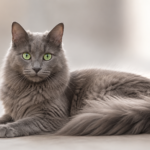
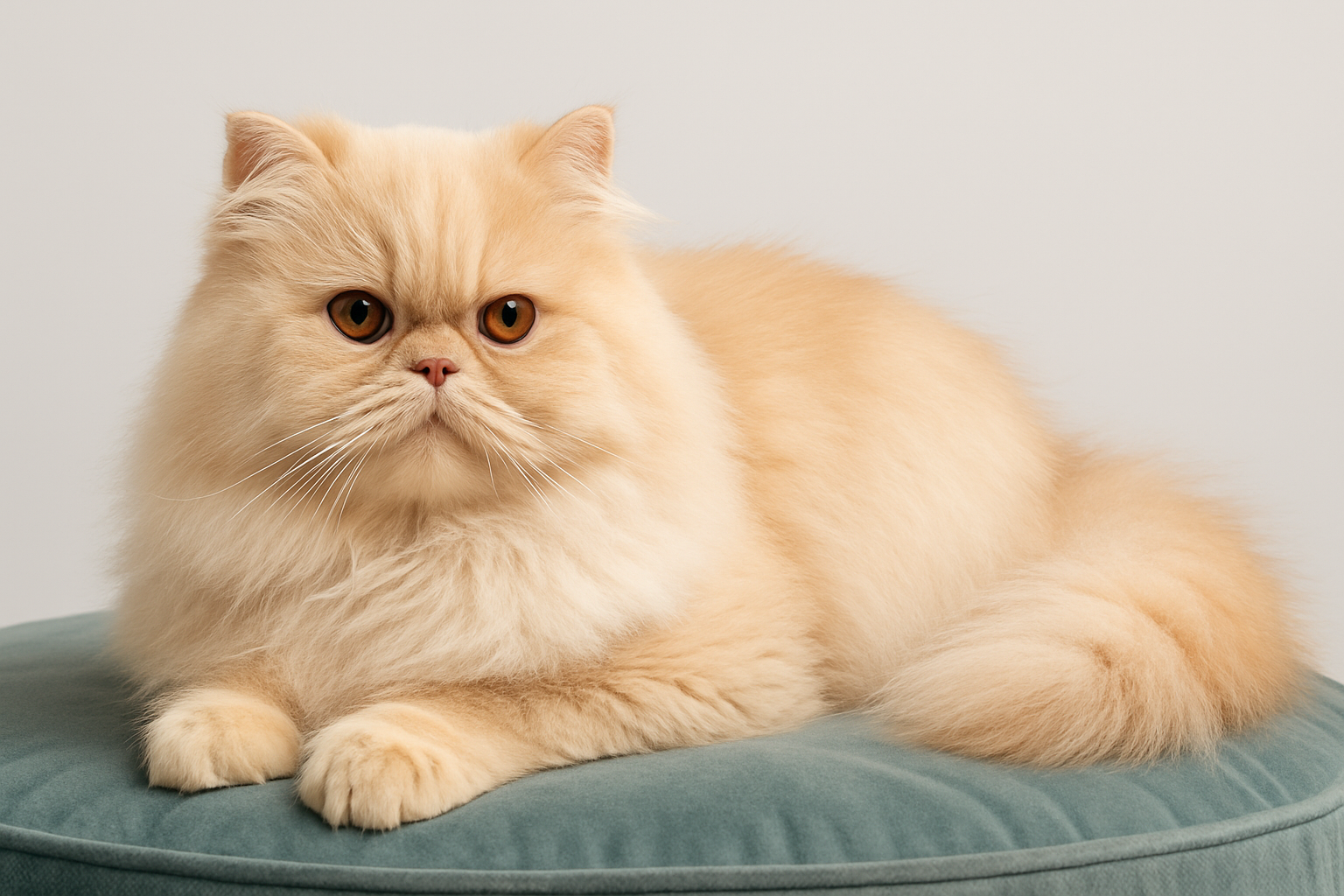
Persian cats have a way of making a room feel more refined just by being in it. That long, silky coat, the flat expressive face, those round copper eyes blinking slowly at nothing in particular. They’re unhurried, deeply affectionate, and content to spend most of the day draped across a soft surface while the rest of the world moves on without them.
They’re also more work than they look. That coat needs daily attention or it will mat badly, and flat-faced Persians come with a set of health considerations that aren’t optional to understand. The grooming commitment alone is enough to rule out this breed for a lot of people, and that’s before you factor in the vet costs that can come with their facial structure.
Quick Breed Facts
- Origin: Iran (formerly Persia); developed in Europe
- Breed registries: CFA, TICA, FIFe, GCCF, WCF
- Weight range: 7–12 lbs
- Lifespan: 12–17 years
- Coat: Long, thick, silky
- Colors and patterns: Solid, tabby, calico, smoke, bicolor, Himalayan point, chinchilla
- Eye color: Copper, blue, green, or hazel depending on coat color
- Grooming: High — daily brushing required
- Activity level: Low to moderate
- Affection level: Very high
- Vocality: Quiet and soft-spoken
- Good with children: Yes, with gentle kids
- Good with other pets: Yes, especially calm animals
History & Origin of the Persian Cat
The Persian cat’s origins are less precisely documented than its reputation might suggest. Long-haired cats were recorded in Persia (modern-day Iran) and surrounding regions as far back as the 1600s, and European traders brought them west where they quickly became status symbols among the wealthy. By the Victorian era, Persians had become one of the most fashionable cats in Britain and Europe, appearing at the very first cat shows and drawing consistent admiration for their coat and calm demeanor.
American and British breeders gradually shaped the modern Persian into two distinct types. The traditional or “doll-face” Persian retains a more moderate facial structure, while the peke-faced or flat-faced type, the one most commonly seen at cat shows today, has a dramatically compressed muzzle that became the standard in CFA show lines from the mid-20th century onward. That shift toward a flatter face has been the source of significant health scrutiny in recent decades, with welfare concerns now prompting some registries and breeders to move back toward more moderate facial structure.
Persian Cat Personality & Temperament
Persians are among the calmest and most settled cats most people will ever own. They’re gentle, patient, and quietly affectionate in a way that feels calming to be around. They don’t constantly ask for attention, but they enjoy being near their people. They’ll find a comfortable spot near wherever you are, keep you company without making noise about it, and respond warmly when you come to them. For someone who wants a sweet, low-key companion rather than a high-energy, constantly demanding cat, the Persian is an excellent fit.
They’re not particularly playful compared to most breeds, and they’re not curious in the way that gets cats into trouble. A Persian is unlikely to knock things off shelves for entertainment or figure out how to open doors. They enjoy a short play session, especially anything slow-moving and easy to bat at, but they’re just as happy doing nothing at all. That low energy is part of what makes the breed such a good fit for quieter households, though some owners looking for a more interactive cat may find them too relaxed.
Persian Cat Appearance & Physical Traits
The Persian’s most recognizable feature is its face. The flat-faced or peke-faced type has a compressed muzzle, a very short nose, and large round eyes set close together, giving it an almost doll-like expression. The traditional doll-face Persian has more length to the nose and a less extreme profile that many breeders and veterinarians consider healthier. Both types share the same long, dense coat, stocky body, and short legs that give the breed its distinctly compact look.
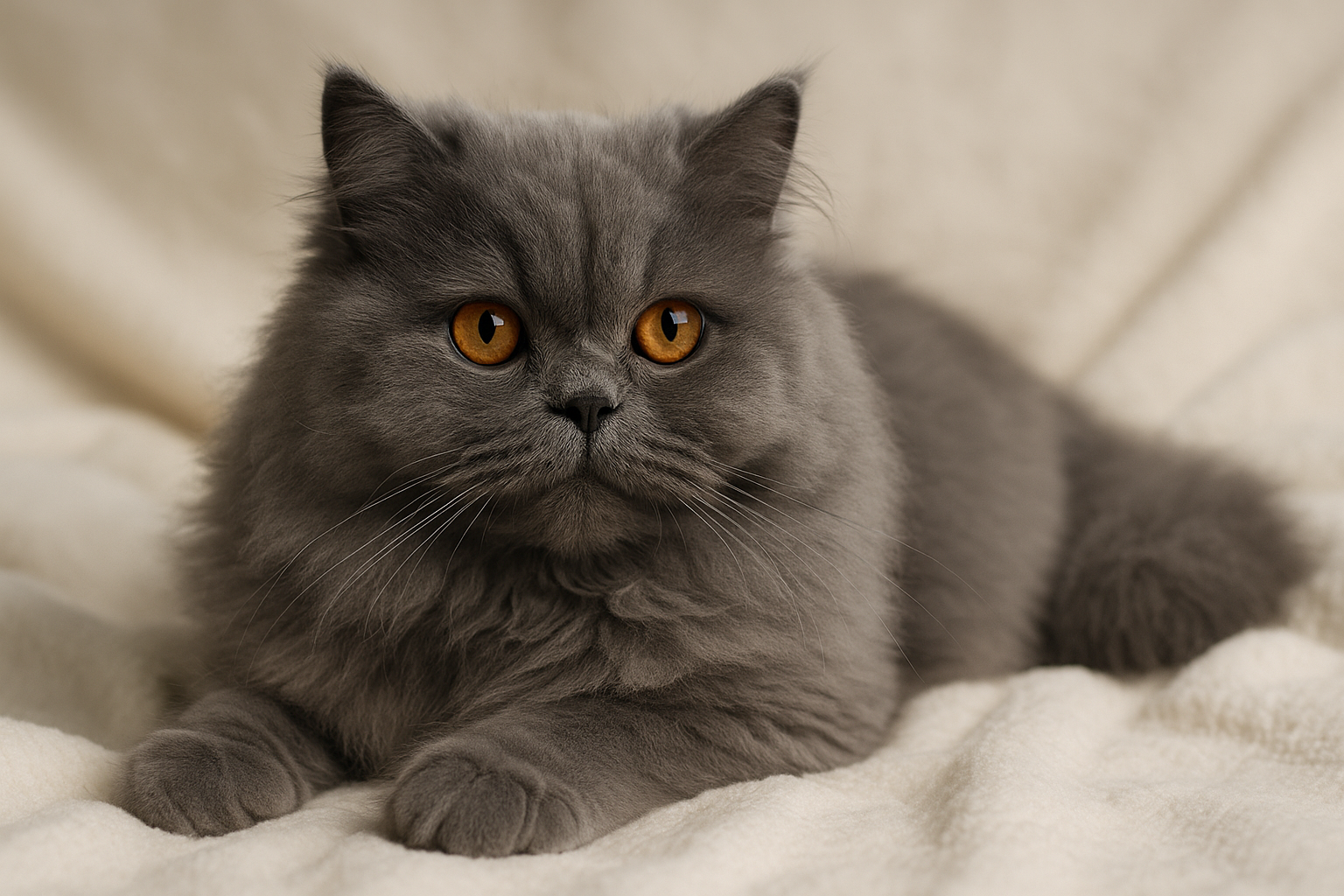
The coat comes in an enormous range of colors and patterns. Solid whites, blacks, and blues are classic. The chinchilla silver Persian, with its white coat tipped in black and vivid green eyes, is one of the most striking color variations in any domestic breed. The Himalayan is a color-pointed Persian (sometimes classified separately) that combines the Persian body type with the point markings of a Siamese. Eye color is tied closely to coat color, with copper eyes common in solids, blue in whites, and green in chinchillas.
Persian Cat Grooming & Shedding
No other common domestic breed asks as much of its owner in terms of coat care. The Persian coat is long, dense, and prone to matting if it goes more than a day or two without attention. Daily combing with a wide-tooth metal comb is the baseline, and slicker brushing on top of that helps manage the undercoat. Skip a few days and you’ll find tangles forming behind the ears, under the armpits, and around the collar area. Left too long, those tangles become mats that have to be shaved out by a groomer.
Beyond the coat, flat-faced Persians typically have drainage issues due to their compressed tear ducts, which causes staining and moisture buildup in the facial folds. A gentle wipe with a damp cloth or dedicated eye wipe once or twice a day keeps this manageable. Shedding is consistent year-round and heavy. People with Persians learn to keep a lint roller in every room.

Activity & Play
Persians are low-energy cats and comfortable with a calm, predictable routine. They enjoy play, but in short bursts and with toys that don’t require much chasing. Feather wands, soft balls, and slow-moving toys hold their attention well. They’re not climbers by nature, so a tall cat tree isn’t as essential as it would be for an active breed. A comfortable perch near a window where they can watch birds or activity outside covers most of their enrichment needs, and a Persian will use it for hours without any encouragement.
Their low activity level is part of what makes them well-suited to apartments and quieter households, but it also means weight gain is a real concern if their diet isn’t managed carefully. A puzzle feeder at mealtimes adds a small amount of mental engagement and slows down eating, which helps keep weight in check without requiring them to do anything they’d find stressful.
Persian Cat Health & Lifespan
Most Persians live between 12 and 17 years with good care, though the breed does come with some important health concerns potential owners should understand. The flat face that defines the modern show Persian creates a condition called brachycephaly, the same structural issue seen in flat-faced dog breeds. This can cause narrowed nostrils, elongated soft palates, and obstructed airways that range from barely noticeable to requiring surgical correction. If you’re considering a flat-faced Persian, ask the breeder directly about breathing quality in their lines and listen to the cat breathe at rest.
Polycystic kidney disease (PKD) is the other major hereditary health concern associated with Persian cats. It causes cysts to form on the kidneys and can lead to kidney failure over time. Reputable breeders screen for PKD using DNA testing and should be able to provide documentation.
Beyond breed-specific conditions, Persians benefit from consistent dental care. Their compact skulls often mean crowded teeth that accumulate plaque faster than average. A quality diet with controlled portions matters because their low activity level makes them susceptible to weight gain, which compounds joint and cardiovascular strain over time. Wet food is worth including in their diet for hydration support, particularly given the kidney disease risk in the breed.
Family Compatibility
Persians do well in calm households and are patient with respectful children. They’re not the type to scratch or bite when annoyed; they’re more likely to simply remove themselves from a situation they find uncomfortable. That tolerance has limits though. Toddlers who grab or pull, loud and unpredictable households, and high-energy dogs that won’t leave them alone are all stressors that can make a Persian anxious and withdrawn. They suit families with older, gentle children considerably better than those with young ones still learning how to handle animals.
They’re well-matched with other calm cats and older, low-energy dogs that will respect their space. They also suit solo owners and seniors particularly well. A Persian doesn’t need a lot of activity from the people around them, just consistency, quiet, and regular affection on their own terms. They don’t tend to suffer from the kind of separation anxiety that more demanding social breeds experience, but they do appreciate not being left alone for very long stretches.
Recommended Supplies for a Persian Cat
The grooming kit is the most important investment you’ll make with this breed.
- Wide-tooth metal comb for daily detangling
- Slicker brush for undercoat maintenance
- Soft eye wipes for daily facial fold cleaning
- Low-sided litter box that’s easy to step into
- Raised or tilted food bowl to suit flat-faced eating posture
- Soft, washable bed placed in a quiet spot near a window
- Puzzle feeder to slow eating and add light enrichment

Persian Cat Price and Cost
From a reputable breeder, Persian kittens typically cost between $1,000 and $2,500 for pet-quality cats, with show-quality kittens from champion lines or rare color variations like chinchilla silver or blue point Himalayan pushing higher. The price reflects health testing for PKD, early veterinary care, and the significant time that goes into socializing Persian kittens properly. Persian rescues do exist and are worth searching out if you’re open to an adult cat. Many rehomed Persians come from owners who underestimated the grooming commitment, so they’re often well-socialized and simply in need of someone with the time to care for their coat.
Persian Cat FAQs
Are Persian cats hypoallergenic?
No. Persians are one of the heavier-shedding breeds and produce the same Fel d 1 protein that triggers most cat allergies. Their long, dense coat means more airborne dander, not less. They’re a poor choice for anyone with significant cat allergies.
How long do Persian cats live?
Most Persians live 12 to 17 years with proper care. Regular vet checkups, PKD screening, dental care, and weight management all contribute to a longer, healthier life.
Do Persian cats shed a lot?
Yes, consistently and heavily. Daily brushing reduces it, but Persian owners learn to accept fur on furniture, clothes, and most surfaces. A good vacuum rated for pet hair is not optional with this breed.
What is a doll-face Persian?
A doll-face or traditional Persian has a more moderate facial structure than the flat-faced show type, with a longer nose and less compressed muzzle. Many vets and breeders consider it the healthier of the two types because it avoids the breathing complications associated with extreme brachycephaly.
How much does a Persian cat cost?
Pet-quality Persians from reputable breeders typically range from $1,000 to $2,500. Rare color variations and show-quality cats can cost more. Adoption through a Persian rescue is a more affordable option and often means giving a well-socialized adult cat a second home.
Is the Persian Cat Right for You?
If you want a quiet, deeply affectionate cat that’s calming to be around and content with a peaceful home routine, the Persian is one of the best choices out there. They’re not demanding about attention, they’re patient with the people around them, and they form real bonds without making a lot of noise about it. The breed suits calm households, solo owners, and anyone who finds satisfaction in a cat that appreciates being cared for.
The biggest thing to understand about Persian cats is the daily grooming. It’s not optional, and it’s not something that gets quicker with practice the way some people hope. It’s simply part of living with the breed. Get that right, and you’ll have one of the most relaxed, affectionate companions you can share a home with for a very long time.