
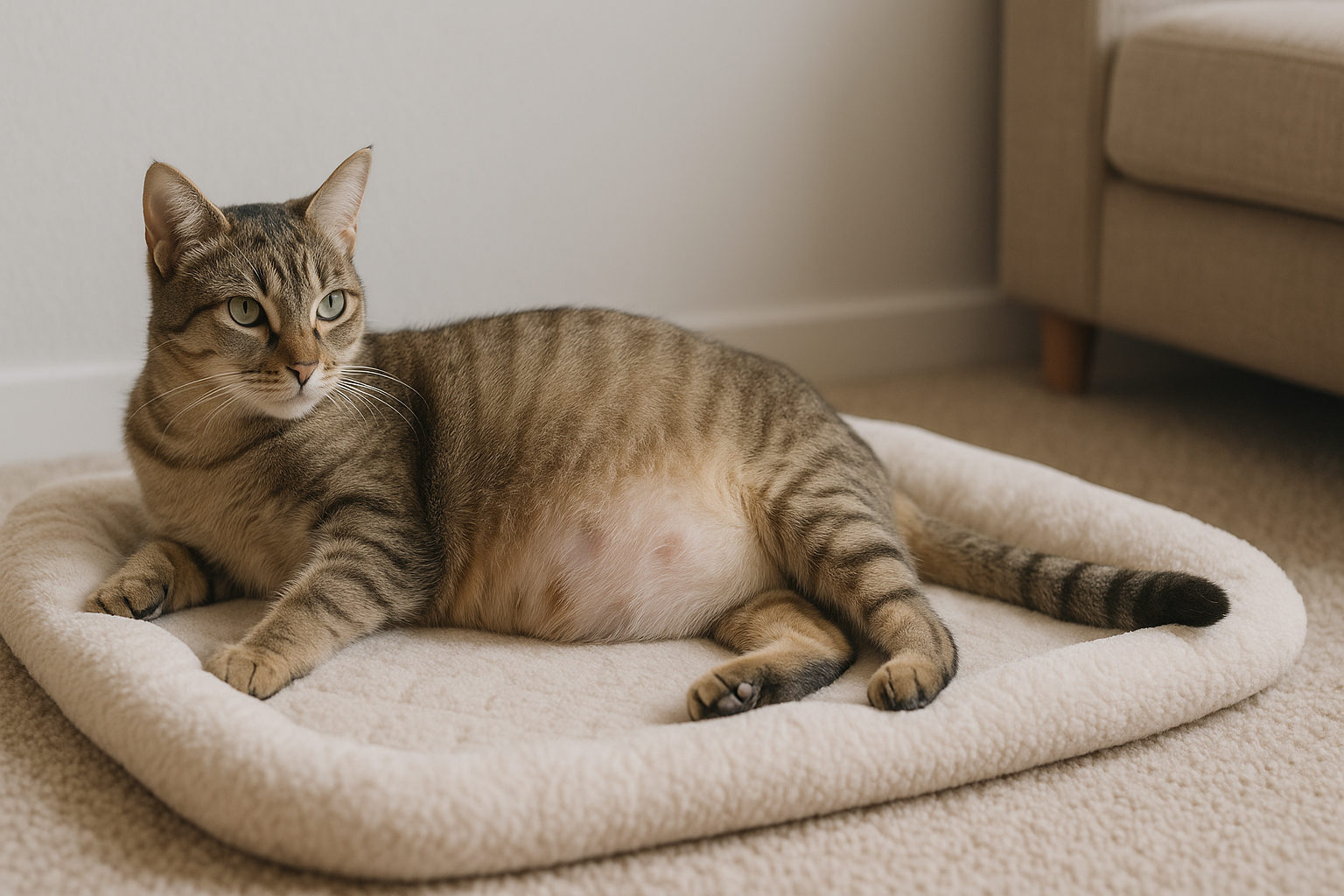
Cat pregnancy often catches owners by surprise because the changes can be so subtle at first. One week your cat seems completely normal, and the next she’s resting more, eating a little differently, or settling into quieter spots around the house. Because the entire pregnancy moves so quickly, it’s easy to feel unsure about what’s happening or how to support your cat along the way.
Many people don’t realize how long cats are pregnant or what each stage actually looks like, which can make the experience feel confusing. This guide walks through the timeline in a warm, simple way so you always know what’s normal — how your cat’s body changes week by week, the behaviors you might notice, and the small things you can do to help her feel safe and comfortable as the kittens grow.
What to Expect During Cat Pregnancy
Most pregnant cats stay active and relaxed during the early weeks, and many of the changes happen so gradually that owners don’t notice them right away. You may see your cat eating a bit more, choosing quieter areas to rest, or becoming slightly more affectionate. These early signs are normal and simply reflect her body adjusting to the developing kittens.
As pregnancy progresses, your cat will move through predictable physical and behavioral changes. Understanding these patterns helps you know what’s normal and when extra support or a veterinary check might be helpful. From small shifts in appetite to nesting behavior, each stage offers clues about how your cat is feeling and how close she is to giving birth.
The Feline Pregnancy Timeline
The average cat pregnancy lasts about 63 to 65 days. Some cats deliver a little early or slightly late, but nine weeks is typical. The earliest stage is the hardest to recognize because most of the changes happen internally — embryos begin forming, hormones shift, and development starts long before anything is visible from the outside.
While every cat is different, the week-by-week changes below reflect what most owners commonly see. They also help you picture what’s happening inside your cat’s body, even when she still appears completely normal on the surface.
Weeks 1–2: The Hidden Beginning
During the first two weeks, pregnancy is nearly impossible to detect. Fertilized eggs travel through the reproductive tract and settle into the uterine wall. Hormone levels begin rising to support pregnancy, but these early shifts rarely cause noticeable changes. Your cat may sleep a little more or act slightly calmer, but many show no signs at all.
Because most cats continue their usual routines, this early stage is easy to miss. Appetite, energy, and activity normally stay unchanged, and there’s no visible belly growth. Even experienced owners often overlook these early days — which is completely normal.
Weeks 3–4: Subtle Physical Changes
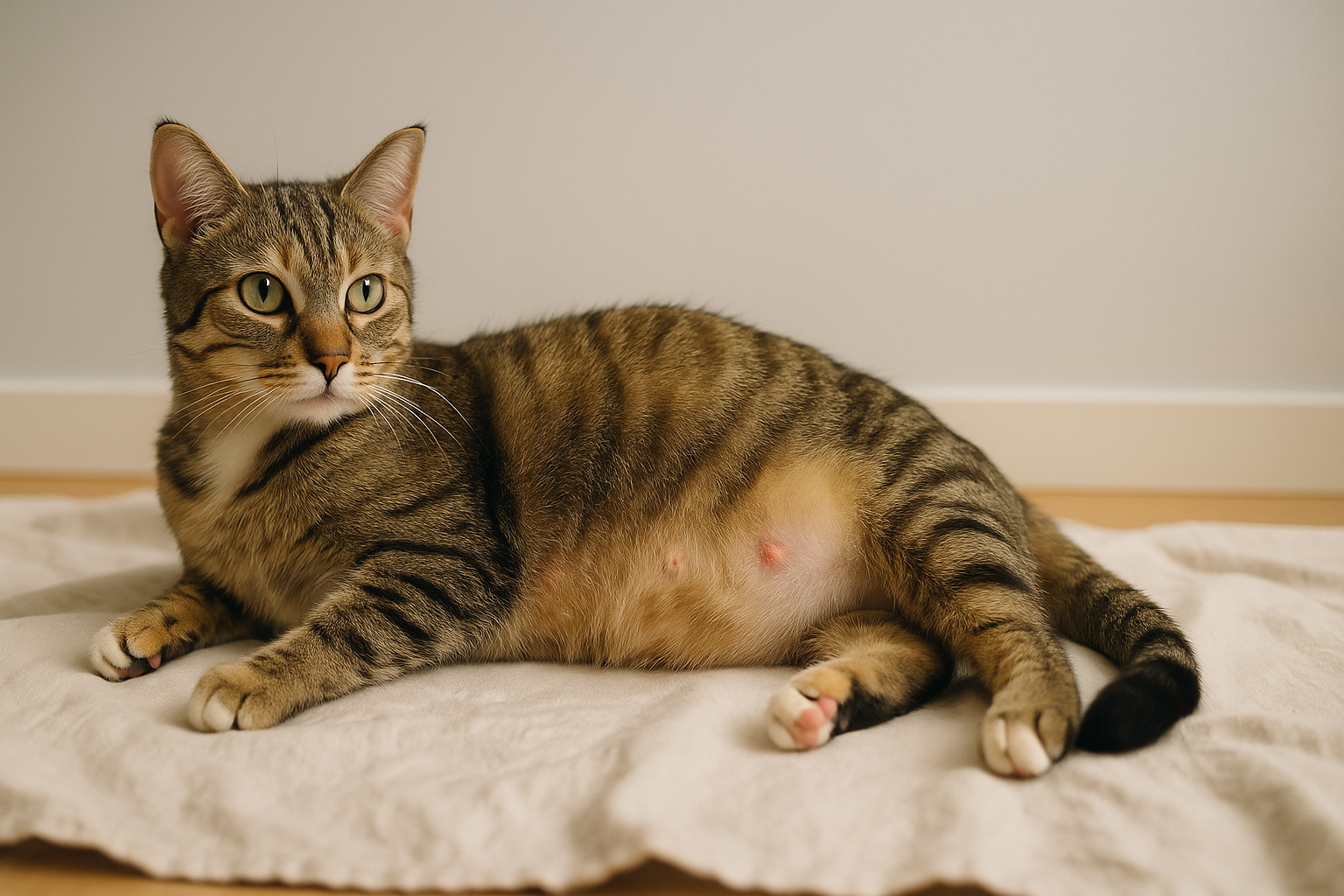
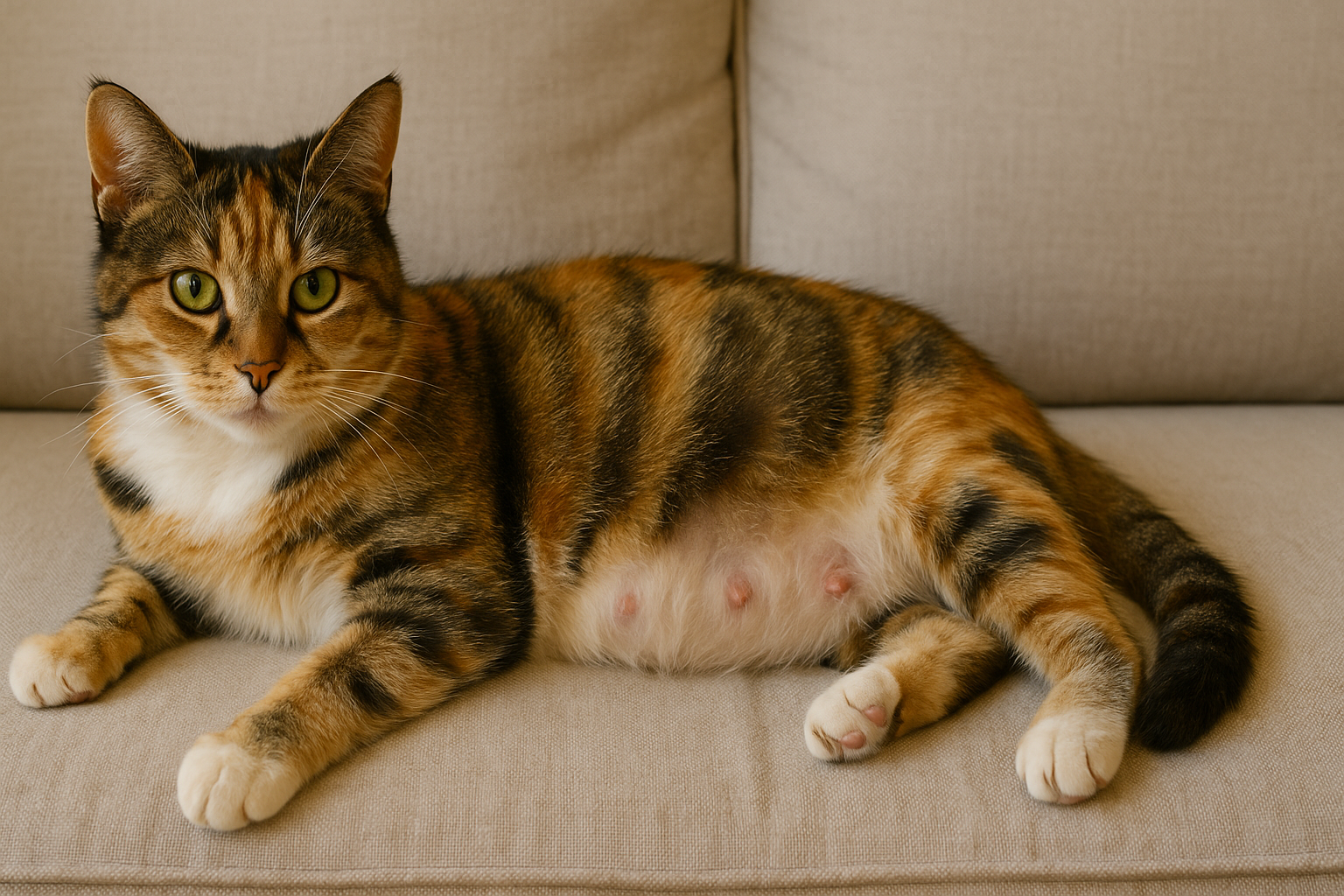
By the third week, the first outward signs of pregnancy appear. Your cat’s nipples may become pinker and slightly enlarged due to increased blood flow — a classic early indicator known as “pinking up.” Around this time, she may also seem hungrier, sleep more than usual, or seek extra comfort and attention.
Inside the womb, the embryos are developing their earliest features. Some cats begin to gain a bit of weight, and toward the end of week four you might notice gentle rounding in the belly, especially if your cat is naturally slender. This stage is also when a veterinarian can often confirm pregnancy with an ultrasound or gentle abdominal exam.
Weeks 5–6: Noticeable Belly Growth
By weeks five and six, pregnancy becomes more visible. Your cat’s belly typically becomes rounder and firmer as the kittens grow, and you may notice small changes in how she walks or settles down to rest. Her appetite often increases because the kittens are rapidly developing bones, organs, and muscle.
Inside, the kittens now have clear body shapes. As their bones harden, they can appear on x-rays, which helps your veterinarian estimate how many kittens are on the way. This is an energy-dense stage for your cat, so offering nutrient-rich food supports her increasing needs.
Weeks 7–8: Nesting and Movement
During the seventh and eighth weeks, the kittens become active enough that you may see or feel small movements beneath your cat’s skin. Her belly looks full and rounded, and she may walk more slowly or rest more frequently. Nesting behavior often begins now — exploring quiet corners, burrowing into blankets, or testing out different hiding spots as potential birthing areas.
Her personality may shift, too. Some cats become very affectionate, while others prefer more space. Both reactions are normal. Inside, the kittens are nearly fully developed and are now focused mainly on gaining weight and preparing for birth. This is a good time to set up a warm, quiet nesting area for her.
Week 9: Preparing for Birth
By week nine, most cats are nearing delivery. Appetite may decrease slightly because there’s less room in the abdomen, and your cat may seem restless or change resting spots as she prepares for labor. Many cats also groom themselves more than usual, especially around the back end — a common sign that labor is approaching.
When labor begins, your cat may pant, pace, or make soft vocalizations. Early contractions often look like gentle tightening of the belly. Once active labor starts, the first kitten usually arrives within a few hours. Most cats prefer privacy during this time, but keeping an eye from a distance ensures you can step in if something seems unusual.
What to Expect When Labor Begins
After those early signs, most cats move into active labor within a few hours. Contractions become stronger and more regular, and the first kitten is usually born soon afterward. Kittens often arrive one at a time, with short resting periods between deliveries. These breaks are normal as long as your cat stays calm and continues progressing.
Most cats deliver naturally without assistance. However, if she strains for more than an hour without producing a kitten, seems distressed, or suddenly stops progressing, contacting your veterinarian is the safest choice.
Understanding Your Pregnant Cat’s Needs
Your cat’s appetite, habits, and comfort needs will shift throughout pregnancy. Feeding a high-quality kitten food is usually recommended because it provides extra calories, protein, and essential nutrients. Many pregnant cats prefer smaller, more frequent meals as their belly grows. Keeping fresh water available in multiple spots also supports hydration.
A calm, predictable environment can make pregnancy easier for your cat. Soft bedding, warm resting places, and quiet areas help her relax as her due date approaches. If your home has other pets, offering her a private space helps her feel secure and less stressed.
Safe and Unsafe Foods During Pregnancy
Feeding your cat safely is one of the best ways to support her during pregnancy. Most veterinarians recommend sticking with commercial kitten food because it’s balanced for higher nutritional needs. You can offer small amounts of plain, cooked chicken or turkey as treats, but everything should be unseasoned and fully cooked.
Avoid raw meats, raw eggs, unpasteurized dairy, or anything seasoned with garlic, onion, or heavy spices. Pregnancy is not the time to introduce unfamiliar foods since her digestive system is working harder than usual. Keeping her diet consistent supports both her and her developing kittens.
When Pregnancy Isn’t What It Seems
Occasionally, a cat will show all the signs of pregnancy — enlarged nipples, nesting behavior, a fuller belly, even milk production — but no kittens are actually on the way. This is known as a false pregnancy. Hormonal shifts after a heat cycle can mimic true pregnancy, making it easy to mistake the signs.
The good news is that false pregnancies are harmless and fade naturally. The belly gradually returns to normal, nesting behavior stops, and appetite evens out. If symptoms linger longer than expected or you’re unsure whether your cat is truly pregnant, a veterinarian can confirm with an exam or imaging.
Getting Ready for Birth
As the due date approaches, most cats begin searching for a safe place to give birth. This instinctive nesting behavior often starts around weeks seven or eight. Your cat may explore closets, boxes, or quiet corners as she looks for a comfortable, secure space. You can help by setting up a nesting area lined with soft blankets or towels. A large cardboard box or shallow plastic bin works well when placed in a peaceful spot.
In the final days before labor, your cat may become more affectionate or a bit more withdrawn. She might switch resting places frequently, groom herself more than usual, or seem slightly restless. These are all normal signs that labor is approaching. Keeping the home calm helps her feel protected and prepared.
How to Prepare Your Home for Newborn Kittens
Newborn kittens can’t regulate their body temperature, so a warm, quiet environment is essential. The nesting area should be free from drafts, bright lights, and loud noises. Most mother cats prefer dim, cozy spaces where they feel hidden and secure.
Place food, water, and a litter box nearby. New mothers often stay close to their kittens during the first few days, so having supplies within reach helps her stay comfortable. A warm, clean, and predictable space supports both the mother and her litter during the early weeks.
Life After Delivery
Once the kittens arrive, your cat will focus entirely on caring for them. She will nurse often, clean them, and keep them warm by curling around the nest. It’s normal for her to stay with the kittens almost constantly at first, leaving only briefly to eat, drink, or use the litter box. Offering plenty of kitten food and fresh water helps support milk production and keeps her energy strong.
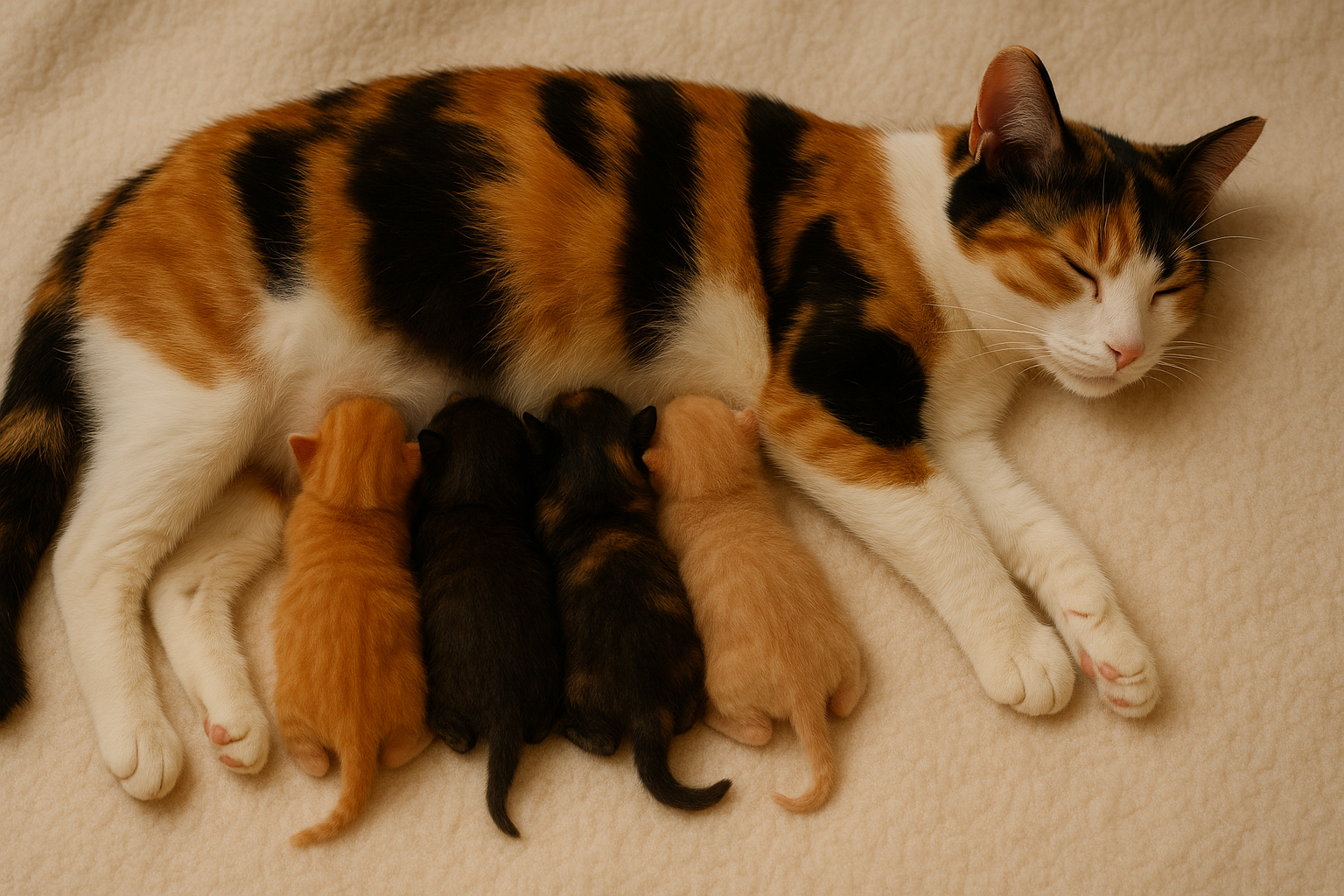
Kittens grow quickly during these first weeks. Their eyes usually open between one and two weeks of age, and by three weeks they begin wobbling around the nest. Around four weeks, they become curious about solid food. By eight weeks, most kittens are playful, active, and far more independent. A warm, clean, and stable environment helps both mom and kittens stay healthy during this stage.
What to Know About Postpartum Care
Most cats recover smoothly after giving birth, but it’s important to keep an eye on their appetite, energy, and comfort. A healthy mother will nurse reliably, stay close to her kittens, and show steady improvement each day. While she may rest often, she should continue eating well and gradually return to her normal routine within a week or two.
If she seems unusually tired, avoids her kittens, or appears uncomfortable, contacting your veterinarian is the best step. Once the kittens are weaned, many owners choose to spay the mother to prevent future pregnancies. Cats can become pregnant again very quickly — even while still nursing — so spaying supports her long-term health and allows her body time to rest and recover.
Supporting Your Cat Through Pregnancy
Even though a cat’s pregnancy lasts only about 63–65 days, those weeks bring steady changes. Understanding the timeline, noticing subtle shifts, and creating a comfortable space can make the experience smoother for both you and your cat.
Most cats progress through pregnancy and birth naturally, relying on their instincts and the security of a calm home. If anything ever feels unusual or you’re unsure about what you’re seeing, reaching out to your veterinarian is always a safe and supportive choice. With your care, a warm nesting area, and a bit of preparation, your cat can move confidently through pregnancy and welcome healthy kittens into the world.