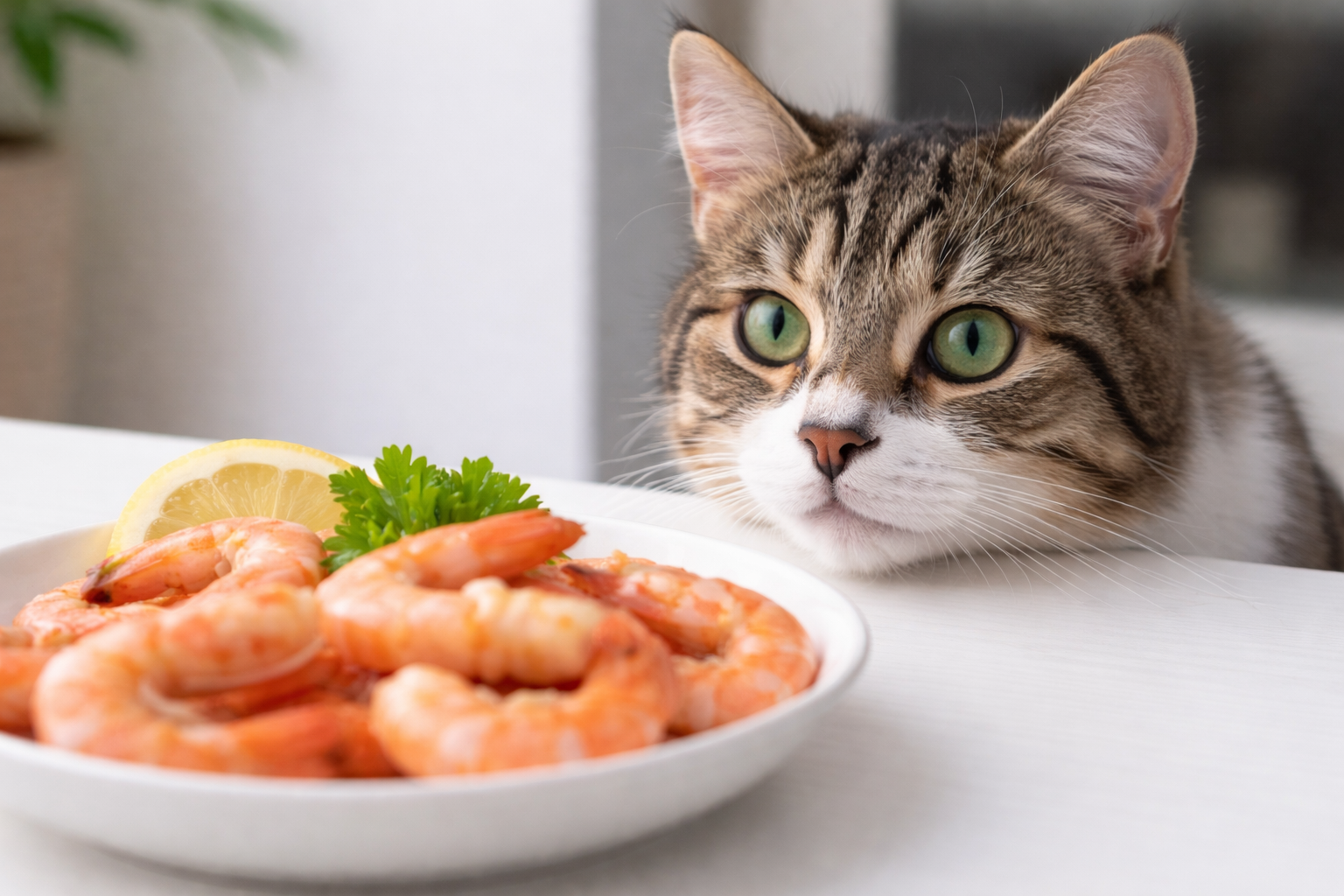
Many cats enjoy the taste and smell of seafood, and shrimp is no exception. If you eat shrimp at home, chances are your cat has tried to steal a bite at least once, leaving you wondering whether it is safe to share.
The short answer is yes, cats can eat shrimp in small amounts — as long as it is prepared properly for them.
When Shrimp Is Safe for Cats
Shrimp is safe for cats when it is fully cooked, plain, and given in small amounts.
Shrimp that is served raw, seasoned, fried, or paired with sauces can cause digestive upset or expose cats to ingredients that are unsafe.
For most cats, shrimp should be treated as an occasional extra, not a regular snack or meal replacement.
Can Cats Eat Raw Shrimp?
No, cats should not eat raw shrimp.
Raw shrimp can carry bacteria and parasites that may lead to vomiting or diarrhea. Cats have smaller digestive systems than humans, so they are more sensitive to foodborne illness.
Cooking shrimp thoroughly reduces these risks. Shrimp should always be fully cooked and cooled before offering any to your cat.
Can Cats Eat Cooked Shrimp?
Yes, cats can eat cooked shrimp when it is prepared simply.
The safest option is plain shrimp that has been boiled or steamed with no salt, butter, garlic, spices, or sauces. Even small amounts of seasoning can irritate a cat’s stomach.
Once cooked, allow the shrimp to cool and cut it into very small pieces. This helps reduce choking risk and makes digestion easier.
Can Cats Eat Shrimp Tails or Shrimp Shells?
No, cats should not eat shrimp tails or shrimp shells.
Shrimp shells are hard and sharp. If swallowed, they can cause choking, mouth injuries, or intestinal blockages.
Even if a cat manages to chew them, shells offer no real benefit and increase risk. Always remove the shell and tail completely before offering shrimp.
Can Cats Eat Shrimp Cocktail?
Cocktail shrimp is not recommended for cats.
While the shrimp itself may be cooked, cocktail shrimp is often salted and served with sauces. Cocktail sauce commonly contains onion, garlic, sugar, and spices that are unsafe for cats.
The high sodium alone makes this a poor choice. An accidental lick is unlikely to cause harm, but it should not be offered intentionally.
Is Shrimp Healthy for Cats?
Shrimp can offer some nutritional benefits for cats when it is prepared properly and fed in small amounts.
Shrimp is a low-calorie, protein-rich food that contains small amounts of nutrients that support overall health.
That said, shrimp does not provide complete nutrition for cats. While it can be a fun and tasty treat, it lacks the balance of vitamins, minerals, and amino acids cats need from their regular diet.
For this reason, shrimp should only be offered occasionally and should never replace complete and balanced cat food. Feeding shrimp too often can crowd out proper nutrition or cause stomach upset in some cats.
Signs Your Cat Did Not Tolerate Shrimp Well
After offering shrimp for the first time, watch for signs of digestive upset.
- Vomiting
- Diarrhea
- Low energy or hiding
- Refusing regular food
If symptoms are mild and pass quickly, it is usually not serious. If symptoms last longer than 24 hours or your cat seems uncomfortable, contact your veterinarian.
How to Give Shrimp to Your Cat Safely
If you decide to share shrimp, keep it simple.
Use only fully cooked, plain shrimp. Remove all shells and tails, cut the shrimp into tiny pieces, and offer no more than one or two bites.
Shrimp should only be given occasionally and should never replace your cat’s regular food.
Final Thoughts: Can Cats Eat Shrimp?
Yes, cats can eat shrimp in small amounts when it is fully cooked, plain, and shell-free.
Raw shrimp, shrimp shells, seasoned shrimp, and cocktail shrimp should always be avoided. When in doubt, sticking with balanced cat food and cat-safe treats is the safest way to support your cat’s health.