White cats are already uncommon, but true albino cats are even rarer. At a glance, they can look almost identical — bright white coats, soft pink features, and that same angelic glow in the right light. But albinism isn’t just about appearance; it’s a genetic condition that affects every bit of pigment in a cat’s body. That’s why a cat can look completely white without being albino at all.
If you’ve ever wondered whether your own white cat might be a true albino cat, or you’re simply curious about what makes these rare cats different, you’re in the right place. We’ll walk through how to tell them apart, what albino kittens really look like, the health issues they may face, and the kind of care that helps them stay comfortable.
What Is an Albino Cat?
A true albino cat isn’t just white — they’re born with a genetic condition that stops their body from producing melanin, the pigment that gives color to the eyes, skin, and coat. This happens because of a mutation in the TYR gene, which prevents their body from making the enzyme needed to create pigment. Without melanin, albino cats have pinkish skin, nearly colorless eyes, and a coat that appears bright white from birth.
Albinism is recessive, meaning a kitten must inherit the mutated gene from both parents to be albino. If they inherit it from only one parent, they may look pale or light-colored, but they won’t be a true albino. This is part of why albino kittens are so rare — the genetics have to line up just right. Some cats may look “almost albino,” which leads people to think cats can be “partially albino.” In most cases, these cats actually have leucism, a different condition that reduces pigment but doesn’t remove it entirely.
What Albino Cats Look Like (Eyes, Skin, and Coat)
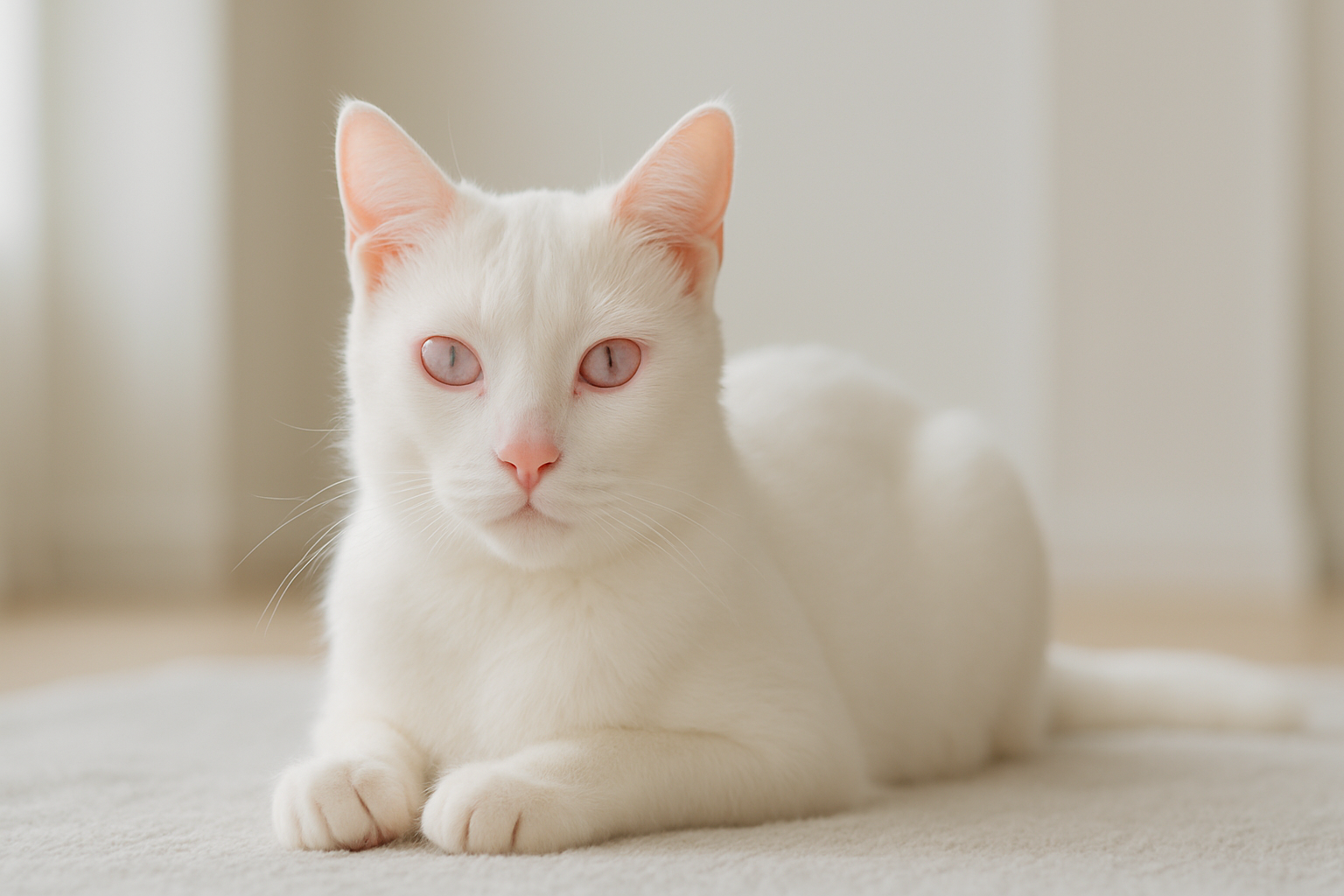
Because albinism affects every bit of pigment in the body, albino cats have a very recognizable look once you know what to check. Their eyes are usually the first giveaway. Depending on the lighting, the eyes may appear pink, red, or an extremely pale icy blue. This happens because there isn’t enough pigment to block the light, so you’re seeing the reflection of tiny blood vessels behind the iris. In bright sunlight, an albino cat’s eyes may take on a striking, almost glowing red tint.

The skin offers another clear sign. True albino cats have naturally pink skin anywhere pigment would normally show — the paw pads, the inner ears, the nose, and the delicate skin around the eyes. A white cat may have pale features, but the even, soft pink tone of an albino cat is much more distinct.
The coat of an albino cat is always a pure, even white with no warm tones or faint markings. Albino kittens are born this way and stay bright white throughout life. If a cat has stripes, patches, or any visible pattern — even very light ones — that’s a sign they aren’t albino, just a pale or white-coated cat.
Albino Cat vs White Cat: How to Tell the Difference
Once you understand what a true albino cat looks like, it becomes much easier to compare them with regular white cats. At first glance, they might seem identical, but the reason behind their white coats couldn’t be more different. A white cat inherits a dominant W gene that masks all other colors, while an albino cat appears white because their body cannot produce any pigment at all.
The eyes are often the most helpful clue. Albino cats have very pale eyes with little to no visible pigment, while white cats can have almost any natural eye color — blue, green, gold, or even a mix. If the eyes look extremely light or almost colorless, albinism becomes much more likely.
Skin tone can also help you tell the difference. Albino cats have consistently pink skin on the nose, ears, and around the eyes. White cats may have light skin too, but it usually isn’t the same clear, even pink. And unlike white cats, which can be born with faint markings that fade as they grow, a true albino cat will never develop stripes, patches, or any pattern at all.
Health Issues Albino Cats Face
Because melanin plays an important role in protecting the skin and eyes, albino cats are more sensitive to things that most cats tolerate without trouble. Sunlight is a major challenge. Albino cats burn easily, especially on the nose and ears, and long periods in the sun increase their risk of skin damage over time. This sensitivity means that albino cats do best as indoor companions, where lighting can be controlled and harsh UV rays aren’t a constant threat.
Vision can also be affected. Albino cats may struggle in bright environments because their eyes let in more light than usual. Some experience mild vision changes such as difficulty tracking movement or judging depth. A few may develop nystagmus, a condition where the eyes move involuntarily. While not painful, it can make focusing harder in certain settings. Their lack of pigment also affects basic immunity, which means an albino cat may catch common illnesses more easily than a typical white cat.
Caring for an Albino Cat
Cats with albinism can live long, happy lives as long as a few simple precautions are taken. Keeping them indoors is one of the most important steps, since sunlight is the biggest risk factor for their skin and eyes. If they enjoy lounging near windows, choosing rooms with filtered or indirect light can make a big difference in comfort. Some cat parents also use UV-blocking window film to reduce glare. It also helps to provide cozy resting spots away from the brightest areas of the home, especially during the afternoon.
Regular vet checkups are essential for albino cats because early signs of skin or eye problems are much easier to manage when caught quickly. Your vet may recommend more frequent eye exams or specific ways to protect sensitive areas. If your cat seems bothered by bright lights, turning off overhead bulbs and using softer, indirect lighting can help them relax. These small adjustments make everyday life safer and more comfortable for a true albino cat.
With a few adjustments to lighting and routine care, albino cats adapt well to indoor life and often form deep, trusting bonds with their families. Their needs are simple once you understand how light affects them, and most albino cats thrive with a calm, predictable home environment.
How Rare Are Albino Cats?
Albino cats are extremely rare because both parents must carry the recessive gene for albinism, even if neither parent shows signs of it. Most white cats seen in homes or shelters are not albino — they simply have a masking gene or a reduced-pigment condition like leucism. This is why true albino cats are such uncommon finds and often spark curiosity wherever they appear.
Because albino cats are so rare, many people assume the albino cat price must be high or that these cats are intentionally bred. In reality, ethical breeders avoid producing albinism because of the health risks associated with low pigment. Albino kittens usually appear by chance rather than by design, which means they’re far more likely to be found through rescues or shelters than through specialty breeding programs.
At the end of the day, the real value of an albino cat isn’t in a price tag — it’s in understanding their needs and giving them a safe, comfortable home where they can thrive.
Frequently Asked Questions
Are albino cats born with red eyes?
Albino kittens are born with extremely pale blue or pinkish eyes that may look red in certain lighting. This is because their eyes do not have enough pigment to block light, making the reflection of blood vessels more noticeable.
Can cats be partially albino?
No. Cats that appear “partially albino” usually have leucism, a separate condition that reduces pigment but does not remove it entirely.
How can I tell if my cat is albino?
Look closely at the eyes and skin. A true albino cat has pink skin, very pale eyes, and a coat with no pigment at all. A white cat may look similar but will not have all of these features together.
Do albino cats have health problems?
Albino cats are more sensitive to sunlight and may experience mild vision challenges. They benefit from regular vet checkups and careful indoor living, but most can still live long, comfortable lives with the right care.
What to Remember About Albino Cats
Albino cats may look similar to white cats at first, but their genetics, appearance, and care needs make them truly unique. Once you understand how light sensitivity and low pigment affect their daily lives, it becomes much easier to create a safe, comfortable environment where they can thrive. Most albino cats adapt very well to indoor living and enjoy the same love, playtime, and companionship as any other cat.
If you’re caring for an albino cat or think you may have one at home, focusing on gentle lighting, sun protection, and regular vet checkups can make a noticeable difference in their comfort and long-term health. With the right support, these rare and beautiful cats often form deep bonds with their families and live full, happy lives.